



Introducing PRIMA: NASA's New Cosmic Explorer
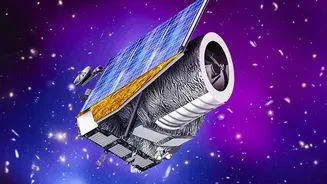
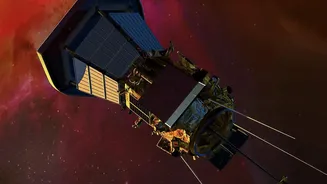
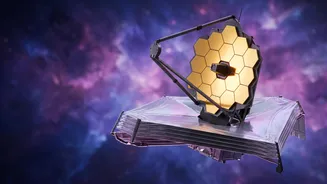
PRIMA, which stands for the Probe far-Infrared Mission for Astrophysics, is a next-generation space observatory designed to see the universe in a way that other telescopes cannot. It is the first of a new “Probe-class” of missions, which are designed to be more
ambitious and capable than smaller projects but more focused and cost-effective than flagship observatories like the James Webb Space Telescope (JWST). PRIMA's mission is to peer into the cosmos using far-infrared light. This part of the light spectrum is invisible to the human eye but holds the secrets to some of the most fundamental processes in the universe, which are often obscured by cosmic dust. By capturing this light, PRIMA will essentially give scientists a new set of eyes to witness the birth of planets and galaxies.
The Cosmic Questions It Will Answer
While missions like JWST are transforming astronomy, there are still major questions that require a different kind of vision. PRIMA is specifically designed to tackle three key areas. Firstly, it will investigate the origins of planets and their atmospheres by studying the raw materials in protoplanetary disks, with a special focus on the role water plays in forming new worlds. Secondly, it will explore how galaxies and the supermassive black holes at their centers grow and evolve together over billions of years. Finally, PRIMA will trace how the universe's dust and heavy elements—the building blocks of everything, including us—have accumulated since the dawn of time. These goals target gaps in our knowledge that current telescopes were not built to fill.
Decoding 'Phase B' Development
The announcement that PRIMA has entered “Phase B” is more than just technical jargon; it’s a critical milestone that signals the mission is getting serious. In NASA's project lifecycle, early stages like Pre-Phase A and Phase A are about developing concepts and proving their feasibility. Phase B, however, is where the project moves from an idea to a concrete plan. During this stage, engineers will finalize the telescope’s preliminary design, solidify technology, and establish a firm budget and schedule. Passing into Phase B means PRIMA has proven its scientific merit and technical feasibility, and NASA has given it the green light to become a fully-fledged engineering project. The project cost is capped at approximately $1.2 billion, not including launch costs.
A Leap Beyond Webb and Hubble
The Hubble and James Webb space telescopes are astronomical titans, but each is designed to see specific kinds of light. PRIMA is not a replacement but a crucial complement. Its instruments will be sensitive to far-infrared wavelengths that are longer than what JWST can detect. This capability is essential for observing cool dust and gas, allowing PRIMA to study the very earliest stages of star and planet formation. For example, some of the most important spectral signs of water in the disks where planets are born are only visible in the far-infrared. PRIMA's telescope will also be cryogenically cooled to just 4.5 degrees above absolute zero, making it thousands of times more sensitive than previous far-infrared observatories like the Spitzer and Herschel telescopes.
The Path to a 2033 Launch
With a targeted launch date of 2033, the journey for PRIMA is a marathon, not a sprint. Following the current preliminary design phase, the mission will move into Phase C, which involves final design and fabrication, and then Phase D for assembly, integration, and testing. This long-term project is a massive international undertaking. NASA's Jet Propulsion Laboratory (JPL) will manage the mission, but it involves collaboration with multiple other NASA centers and the space agencies of Canada, France, Germany, Japan, South Korea, and the United Kingdom. This global partnership underscores the mission's importance to the entire scientific community as it prepares for a five-year survey of the cosmos starting next decade.