





A New Reality in Orbit
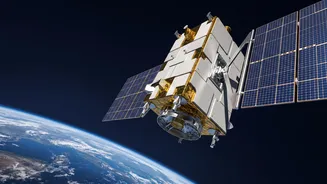
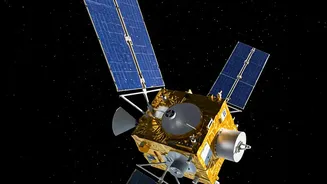
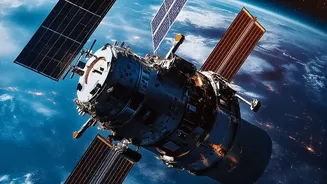
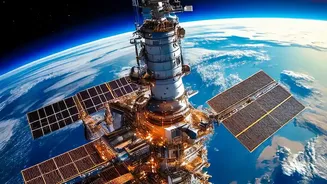
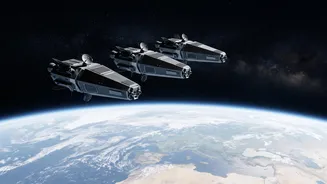
For the first time, the United States has publicly confirmed it has deployed 'on-orbit space-control weapons'. The announcement, made by Air Force Secretary Troy Meink in September 2026, marks a major departure from decades of strategic ambiguity. While
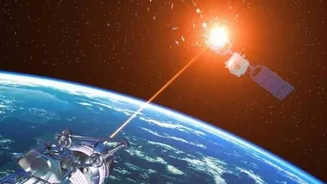
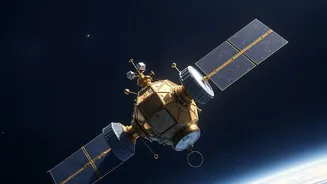
the specifics of these weapons remain classified, the admission itself validates what analysts have long suspected: space is officially a warfighting domain. This isn't the 'Star Wars' missile defense fantasy of the 1980s. Today's orbital weapons are more subtle and varied, including everything from signal jammers and high-powered lasers to kinetic weapons designed to disable or destroy other satellites. This public confirmation has prompted immediate warnings from China and Russia about accelerating a high-risk arms race above our heads.
The Key Players and Their Stakes
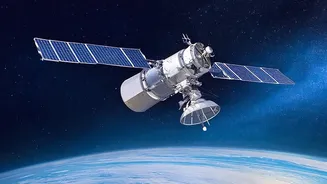
The contest for space dominance involves three main protagonists: the United States, China, and Russia. All three have demonstrated the capability to destroy satellites from the ground using missiles. The creation of the U.S. Space Force in 2019 was a clear signal of Washington's intent to treat space as a distinct military arena. In response to the recent U.S. announcement, Beijing warned against turning space into a 'battlefield', while Moscow called for the 'complete demilitarisation of space'. Yet, U.S. intelligence has repeatedly pointed to both nations developing their own offensive space capabilities, including 'prototype' anti-satellite weapons and co-orbital systems designed to shadow and potentially interfere with other satellites. The dynamic is one of mutual suspicion, where each nation's defensive preparations are seen as offensive provocations by its rivals, fueling a cycle of escalation.
What Happens When Satellites Go Dark
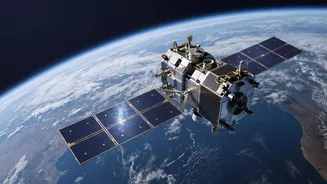
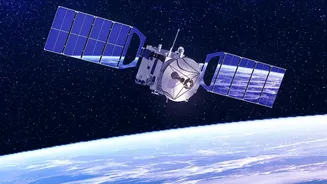
The 'practical consequences' of a conflict in space are no longer abstract. Our modern global economy is critically dependent on a fragile network of orbital infrastructure. An attack on satellites would have immediate and cascading effects on civilian life. Global Positioning System (GPS) satellites are the most obvious vulnerability. They don't just guide our cars; they provide the precise timing signals that underpin global financial transactions, stock markets, and electrical grids. Disruption to communications satellites would impact everything from internet access in remote areas to international broadcasting and secure military communications. Weather forecasting, disaster management, and climate monitoring all rely on data from Earth-observation satellites that would become prime targets. In short, a war in space would severely cripple the global economy and the basic functions of modern society.
The Menace of Orbital Debris
Beyond the strategic impact, there is a looming physical consequence: space debris. When a satellite is destroyed by a kinetic weapon, it doesn't just vanish. It shatters into thousands of pieces of shrapnel, each traveling at enormous speeds. As China's 2007 anti-satellite test proved, a single event can create a massive debris cloud that remains in orbit for decades, posing a threat to every other satellite in that region. This raises the terrifying prospect of the 'Kessler Syndrome', a theory proposed by NASA scientist Donald Kessler in 1978. He hypothesised a scenario where the density of orbital junk becomes so great that collisions create a cascading chain reaction, generating more and more debris until low Earth orbit becomes an impassable and unusable minefield for generations. A conflict in space could trigger this syndrome, effectively trapping us on Earth.
A Frontier Without Rules
Governing this new domain is the 1967 Outer Space Treaty, a Cold War-era document with significant loopholes. The treaty prohibits placing nuclear weapons or other weapons of mass destruction in orbit but is largely silent on conventional weapons, such as kinetic interceptors or signal jammers. This legal grey area has allowed for the development of the very weapons now being deployed. The treaty bans military bases on celestial bodies like the Moon but does not prevent the militarisation of space itself. As nations push the boundaries of what is technologically possible, the international legal framework has failed to keep pace, leaving the world without clear rules of engagement for a potential conflict that begins far from Earth but would be felt by everyone on it.