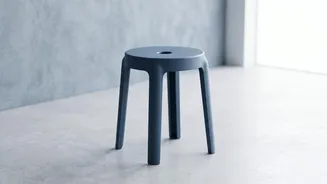








The Anti-Suction Solution
The most celebrated reason for the hole involves a simple physics problem. Plastic stools are designed to be stackable to save space. When you nest one smooth, flat-topped stool inside another, you risk trapping air between them. Pulling them apart creates
a pressure difference, or a vacuum effect, that makes them stick together stubbornly. Anyone who has wrestled with a stack of plastic chairs or buckets knows this struggle. The hole provides a crucial air passage, allowing pressure to equalize as you lift a stool off the stack. This prevents the suction from forming, making them incredibly easy to separate. It’s a simple solution to a surprisingly powerful physical force.
A Handle for Easy Portability
Beyond the physics of stacking, the hole offers a very straightforward, practical benefit: it’s a handle. Instead of grabbing the stool with two hands or awkwardly by the rim, you can simply slip your fingers through the hole and lift. This is particularly useful in environments where stools are frequently moved, such as in shops, event spaces, or around the home. The central location of this grip point also helps balance the stool as you carry it, making it less clumsy to transport. It’s a perfect example of ergonomics hiding in plain sight, turning a simple piece of furniture into something effortlessly portable.
Strength in a Surprising Shape
It might seem counterintuitive, but removing material can sometimes improve structural integrity. The hole, specifically its circular shape, plays a role in the stool's durability. When you sit down, your weight applies stress to the plastic. If the hole were square or had sharp corners, these angles would become stress concentration points, making the stool more likely to crack over time. A circular hole, however, distributes the load more evenly across the surface. This prevents weak spots from forming and ensures the stool can withstand the pressures of daily use without breaking. The design is not just about removing material, but about shaping it to be stronger and more resilient.
Manufacturing and Material Efficiency
For manufacturers producing millions of these stools, every gram of material counts. Creating a hole means using slightly less plastic for each unit. While the savings on a single stool might be negligible, it adds up to a significant reduction in material costs and overall product weight across a massive production run. Furthermore, in the injection molding process, the hole can help ensure the plastic cools and sets more evenly, reducing the risk of defects and creating a more consistently strong product. It’s a small detail that contributes to making the stool both affordable and reliable.
The All-Weather Advantage
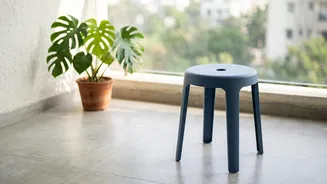
Plastic stools are often used outdoors on balconies, in gardens, or at roadside stalls. Without a hole, the seat would collect rainwater, turning into a mini-puddle that needs to be wiped away. The hole provides a simple and effective drainage route, ensuring the stool remains dry and ready to use shortly after a downpour. This makes them far more practical for all-weather use compared to a solid-surface design. It's another small, thoughtful touch that enhances the stool's versatility and usefulness in a variety of settings.