






An Audacious LinkedIn Message
In 2018, two former ISRO scientists, Pawan Kumar Chandana and Naga Bharath Daka, had a revolutionary idea: to build India’s first private rocket company. They had seen early signs that the government was considering opening the tightly controlled space
sector to private enterprise and decided to take a massive risk, leaving their secure jobs to start Skyroot Aerospace in Hyderabad. But they faced a formidable challenge. The regulatory framework was non-existent, and building rockets requires immense capital with no guarantee of returns. Most institutional investors, preferring the faster cycles of consumer internet businesses, were skeptical. Undeterred, Chandana and Daka took a shot in the dark. They sent a cold message on LinkedIn to one of India’s most successful serial entrepreneurs: Mukesh Bansal, the founder of Myntra and Curefit.
A Pitch Built on Passion, Not Projections
Mukesh Bansal was an unlikely investor for a deep-tech space venture. His expertise was in fashion e-commerce and health-tech, worlds away from orbital mechanics and rocket propulsion. When he met the young founders, he was struck not by their business plan, but by their sheer passion and audacity. The pitch was less about financial projections and more about a shared founder’s spirit. Bansal recognized their willingness to dedicate the next decade of their lives to a mission that seemed impossible. He asked them if they were prepared for a ten-year journey with minimal pay, and their answer was a resounding yes. This conviction was all Bansal needed. He saw an opportunity that others missed, driven by the founders' vision rather than market trends.
More Than Just a Cheque, It Was Belief
Bansal became Skyroot’s first and, for nearly two years, only angel investor. He wrote an initial cheque for ₹10 crore at a time when there was no official policy for private space launches. As Skyroot co-founder Pawan Kumar Chandana later noted, "The first cheque is never just capital. It is belief." This early backing was critical. When the COVID-19 pandemic squeezed finances, Bansal stepped in again with another ₹2 crore to ensure the team could stay together. His investment came nearly two years before venture capital firms began to take notice, which only happened after the Indian government officially liberalised the space sector in 2020.
The Vikram-1: A Dream Takes Flight
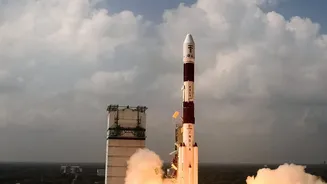
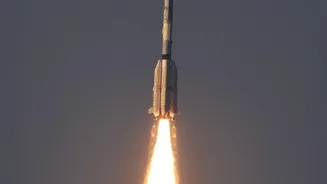
The culmination of this partnership and years of engineering was the historic launch of Vikram-1 on July 18, 2026. Lifting off from Sriharikota, the four-stage launch vehicle successfully placed its payloads into low Earth orbit, making Skyroot the first private Indian company to achieve this feat. The Vikram-1 is a small-lift launch vehicle designed to make space access more affordable and on-demand, much like a "cab service to space." Built with innovative technologies like 3D-printed engines and lightweight carbon composite structures, the rocket represents a new, agile approach to spaceflight in India. This successful launch validated the vision that Chandana and Daka had pitched years earlier and proved Bansal’s high-risk bet had been on the right side of history.
A New Chapter for Indian Innovation
Mukesh Bansal's initial investment of about ₹12 crore has reportedly grown to a value of over ₹700 crore, a return of nearly 60 times. But the significance of this story extends far beyond financial returns. It exemplifies a maturing Indian startup ecosystem where a generation of successful founders is now providing the crucial first-stage funding and mentorship for the next wave of innovators. Bansal’s role was not just as an investor but as a mentor who trusted the founders' expertise and gave them the room to build. The success of Skyroot and the Vikram-1 journey has ignited a new fire in India's deep-tech and space-tech sectors, proving that patient capital, when combined with bold vision, can create both immense value and strategic national capabilities.