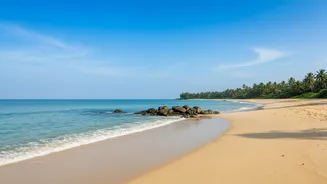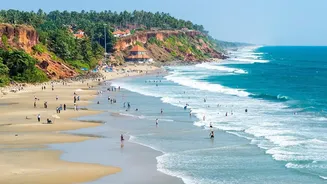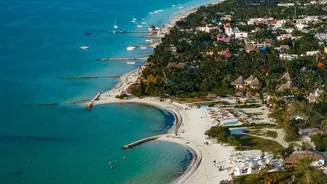





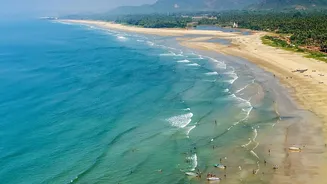


What Exactly Is a Blue Flag Beach?
The Blue Flag is a prestigious international eco-label awarded by the Foundation for Environmental Education (FEE), a non-profit based in Denmark. It is considered a gold standard for beaches, marinas, and sustainable boating tourism operators worldwide.
To earn the right to fly the Blue Flag, a beach must meet and maintain a demanding list of over 30 criteria. These standards are grouped into four main categories: environmental education and information, bathing water quality, environmental management, and safety and services. This means a Blue Flag beach isn't just beautiful; it's also clean, safe, and managed with a commitment to protecting the local ecosystem. The criteria require pristine water free from industrial and sewage-related waste, proper waste management systems, and public information about local ecosystems and biodiversity.
Karnataka's Growing Blue Flag Collection
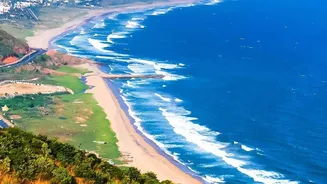
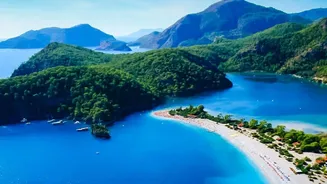
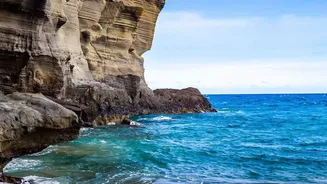
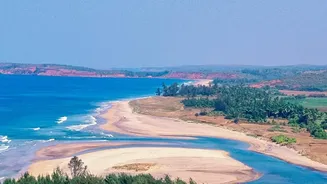
Karnataka has already made successful inroads into the Blue Flag programme. The state earned its first certifications for Kasarkod Beach in Uttara Kannada and Padubidri Beach in Udupi, which were part of an initial wave of beaches in India to receive the honour. More recently, Tannirbhavi Beach in Dakshina Kannada also joined this exclusive list, bringing the state's total to three. But the ambition doesn't stop there. As part of a new Coastal-Malnad Karnataka Tourism Policy, the government has identified 11 more potential sites for upgrade. These include popular stretches like Someshwar and Ullal near Mangaluru, as well as several beaches in Udupi and Uttara Kannada districts. The government is preparing customised master plans for each beach, signaling a detailed, long-term strategy rather than a simple cosmetic upgrade.
The Promise of Sustainable Growth
The primary driver behind this initiative is to position Karnataka's coastline as a globally competitive destination on par with neighbours like Goa and Kerala. The Blue Flag certification acts as a powerful marketing tool, attracting discerning tourists who prioritise cleanliness, safety, and environmental quality. This can lead to significant economic benefits, boosting local hospitality businesses and creating jobs for coastal communities. The development itself involves substantial investment in infrastructure, such as waste and greywater treatment plants, solar power installations, disabled-friendly access, and enhanced safety measures like lifeguards and watchtowers. Beyond the economic allure, the process inherently promotes conservation, forcing authorities to adopt better environmental practices and raise public awareness about protecting fragile coastal ecosystems.
Challenges on the Shoreline
However, the path to certification is not without its hurdles. One of the most significant challenges is the potential impact on traditional coastal communities. In other parts of India, similar projects have sparked protests from fisherfolk who fear losing access to the sea for anchoring their boats and conducting their livelihoods. The redevelopment can create a physical and economic barrier for locals who have depended on the beach for generations. Furthermore, achieving and maintaining the Blue Flag standards is a costly affair. The state has estimated an expenditure of over ₹140 crore to develop the 11 newly identified beaches. Once certified, these beaches often introduce entry and service fees to cover maintenance costs, which can lead to concerns about the privatization of public spaces and potentially excluding local visitors who cannot afford them.