




The Big Picture: More Than Just a Catchy Acronym
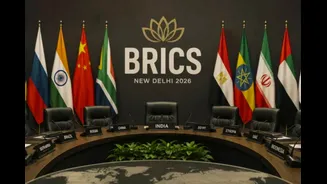
Originally a term coined by an economist, BRICS has evolved into a formal bloc of emerging economies. The group, which started with Brazil, Russia, India, China, and South Africa, has recently expanded to include Egypt, Ethiopia, Iran, Saudi Arabia, the
UAE, and Indonesia. Together, these nations now represent about 40% of global GDP and nearly half the world's population. Their stated goal is to increase their economic clout, foster cooperation among developing nations (the 'Global South'), and create alternatives to Western-dominated financial institutions like the World Bank and IMF. With India chairing the bloc in 2026, the focus is on tangible outcomes in areas like trade, supply chains, technology, and development finance.
Fact-Check: Is Intra-BRICS Trade Really Booming?
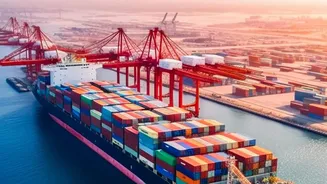
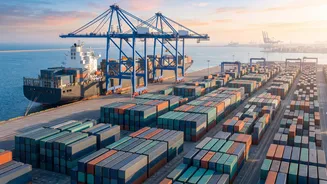
On the surface, the numbers look impressive. Merchandise trade within BRICS nations surged from roughly $84 billion in 2003 to $1.17 trillion in 2024. This growth rate has outpaced the expansion of global trade overall. However, this needs context. Despite the bloc's massive share of global GDP, intra-BRICS trade only accounts for about 5% of total world trade. A significant portion of this trade is dominated by China, which acts as the main exporter and importer within the group. For many members, trade relationships with the US and EU remain far larger and more critical than their trade within BRICS. This highlights a key fact: while internal trade is growing, the bloc has yet to become a self-contained economic ecosystem.
India's Role: A Story of Widening Deficits
For India, the BRICS trade story is complex. Total goods trade between India and its BRICS partners more than doubled between fiscal years 2021 and 2026, reaching $417.5 billion. But this growth has been overwhelmingly driven by imports. While India's exports to the bloc grew by a healthy 48.8%, imports skyrocketed by 131.8%. As a result, India's trade deficit with BRICS nations more than tripled to $226.1 billion in FY26. The primary drivers of this imbalance are massive imports from China and, more recently, Russia. This has led to calls from Indian exporters for the government to push for better market access and address non-tariff barriers to create a more balanced trade relationship.
The De-Dollarization Dream vs. Reality
Perhaps the most talked-about BRICS ambition is 'de-dollarization'—reducing dependence on the US dollar for international trade. The idea is to shield member economies from US sanctions and currency fluctuations. However, the notion of a single BRICS currency is not on the immediate agenda and faces immense political and economic hurdles. Instead, the real focus is on increasing the use of national currencies for bilateral trade (like rupee-rouble transactions) and developing a shared payment system, often dubbed 'BRICS Pay'. This system aims to connect the domestic digital payment platforms of member countries, such as India's UPI. While progress is being made, this initiative is still in its pilot phase and a full launch remains a future goal, not a present reality. The US dollar's dominance in global trade invoicing and reserves remains firmly entrenched for now.
Investment Push: The New Development Bank
The most concrete achievement of BRICS cooperation is the New Development Bank (NDB). Headquartered in Shanghai, the NDB was created to finance infrastructure and sustainable development projects in member countries and other emerging economies. Since its inception in 2015, the bank has approved nearly $43 billion for 139 projects in areas like clean energy, transport, water, and sanitation. A key part of its strategy is to provide a growing portion of its loans in local currencies, which helps borrowers avoid exchange rate risks. Under its current five-year plan (2022-2026), the NDB aims to allocate $30 billion for new projects and direct 40% of its financing towards climate-related initiatives. While its scale is still smaller than the World Bank, the NDB represents a tangible alternative for development finance.