



Current Status: Trials Underway
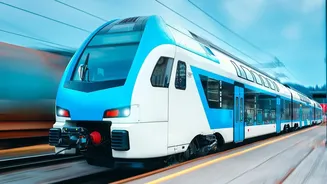
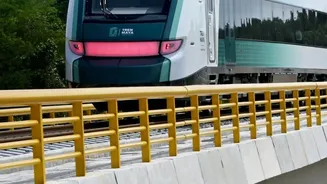
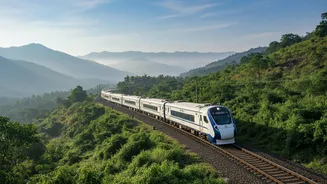
The good news is that the project is moving forward. As of mid-August 2026, the South Western Railway's Mysuru Division has been conducting crucial field trials on the most challenging part of the route. A specially manufactured 20-car Vande Bharat rake,
built by the Integral Coach Factory in Chennai, was brought in for these tests. After initial static trials in Mysuru, the train was moved to the Sakleshpur-Subrahmanya Road Ghat section for dynamic testing. These trials, which began around August 11 and are expected to continue for several days, are a critical step in assessing the operational feasibility of running the semi-high-speed train on this demanding line. However, it's important to note that these trials do not signify an immediate launch; they are part of a longer evaluation process.
The Ghat Section: A Major Engineering Challenge
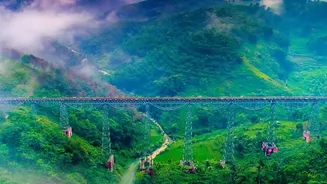
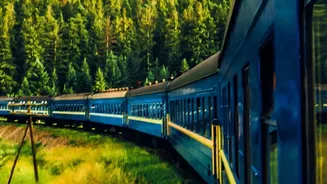
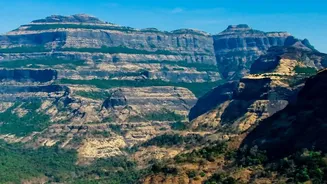
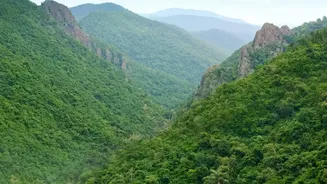
The primary reason for the extensive testing and cautious approach is the 55-kilometre Sakleshpur-Subrahmanya Road section. This stretch, which cuts through the dense Western Ghats, is one of the most technically difficult railway lines in India. It features a steep gradient of 1-in-50, combined with 57 tunnels, 226 bridges, and 108 sharp curves. The area is also prone to landslides, especially during the monsoon season, adding another layer of complexity. Conventional trains often require an additional 'banker' locomotive to be attached to push them up the steep inclines, a solution not practical for the integrated design of a Vande Bharat Express. The unique topography demands a specialised solution and rigorous safety checks before any passenger service can be considered.
Special Modifications and Safety Protocols
To navigate the treacherous ghat section, this specific Vande Bharat rake has been equipped with a special Automatic Emergency Braking (AEB) system. This technology is designed to automatically apply the brakes if the train exceeds the restricted speed limit of 30 kmph on this stretch, providing a crucial safety layer. The trials are being closely monitored by personnel from the Research Designs and Standards Organisation (RDSO), the Indian Railways' research and development wing. They are evaluating everything from braking and acceleration on steep gradients to stability on sharp curves. The performance of the AEB system is a key focus of this evaluation. The successful operation without the need for banker locomotives would be a significant achievement, potentially reducing travel time.
Political Push and Public Anticipation
There has been consistent demand and political advocacy for this train service. Union Railway Minister Ashwini Vaishnaw has mentioned on multiple occasions that the service is in the pipeline and would commence soon after technical requirements are met. In February 2026, he noted that the electrification of the Hassan-Mangaluru section was complete, paving the way for the testing phase. Local Members of Parliament have also been vocal in their demand for better connectivity between the state capital and the coastal region. The proposed service is expected to significantly cut travel time to around seven hours, compared to the current eight to ten hours by existing trains, making it a game-changer for business and leisure travellers.
The Road to Final Approval
Despite the successful trials, several steps remain before the Bengaluru-Mangaluru Vande Bharat becomes a reality for passengers. After the current trials conclude, the RDSO will compile a detailed report of its findings. This report will be submitted to the Railway Board for review. Following the board's examination, the proposal must also get a final safety certification from the Commissioner of Railway Safety (CRS). Only after all these technical and safety clearances are secured can the South Western Railway proceed with finalising a timetable, fare structure, and an official launch date. There have also been discussions about potentially extending the service to Madgaon in Goa, which would further enhance coastal connectivity, but the immediate focus remains on the Bengaluru-Mangaluru link.