




An Ocean World Far From Home
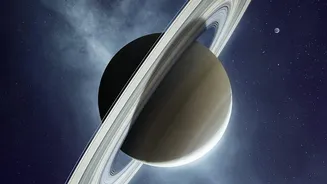
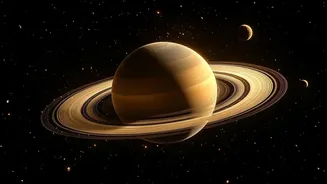
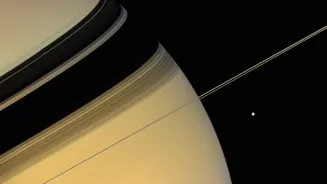
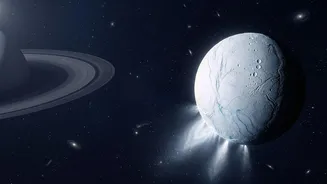
Beneath a thick crust of ice, Saturn's sixth-largest moon, Enceladus, hides its biggest secret: a global ocean of liquid saltwater. What makes this moon particularly tantalizing for scientists is that it generously offers up samples. Geyser-like plumes
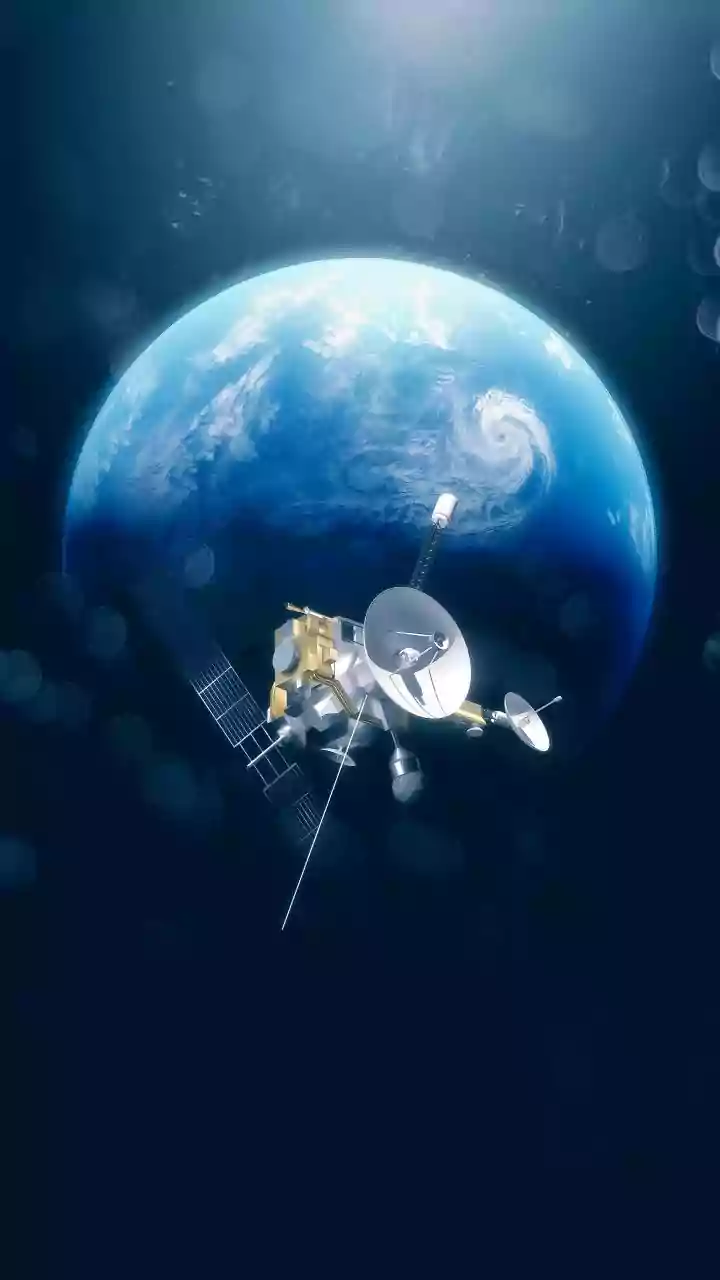
erupt from massive cracks in the ice near its south pole, blasting water vapor and ice grains hundreds of kilometres into space. These plumes, first studied in detail by NASA's Cassini spacecraft, give us a direct line to the ocean below without needing to drill. Analysis of this material has already confirmed the presence of water, salts, and simple organic molecules, establishing Enceladus as a prime candidate for finding life beyond Earth. It possesses three of the key ingredients for life as we know it: liquid water, a source of energy (driven by hydrothermal activity on the seafloor), and the right chemical building blocks.
The Final Ingredient for Life
For years, one essential element for life remained missing from Enceladus’s known inventory: phosphorus. On Earth, phosphorus, in the form of phosphates, is fundamental. It forms the backbone of DNA and RNA and is crucial for metabolic energy in the form of ATP. Without it, life as we understand it cannot exist. Previous geochemical models were uncertain whether the element would be abundant in Enceladus's ocean. However, a re-analysis of data from Cassini’s Cosmic Dust Analyzer has provided the first definitive evidence of phosphorus. Scientists found the clear chemical signature of phosphorus salts locked inside ice grains from the plumes. Laboratory experiments confirmed that phosphates are likely dissolved in the ocean water at concentrations potentially hundreds of times higher than in Earth's oceans. This discovery satisfies what is considered one of the strictest requirements for habitability, confirming that Enceladus has all six of the elements essential for life: carbon, hydrogen, nitrogen, oxygen, phosphorus, and sulfur.
Finding the Telltale Signs
Confirming a world is habitable is one thing; finding proof of life is another. This requires detecting biosignatures—substances or patterns that provide evidence of biological processes. The challenge is that these signs, such as complex organic molecules or cellular fragments, might be incredibly rare within the vast ocean. This is where the second piece of recent research comes into play. New studies suggest Enceladus may be doing some of the work for us. Laboratory simulations show that as droplets of ocean water freeze slowly within the cracks in the ice shell, different chemicals get separated and concentrated. This process could naturally concentrate rare organic molecules or other potential biosignatures into a small number of ice grains. In essence, instead of being diluted across the entire ocean, evidence of life could be bundled into specific particles, making it much easier for a visiting spacecraft to detect.
Could Earthly Life Survive There?
To test the viability of Enceladus's environment, researchers have also turned to Earth's own extremophiles. In one study, scientists recreated the predicted conditions of Enceladus's ocean in a lab—alkaline, oxygen-poor, and rich in carbonates. They then introduced a microorganism called Methanothermococcus okinawensis, which on Earth thrives near deep-sea hydrothermal vents without needing oxygen. The microbe not only survived but continued to grow and produce methane, adapting its metabolism to the alien conditions. This experiment doesn't prove life exists on Enceladus, but it demonstrates that some of Earth's most ancient metabolic pathways could function in that environment, removing another potential barrier to life.