






A New Leader in the Skies
According to preliminary data from Airports Council International (ACI) for the first half of 2026, Incheon handled an impressive 38.39 million international passengers. This figure narrowly edged out London Heathrow, which saw 37.79 million passengers,
and Singapore's Changi Airport, with 34.53 million. The shift marks a significant moment for the airport, which only opened in 2001. Its rise has been attributed to a combination of factors, including a surge in tourism to South Korea and changing global travel patterns that have diverted traffic from Middle Eastern hubs. Transfer passengers at Incheon saw a remarkable 18% increase from the previous year.
More Than an Airport, a Destination
While passenger volume tells one story, Incheon’s excellence is more than a numbers game. For years, it has been a consistent high-performer in passenger satisfaction surveys, recognized for making time spent at the airport part of the pleasure of travelling. Incheon offers an array of amenities that sound more like a luxury resort than a transit hub. The airport features a golf course, multiple spas, private sleeping rooms, an ice-skating rink, and a casino. Beyond leisure, it leans heavily into cultural immersion, with a Museum of Korean Culture and regular live performances of traditional music and dance. For transit passengers with time to spare, the airport even offers free tours of the surrounding area.
The Efficiency Engine
An airport can have all the amenities in the world, but they mean little if the basics aren't handled flawlessly. This is where Incheon truly excels. It is renowned for its operational efficiency, with some of the world's fastest immigration and customs processing times. In an era of long security queues, travellers frequently report moving through Incheon’s checkpoints in as little as five to ten minutes. This focus on a smooth, stress-free journey is a core part of its design philosophy. The airport has also invested heavily in technology, including self-service facilities and automation, to streamline the entire passenger journey from check-in to boarding.
A League of Super-Airports
Incheon’s ascent places it at the top of an elite class of global airports that are redefining the travel experience. It competes fiercely with hubs like Singapore's Changi, a 13-time winner of the Skytrax World's Best Airport award, which is lauded for its dining and immigration services. Other frequent contenders include Tokyo's Haneda and Narita airports, known for their exceptional cleanliness and service. While these airports constantly trade places in different rankings—which measure everything from service quality to passenger volume—they all share a common trait: they treat the airport as a crucial part of the journey, not just a utilitarian building. These 'aerotropolises' are becoming destinations in their own right, complete with high-end shopping, cultural attractions, and green spaces.
The Future of the Hub
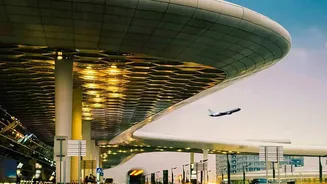
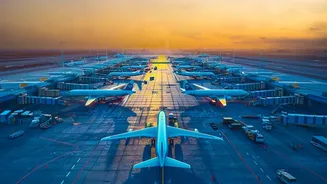
Incheon's recent expansion, completed in 2024, increased its capacity to 106 million passengers annually, making its infrastructure the third-largest in the world. The airport is now a critical gateway connecting 183 cities across 53 countries. Its success provides a blueprint for the future of air travel, where efficiency, technology, and passenger experience are deeply intertwined. As global passenger volumes continue to grow, airports are no longer just infrastructure projects but crucial ambassadors for their countries. Incheon's blend of cultural promotion, seamless service, and world-class amenities proves that the journey can be just as memorable as the destination.