




The End of the Road for Niche Models
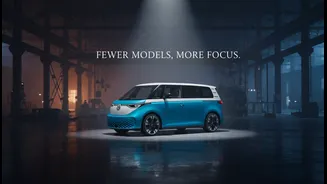
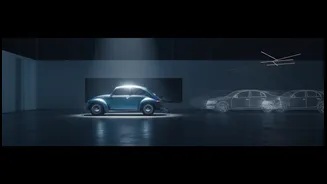
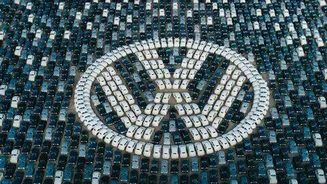
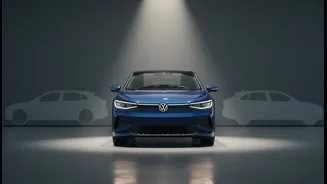
For decades, Volkswagen’s strategy seemed to be a car for every possible niche. That era is officially over. The company has confirmed that lower-volume models are on the chopping block, with the stylish Arteon fastback being one of the first casualties.
Recent reports from July 2026 suggest the purge could be far more extensive, with plans to slash the group's global product portfolio by as much as 50%. While executives have not released a definitive list, reports indicate that long-running names like the Jetta and the relatively new Taos crossover are being evaluated for discontinuation due to their low profit margins. This move isn't just about the VW brand; nameplates across the entire group, including Audi and Porsche, are also under scrutiny as the company focuses only on the most profitable market segments.
A Crisis of Profit, Not Popularity
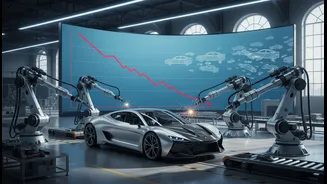
The core of Volkswagen's problem isn't that people have stopped buying its cars. As CEO Oliver Blume admitted, the products remain popular, but the company simply isn't making enough money from them. The Volkswagen brand's operating profit margin has been worryingly low, falling to just 2.8% recently, a figure that is considered unsustainable for a company of its size. To combat this, VW launched a massive performance program, dubbed "ACCELERATE FORWARD | Road to 6.5," aiming to boost the brand's return on sales to a healthier 6.5% by 2026. This program targets improving earnings by approximately 10 billion euros through a combination of revenue growth and significant cost savings. It's a fundamental realignment of the business model, acknowledging that previous cost-cutting plans were not enough to survive in the current economic environment.
From 'Volume' to 'Value'
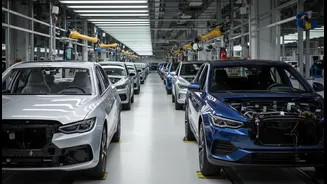
For generations, Volkswagen chased the title of the world's largest automaker, a goal often achieved by prioritizing sales volume above all else. That pursuit has proven to be a costly one. The new strategy marks a dramatic pivot from volume to value. Instead of selling as many cars as possible, the focus is now on maximizing the profit of every vehicle sold. This involves not just cutting entire model lines, but also radically reducing complexity. The company plans to slash the number of equipment options and variants by up to 75%. For instance, the new all-electric ID.7 has 99% fewer configuration options than the old Golf 7, a move that massively streamlines production and reduces costs. The goal is to build a leaner, more agile company that is less vulnerable to market fluctuations.
Funding the Electric Future
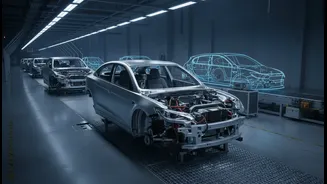
The enormous cost of transitioning to electric vehicles is the primary driver behind this aggressive cost-cutting. Volkswagen has committed billions to developing its next generation of EVs, software, and autonomous driving technology. These investments are essential for long-term survival, but they put immense pressure on current profitability. The money saved by discontinuing less profitable internal combustion engine (ICE) models and reducing production complexity can be funneled directly into the brand's electric future. The company is accelerating its EV rollout, aiming for electric vehicles to make up over 70% of its sales in Europe and 50% in the US and China by 2030. By simplifying its legacy operations, VW hopes to free up the capital needed to compete and win in the electric era.