






The Core Belief: An Ominous Time
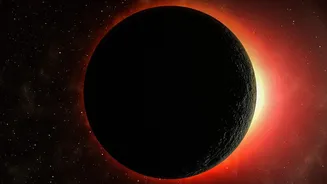
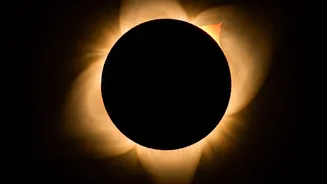
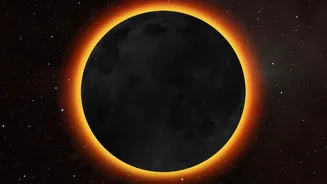
At the heart of the tradition is the belief that an eclipse, known as a 'Grahan', is an inauspicious event. Spiritually, it's seen as a period when the sun or moon is under distress, which releases negative energies into the atmosphere. This negativity
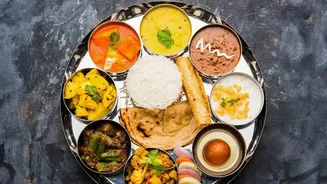
is thought to have the power to contaminate things on Earth, particularly prepared food and water. Many believe that consuming anything during this period would mean ingesting these impurities, leading to potential illness or spiritual imbalance. This is why fasting is observed as a form of protection and purification. The fast is typically broken only after the eclipse has ended, often following a ritual bath and the preparation of a fresh meal.
Mythological Roots: The Demon and the Nectar
This belief is deeply rooted in Hindu mythology, particularly the story of Samudra Manthan, or the churning of the cosmic ocean. According to the legend, the gods and demons churned the ocean to obtain the nectar of immortality. A demon named Svarbhanu disguised himself and managed to drink some of the nectar. The Sun (Surya) and Moon (Chandra) alerted Lord Vishnu, who promptly decapitated the demon with his Sudarshana Chakra. However, because the nectar had reached his throat, the demon's head and body remained immortal. The head became known as Rahu and the headless body as Ketu. To enact their revenge on the Sun and Moon for exposing them, Rahu and Ketu are said to perpetually chase and swallow them, causing eclipses. This cosmic struggle is why the event is seen as a time of turmoil.
The Role of Vedic Astrology
In Vedic astrology, Rahu and Ketu are not physical planets but are referred to as 'chhaya grahas' or shadow planets. They represent the points in the sky where the Moon's orbit intersects with the Earth's orbit around the Sun—the very points where eclipses occur. Astrologically, eclipses are considered potent but disruptive events that can create imbalances. During this period, spiritual activities like meditation, prayer, and chanting are encouraged to generate positive vibrations and ward off negative influences. Material activities, especially consuming food, are discouraged as the body's digestive fire, or 'Agni', is believed to weaken, making digestion less efficient.
Protective Rituals and Tulsi
For those who do not discard all food, a common practice is to place Tulsi (holy basil) leaves in cooked meals and water containers. Tulsi is considered sacred in Hinduism and is believed to have purifying properties that can shield food from the negative energies of the Grahan. Some traditional beliefs also suggest that the absence of the sun’s disinfecting ultraviolet rays during an eclipse can lead to a faster growth of microorganisms in food. From this perspective, Tulsi's antibacterial properties are thought to help preserve the food. It's a blend of spiritual belief and traditional wisdom, ensuring nothing goes to waste while still honouring the customs associated with the eclipse.
What Does Modern Science Say?
From a scientific standpoint, there is no evidence to suggest that food becomes unsafe to eat during an eclipse. Scientific bodies like NASA have clarified that no harmful or mysterious rays are emitted from the sun or moon during an eclipse that could contaminate food. The sun is always emitting radiation; an eclipse simply involves the moon blocking that light. If such rays were harmful to cooked food, they would logically affect raw crops in fields and packaged items in stores as well, which they do not. The only scientifically proven danger associated with a solar eclipse is retinal damage from looking directly at the sun without specialised eye protection. Therefore, while the tradition of fasting is a significant cultural practice, it is not supported by modern scientific principles.