



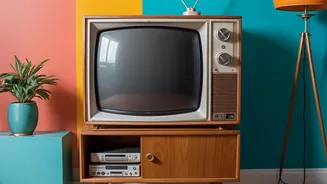

The Case for Paint: Seamless and Architectural
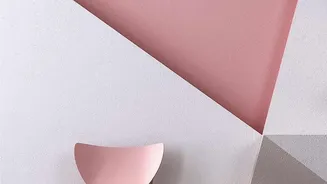
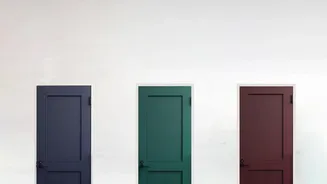
Using paint is the classic route to colour blocking, allowing you to create a look that feels completely integrated with your home’s architecture. This method involves taping off sections of a wall to create geometric shapes, arches, or split-wall effects
and painting them in contrasting or complementary shades. The result is a bold, graphic statement that can make a room feel taller, define a specific zone like a home office nook, or even create the illusion of a headboard. Popular combinations in Indian homes often pair an earthy tone with a neutral, like terracotta and warm white, or a classic deep navy with crisp white for sharp contrast. While a simple two-tone wall is a fairly straightforward DIY project, more complex geometric designs require careful planning, measuring, and taping to achieve clean lines. The biggest advantage of paint is its seamless finish; the colour is part of the wall itself, offering a high-impact, custom look that feels intentional and designed.
The Argument for Framed Art: Flexible and Renter-Friendly
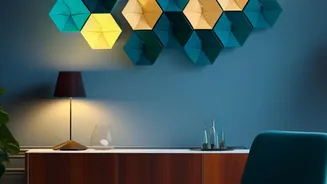
If the thought of painting directly on your walls feels too permanent, framed art offers a brilliant and flexible alternative. The idea is to use large pieces of art—or a curated gallery of smaller ones—to introduce blocks of solid colour. This approach is perfect for renters who are often restricted from making permanent changes, or for anyone who loves to frequently refresh their decor. You can achieve the colour-blocked effect by hanging a series of prints in the same colour family or by choosing a single, oversized abstract piece with bold, distinct colour fields. This method requires minimal commitment and allows for easy updates; simply swap out the art when you crave a new look. It’s a low-effort, high-reward strategy that brings personality and colour to a room without needing a single drop of paint on the walls themselves.
Comparing Costs: Upfront vs. Long-Term
When it comes to budget, the two methods have different financial profiles. Painting an accent wall is generally the more affordable option upfront. A professional job for a standard wall can cost a few thousand rupees, and a DIY approach will only set you back the price of paint and supplies. Framed art, on the other hand, has a much wider cost spectrum. You can find affordable prints for under a thousand rupees, but large, high-quality, or custom-framed pieces can quickly become a significant investment, costing several thousand or more. While paint is cheaper initially, remember that changing it requires a whole new paint job. Art is an asset you can move from home to home, making its long-term value potentially higher.
Effort and Skill: The DIY Divide
For the DIY enthusiast, both options are achievable, but they demand different skills. Painting a colour-blocked wall requires precision. You’ll need a spirit level, measuring tape, and quality painter’s tape to ensure your lines are crisp and your shapes are perfect. While not difficult, it is a multi-step process involving prep, painting, and drying time. Hanging framed art is significantly quicker and requires less technical skill. If you can use a hammer and a nail (or even a temporary, stick-on hook), you can create a colour-blocked effect in under an hour. This makes art the winner for anyone seeking an instant gratification makeover with minimal fuss.
Making Your Choice: Commitment vs. Change
Ultimately, the decision between paint and framed art comes down to your lifestyle and personality. Choose paint if: - You own your home and are ready for a more permanent change. - You want a seamless, architectural look that is integrated into the wall itself. - You enjoy a weekend DIY project and have an eye for detail. - Your budget for the initial transformation is modest. Opt for framed art if: - You are a renter or someone who likes to change their decor often. - You want a quick, low-effort solution with immediate impact. - You prefer investing in pieces that you can take with you when you move. - You want to add texture and dimension through frames and canvases.