


The Essence of Karwa Chauth
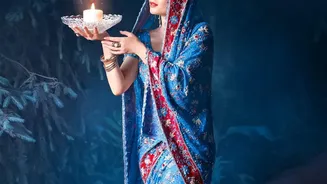
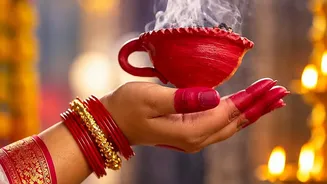
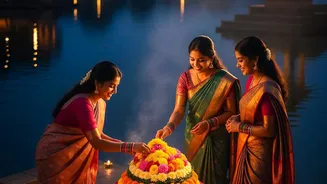
Karwa Chauth is a significant Hindu festival celebrated primarily in Northern India, where married women undertake a day-long fast from sunrise to moonrise. They pray for the long life, well-being, and prosperity of their husbands. The name itself is a combination
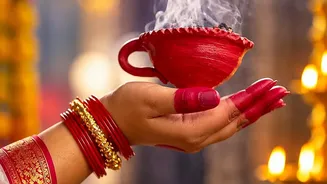
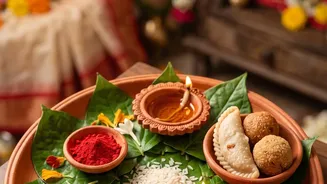
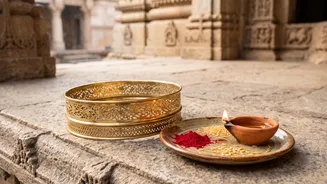
of 'Karwa', an earthen pot used in the rituals, and 'Chauth', meaning the fourth day, as it falls on the fourth day of the waning moon in the Hindu month of Kartik. In 2026, Karwa Chauth will be observed in India on Thursday, October 29. While the day is filled with vibrant rituals like applying mehendi, dressing in festive attire, and evening prayers, many of its core customs are deeply rooted in mythology, particularly the powerful legend of Queen Veeravati.
The Tale of Queen Veeravati
The most widely told story associated with Karwa Chauth is that of the beautiful Queen Veeravati. She was the only sister to seven loving brothers and was happily married to a king. For her first Karwa Chauth after her marriage, she was visiting her parents' home and began the strict, waterless fast at sunrise. As the day wore on, the devoted queen, unaccustomed to such austerity, grew weak with severe hunger and thirst. By evening, she was on the verge of fainting while desperately awaiting the moonrise, which marks the end of the fast.
A Brother's Loving Deception
Seeing their beloved sister in such distress, Veeravati's seven brothers could not bear her suffering. Wanting to provide her relief, they devised a plan to trick her into breaking her fast early. They went to a nearby pipal tree and created an illusion of a full moon. In some versions of the tale, they held up a mirror to reflect a shimmering light, while in others, they lit a fire behind a hill or held a lamp behind a sieve to create a convincing glow. Mistaking the artificial light for the real moon, the innocent Veeravati performed her rituals and broke her fast.
The Tragic Consequence and Penance
The moment Veeravati took her first morsel of food, ill omens appeared. Almost immediately, a messenger arrived with the devastating news that her husband, the king, had died. Heartbroken and realizing she had been tricked, she began to weep inconsolably. On her way to the king's palace, she encountered Lord Shiva and Goddess Parvati. Parvati explained that the tragedy occurred because she had broken her fast by sighting a false moon. Moved by Veeravati’s devotion and grief, the goddess advised her to observe the Karwa Chauth fast again, this time with complete faith and adherence to all rituals, which would lead to her husband's revival.
How Legend Shaped the Rituals
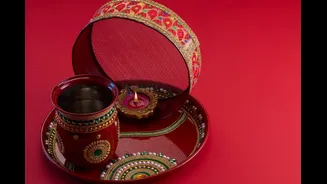
Veeravati’s story directly informs some of the most iconic customs of Karwa Chauth. The use of the sieve, or 'chhalni', is the most prominent example. Women today look at the moon through a sieve before breaking their fast as a symbolic act to ensure they are seeing the true moon, not a deceptive one like Veeravati did. This ritual serves as a reminder of the importance of patience and authenticity in devotion. Furthermore, the entire emphasis on waiting for the actual moonrise is a direct lesson from the legend. The story also reinforces the emotional bond between brothers and sisters, highlighting the protective role they play, even if their actions in the tale were misguided.
The Deeper Meaning of the Sieve
Beyond its connection to Veeravati, the sieve holds further symbolic meaning. It is seen as a filter to ward off negativity. As a woman looks through its mesh, she is believed to be filtering out any discord or bitterness from her marital relationship, choosing to see her husband with only pure affection. In some cultural contexts, the sieve also acts as a form of 'ghoonghat' or veil, a sign of respect shown to the moon, which is considered a divine entity on this day. By filtering the moon's bright rays, the sieve is also thought to only let through blessings of peace and happiness.