









The Thirst Behind the Cloud
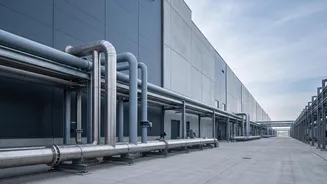
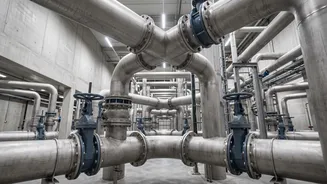
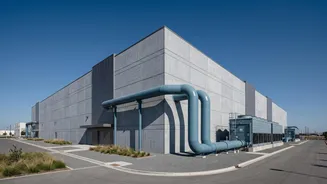
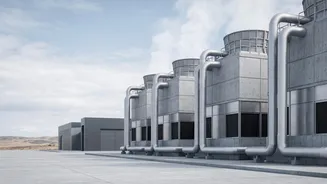
Data centres, the physical backbone of our digital lives, are immensely powerful facilities that generate a tremendous amount of heat. To prevent the thousands of servers from overheating, operators rely on cooling systems, and the most common method
is evaporative cooling, which uses water. A mid-sized 20-megawatt (MW) data centre in India can consume around 1 to 1.2 million litres of water every single day. While this might seem manageable, the real issue is scale. As India's data centre capacity quadrupled between 2020 and 2025 and continues to grow, the cumulative water demand from clusters of these facilities in a single city can become immense, potentially competing with domestic water supplies, especially during dry seasons.
How AI Supercharges Water Use
Standard data centres are already thirsty, but the complex computations required for AI supercharge this demand. Training a large language model like GPT-3 can consume hundreds of thousands of litres of water for direct cooling alone. Researchers have estimated that making a handful of queries to an AI model can consume the equivalent of a bottle of water, factoring in both the on-site cooling and the water used to generate the vast amounts of electricity required. Microsoft, a major player in AI, saw its water consumption jump 34% in a single year, largely due to its AI expansion. This isn't just a one-time cost; as billions of people integrate AI into daily life, this continuous, resource-intensive demand adds up, placing an unprecedented strain on the infrastructure that supports it.
India’s Digital Dilemma
For India, this presents a sharp dilemma. The nation is on a trajectory to become a global data centre hub, with tens of billions of dollars in committed investments from tech giants. This growth is crucial for the digital economy. However, many of these data centre hotspots—including Mumbai, Chennai, Hyderabad, and Bengaluru—are located in regions that are already water-stressed. In 2025, India's data centres consumed an estimated 150 billion litres of water, a figure projected to more than double by 2030. This has sparked local opposition, with residents in places like Visakhapatnam and Thane protesting proposed data centres, fearing the strain on already rationed water and power supplies. The conflict highlights a fundamental question: how can India balance its digital ambitions with the basic water security of its citizens?
The Quest for Smarter, Greener Cooling
The industry is not blind to the problem. Tech companies and researchers are actively exploring more sustainable cooling solutions. Advanced liquid cooling technologies, such as direct-to-chip or immersion cooling, are significantly more efficient. In these systems, a coolant circulates in direct contact with hot components, transferring heat far more effectively than air and using substantially less water. Studies have shown that switching from traditional air cooling to liquid-based methods like cold plates can reduce water consumption by 30% to 50%. Another promising avenue is the mandated use of treated municipal wastewater for cooling. This would create a reliable water source for data centres while reducing their strain on fresh water reserves and helping cities manage wastewater more effectively.