



What is Polarised Starlight?
Imagine light from a distant star as waves vibrating in all directions. Now, picture putting on a pair of polarized sunglasses. They work by filtering out light waves that are vibrating horizontally, only allowing vertical waves to pass through. This
filtered light is 'polarised'. Starlight becomes polarised in a similar way as it travels through space. Instead of sunglasses, however, the filter is composed of countless tiny grains of interstellar dust. By measuring a property of light called polarisation, which describes the direction in which light waves vibrate, astronomers can uncover new clues about the particles present between stars.
Cosmic Dust: A Galactic Compass
Interstellar dust isn't like the dust bunnies under your bed. It’s made of tiny, non-spherical particles, often containing silicates, that drift in the interstellar medium—the space between stars. These elongated grains have a fascinating property: they tend to align themselves with the galaxy's magnetic fields, much like microscopic compass needles. This alignment is key. As unpolarised starlight passes through clouds of these aligned dust grains, the light vibrating parallel to the grains gets absorbed more than the light vibrating perpendicularly. The result is that the starlight emerging on the other side is partially polarised, with its orientation indicating the direction of the magnetic field it just passed through.
Introducing the PUFFINS Mission
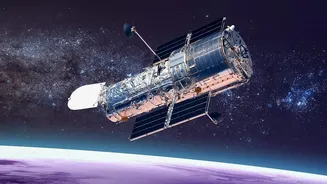
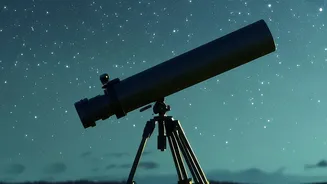
This is where NASA’s PUFFINS mission comes in. The name is an acronym for 'Polarimetry in the Ultraviolet to Find Features in INterStellar dust'. It's an Astrophysics Pioneers mission led by the University of Arizona, designed to precisely measure this polarisation. The mission involves a small satellite, or SmallSat, equipped with a 10-inch telescope that specializes in ultraviolet (UV) spectropolarimetry. From its position in low-Earth orbit, PUFFINS will observe at least 70 stars, analysing how their UV light has been altered by interstellar dust. This focus on UV light is crucial because it allows scientists to study the very smallest dust grains—some smaller than 50 nanometers, or about the size of a virus—which are invisible to many other telescopes.
Mapping the Galaxy's Invisible Architecture
So why go to all this trouble to study dusty, polarised light? The answer lies in what it reveals. Interstellar magnetic fields are a fundamental, yet invisible, component of our galaxy. They are believed to play a critical role in how stars are born, guiding the collapse of giant gas and dust clouds that form stellar nurseries. Magnetic fields contribute to the delicate balance between gravity and pressure that governs star formation. By mapping the polarisation of starlight, PUFFINS can, in turn, map the structure and direction of these magnetic fields across different regions of the galaxy. This provides a three-dimensional picture of the galaxy's 'skeleton', helping scientists understand how stars and planets form and how galaxies evolve over time.
A Pioneer for Future Observatories
Scheduled for launch around 2030, the PUFFINS mission is more than just a standalone project. It is a trailblazer. It will be the first time in nearly three decades that UV spectropolarimetry has been deployed in space, reviving a powerful technique for studying the cosmos. The data collected by PUFFINS will also serve as a crucial bridge to NASA's next-generation flagship mission, the Habitable Worlds Observatory, planned for the 2040s. The insights gained from PUFFINS will help define the scientific goals for future, more powerful instruments, ensuring that our exploration of the universe continues to build on a solid foundation of knowledge. By understanding the tiniest grains of dust, we can piece together the grand story of our cosmic origins.