







The Great IT Budget Rebalancing
For years, IT spending has followed a predictable pattern, with software and services taking the lion's share of budgets. That era is rapidly changing. According to Gartner, worldwide IT spending is projected to climb 14.2% to $6.37 trillion in 2026,
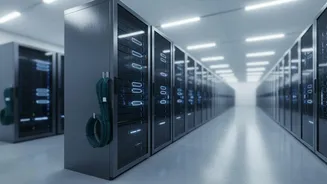
and the primary driver is the race to build out infrastructure capable of handling artificial intelligence. This isn't just about spending more money; it's about spending it differently. Gartner's analysis highlights that technology budgets are being reallocated, with funds moving towards the foundational layers of computing. Segments like data centre systems and Infrastructure-as-a-Service (IaaS) are now seeing the most explosive growth, while areas like consumer devices and some traditional IT services are seeing a smaller piece of the pie. In fact, spending on data centre systems is forecast to jump a staggering 62.5% in 2026 alone, reaching $822 billion.
Why AI Is So Hungry for Hardware
The reason for this shift is simple: modern AI, especially generative AI, is incredibly resource-intensive. Training and running large language models requires vast amounts of parallel processing power, which can only be delivered by specialised hardware like GPUs (Graphics Processing Units). Think of it as the difference between running a word processor and rendering a feature-length animated movie; the latter requires a fundamentally different class of machine. An internet search using an AI service, for example, requires substantially more power than a traditional one. This creates a domino effect. To house and power these new fleets of servers, companies need more data centre space, more sophisticated cooling systems, and high-bandwidth networking to connect everything. As one Gartner analyst described it, building the compute capacity for AI is “the largest infrastructure project ever attempted by humanity.”
The Ripple Effect on India's Tech Scene
This global trend is having a profound impact on India. The nation is no longer just a future potential market but a current, active hub for AI infrastructure. Global hyperscalers and tech giants are making multi-billion dollar commitments to build data centres and AI hubs in the country. This is driven by India's massive user base and growing enterprise adoption. For instance, major IT firms like Infosys and TCS are scaling Microsoft 365 Copilot for hundreds of thousands of employees, signaling that AI demand is now a large-scale workplace reality. Consequently, India's AI infrastructure market is projected to expand rapidly. This creates a massive opportunity for domestic conglomerates that can package land, power, and construction, as well as for the broader ecosystem of IT services and data centre operators.
From Cloud Services to Custom Silicon
The infrastructure buildout is happening on multiple fronts. The most visible is the growth in IaaS, with cloud providers like Amazon Web Services, Microsoft Azure, and Google Cloud seeing a surge in demand. Gartner forecasts IaaS spending to grow by over 29% in 2026 to $287 billion. These hyperscalers are in an arms race, pouring capital into GPU infrastructure to meet customer needs. At the same time, many enterprises are realising that building their own AI models from scratch is incredibly expensive and complex. This is leading to a strategic shift. Instead of large-scale, in-house AI projects, many are now opting for vendor-provided tools and platforms that run on this new infrastructure. The investment is flowing to the companies that provide the picks and shovels of the AI gold rush—the chip makers, the data centre operators, and the cloud giants.
Is Your Business Ready for the Shift?
For business leaders in India, this trend requires a strategic reassessment. The question is no longer just if you should adopt AI, but how you will secure the necessary infrastructure to do so. With technology budgets strained by competing priorities, making the right investment is critical. Relying on public cloud services may be the most efficient path for many, leveraging the massive investments already made by hyperscalers. However, challenges remain, including the high cost of compute and a shortage of skilled AI talent. CIOs are increasingly focused on cost control and demonstrating clear business value from their AI initiatives. This means that while budgets are moving towards infrastructure, the spending is becoming more scrutinised, with a focus on efficiency and measurable outcomes.