






The Goal: A Giant Leap for India
At its heart, the Gaganyaan programme is India's quest to become the fourth nation in the world—after the United States, Russia, and China—to independently launch humans into orbit. The ultimate objective is to send a crew of Indian astronauts, known
as Gaganyatris, into a 400-kilometre orbit for a mission lasting several days, and then bring them safely back to Earth. This monumental undertaking, managed by the Indian Space Research Organisation (ISRO), is not just a single launch but a complex series of missions designed to test every component and procedure to ensure the safety of the crew.
Why Uncrewed Missions Come First
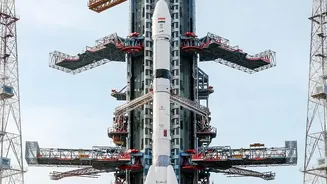
Before putting astronauts on top of a rocket, ISRO must prove that every system works perfectly. This is the purpose of the uncrewed missions. These flights are full-scale dress rehearsals, using the same powerful Human Rated Launch Vehicle (HLVM3) and the same orbital module that will eventually carry the crew. Everything from the launch sequence, orbital manoeuvres, life support systems, and the fiery re-entry through Earth's atmosphere will be tested. According to ISRO, there are three uncrewed orbital missions planned, designated G1, G2, and G3, before the first human spaceflight, or H1, gets the green light. This safety-first approach is non-negotiable when human lives are at stake.
The Latest Uncrewed Launch Schedule
According to the most recent statements from ISRO Chairman V. Narayanan in early September 2026, the first uncrewed Gaganyaan mission, G1, is being targeted for launch before the end of this calendar year. Following a successful satellite launch, the ISRO chief confirmed that work on the mission is progressing “vigorously and systematically.” This initial flight will be followed by two more uncrewed missions, G2 and G3, which are planned for 2026. The successful and timely completion of these three precursor flights is essential for keeping the program on track for its first crewed launch. The first human spaceflight mission, H1, is currently slated for 2027.
Meet Vyommitra: The Humanoid Stand-In
The G1 mission will not be flying empty. Its passenger will be Vyommitra, a sophisticated humanoid robot developed by ISRO. Vyommitra, whose name is derived from the Sanskrit words for 'space' and 'friend', is designed to simulate human functions inside the crew module. This half-humanoid can mimic astronaut activity, operate switches, and monitor the cabin environment. The data collected by Vyommitra on factors like vibration, temperature, and life support performance will be invaluable for engineers, providing critical insights into the conditions that human astronauts will experience.
What Has Been Accomplished?
Getting to this stage has involved years of relentless work. ISRO has already completed the development and ground testing of its powerful HLVM3 rocket's propulsion stages. It has also successfully tested many critical technologies, including the Crew Escape System, which is designed to jettison the crew to safety in an emergency, and the complex parachute system needed for a soft splashdown in the ocean. Mission-critical infrastructure, such as a new Gaganyaan Control Centre and an Astronaut Training Facility in Bengaluru, have also been established. The four selected Gaganyatris have already completed their generic training in Russia and are now undergoing mission-specific training in India.