



A Different Stride, A Different Set of Muscles
When you walk forward, your body is on autopilot, relying on a familiar heel-to-toe motion that primarily uses your hamstrings and glutes to propel you. Walking backward flips this script entirely. The movement becomes a toe-to-heel motion, which forces
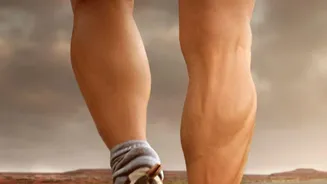
different muscles to take the lead. This reverse action puts a greater emphasis on your quadriceps, the large muscles at the front of your thighs. It also calls on underused muscles in your calves and shins, as well as engaging your core and lower back muscles more actively to maintain stability. By changing the direction, you're essentially cross-training your lower body, preventing muscle overuse and building more balanced strength.
A Friend to Sore Knees
One of the most celebrated benefits of retro walking is its effect on knee health. Forward walking can create significant compressive force on the knee joint, which can aggravate conditions like osteoarthritis. Backward walking, however, reduces this pressure. Because the motion strengthens the quadriceps, it helps build better support around the knee joint. Physical therapists often use backward walking on a treadmill as a rehabilitation tool for knee injuries and for people suffering from chronic knee pain. The movement encourages a fuller extension of the knee and can help improve flexibility in the joint, offering a low-impact way to build strength without adding strain.
Boost Your Balance and Brainpower
Walking backward is as much a mental workout as it is a physical one. Since you can't see where you're going, your body has to rely on other senses to navigate, which improves body awareness and balance. This process requires more focus and coordination, stimulating parts of your brain responsible for attention and spatial awareness. Some studies have even found a link between backward movement and improved short-term memory. Because it’s not an automatic process, retro walking forces you to be more present and mindful, breaking you out of your mental and physical habits. This makes it particularly beneficial for improving stability and potentially reducing the risk of falls, especially in older adults.
More Bang for Your Buck
If you're looking to make your walking workout more efficient, turning around could be the answer. Because your body is working harder and using muscles in an unaccustomed way, your heart rate increases more than it would during a forward walk at the same speed. According to the American College of Sports Medicine, walking backward can burn significantly more calories than walking forward at a brisk pace. This increased energy demand makes it a powerful tool for adding intensity to your routine without needing to run or engage in high-impact exercises. It also helps improve posture, as the motion naturally encourages you to stand up straighter instead of hunching forward.
How to Start Walking Backwards Safely
Getting started with backward walking requires caution. The safest place to begin is on a treadmill, where you can use the handrails for support and control the speed. Start at a very slow pace, around 2 to 2.5 miles per hour, and hold onto the rails until you feel stable. Keep your back straight and look ahead, resisting the urge to twist your body to see behind you. If you don't have a treadmill, find a clear, flat, and obstacle-free space, like an empty hallway or an outdoor track. Start with short five-minute sessions and gradually increase the duration as you become more comfortable. You can incorporate it as a warm-up, a cooldown, or as intervals within your regular walk.