




The Government's Push for 'Talking' Cars
The Ministry of Road Transport and Highways (MoRTH) has set a clear and ambitious goal: to make India's roads significantly safer using technology. In early August 2026, it issued a draft notification proposing that all new vehicles—including two-wheelers,
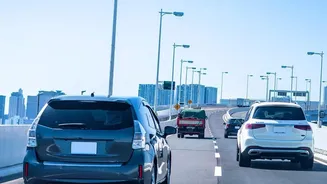
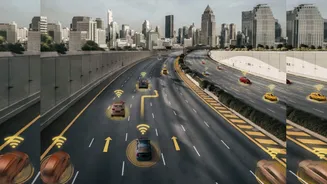
cars, and trucks—be equipped with Vehicle-to-Vehicle (V2V) communication systems by October 1, 2028. This technology allows vehicles to wirelessly broadcast and receive real-time data about their speed, position, and direction. The core idea is to create a digital safety net where cars can 'talk' to each other, preemptively warning drivers of hazards like sudden braking, approaching emergency vehicles, or unsafe lane changes long before a driver could see them. This move is seen as a vital complement to existing safety features and Advanced Driver Assistance Systems (ADAS).
A Major Hurdle Cleared, A Major Decision Made
A key enabler for this V2V push arrived in June 2026, when the Department of Telecommunications delicensed the 5.875-5.925 GHz spectrum band. This decision removed a significant regulatory hurdle, allowing this specific frequency to be used for Intelligent Transportation Systems (ITS) without costly licensing fees. Following this, the government's draft rules introduced Automotive Industry Standard (AIS) 230. This new standard effectively ended a long-standing debate by selecting a specific technology to power India's V2V ecosystem: Cellular V2X, or C-V2X. This technology uses cellular networks to facilitate communication, marking a decisive step away from its main rival, DSRC (Dedicated Short-Range Communications), which is based on a Wi-Fi protocol.
Why C-V2X Won the Day
The debate between C-V2X and DSRC has been a global one. DSRC, the older standard, was purpose-built for vehicle safety communications. However, C-V2X has gained significant momentum, largely because it leverages the existing and rapidly expanding 4G and 5G cellular infrastructure. This offers a clearer path for future upgrades and broader applications beyond just vehicle-to-vehicle safety, including Vehicle-to-Infrastructure (V2I) and Vehicle-to-Pedestrian (V2P) communications. Major economies like China have heavily backed C-V2X, creating a large ecosystem of suppliers and accelerating its development. By codifying C-V2X in the AIS-230 standard, India has aligned itself with this growing global trend, a move praised by tech giants like Qualcomm.
The Road to 2028: A Phased Rollout
The government's plan is not an overnight switch. It outlines a phased implementation to give the industry time to adapt. The first stage begins on October 1, 2027, from which point any vehicle voluntarily equipped with a V2V system must comply with the new AIS-230 standard. The full mandate kicks in one year later, on October 1, 2028, requiring all newly manufactured vehicles across categories L, M, and N (covering nearly everything from scooters to heavy trucks) to have compliant C-V2X systems factory-installed. This timeline is seen as a realistic runway for automakers to integrate, test, and validate the technology across their diverse model lineups.
Challenges Beyond Technology
While the technological standard has been chosen, significant challenges remain. Interoperability is a major one; the system must work flawlessly between a Tata car, a Hero motorcycle, and a BharatBenz truck. Automakers and industry bodies like the Society of Indian Automobile Manufacturers (SIAM) and the Automotive Research Association of India (ARAI) are deeply involved in this process through consultations. Furthermore, cybersecurity and data privacy are paramount. The AIS-230 standard includes requirements for secure communication and vulnerability monitoring to prevent vehicle hacking. Regulations will need to ensure that the data transmitted for safety—like a vehicle's location and speed—cannot be used for unauthorized tracking, balancing road safety with personal privacy.