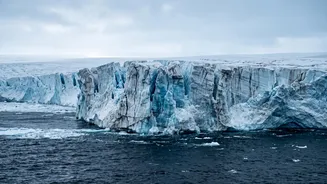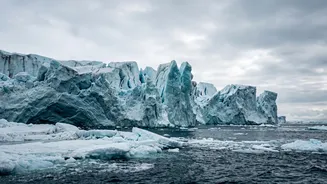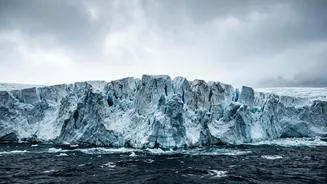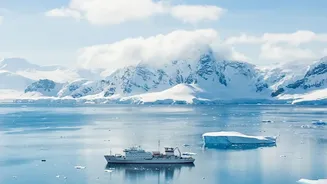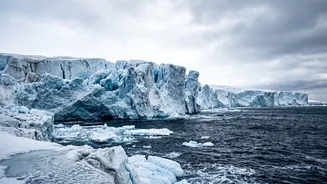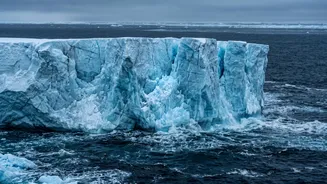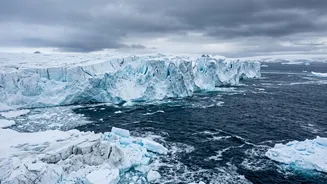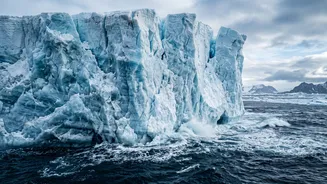






It’s known as the 'Doomsday Glacier' for a reason. New research into Antarctica's vast Thwaites Glacier offers a sobering look at how warm ocean water is seeping into its foundations, drastically altering forecasts for its future stability.
The 'Doomsday Glacier' Explained
Deep in West
Antarctica lies the Thwaites Glacier, an immense river of ice roughly the size of Great Britain. It’s one of the fastest-changing glaciers on the planet, and its fate holds profound consequences for global coastlines. Scientists have nicknamed it the 'Doomsday Glacier' not for sensationalism, but because of its critical role in restraining the entire West Antarctic Ice Sheet. Should Thwaites collapse, it could trigger a wider destabilisation, eventually leading to a catastrophic rise in global sea levels by several metres. For now, the focus is on Thwaites itself, which contains enough ice to raise sea levels by over 65 centimetres, or about two feet.
The Danger Beneath the Ice
The primary threat to Thwaites isn't warmer air; it's warmer water. The glacier terminates in the ocean, with a portion of its leading edge floating on the sea as an ice shelf. This shelf acts like a cork in a bottle, slowing the flow of the glacier behind it. However, warm, dense, and salty ocean currents are increasingly pushing their way beneath this floating ice. This process, known as 'ocean intrusion', melts the glacier from below. It attacks the glacier at its most vulnerable point: the 'grounding line', the area where the glacier loses contact with the bedrock and begins to float. As this point retreats, the glacier accelerates, thinning and weakening its structure.
What the New Research Reveals
For years, scientists have modelled this underwater melting, but the latest research provides a much more detailed and worrying picture. Using advanced radar and sensor technologies, researchers have mapped the complex network of cracks, crevasses, and terraces on the glacier's underbelly. The new findings show that ocean water isn't just smoothly washing over the base; it's actively exploiting these weaknesses. It's pushing deep into fractures, widening them through a combination of melting and water pressure. This creates a far more efficient and aggressive melting process than previous models had accounted for, suggesting that the glacier's decay could be faster and more unpredictable than once thought. The ocean is not just an external force; it has become an internal one, prying the glacier apart from within.
A Vicious Cycle of Collapse
This intrusion creates a dangerous feedback loop. As warm water enlarges a crevasse, it exposes more surface area of the ice to melting. The melting, in turn, can alter the geometry of the cavity, allowing even more warm water to flow in. It’s a self-perpetuating cycle of decay. The new research helps explain observations that have puzzled scientists, such as rapid, localised melting that didn't fit neatly into existing forecasts. By understanding that the ocean is penetrating these deep fractures, the forecasts for Thwaites' retreat become more dire. The 'cork' is not just melting, it's being systematically broken apart, losing its ability to hold back the massive ice sheet behind it.
Why Thwaites Matters to India
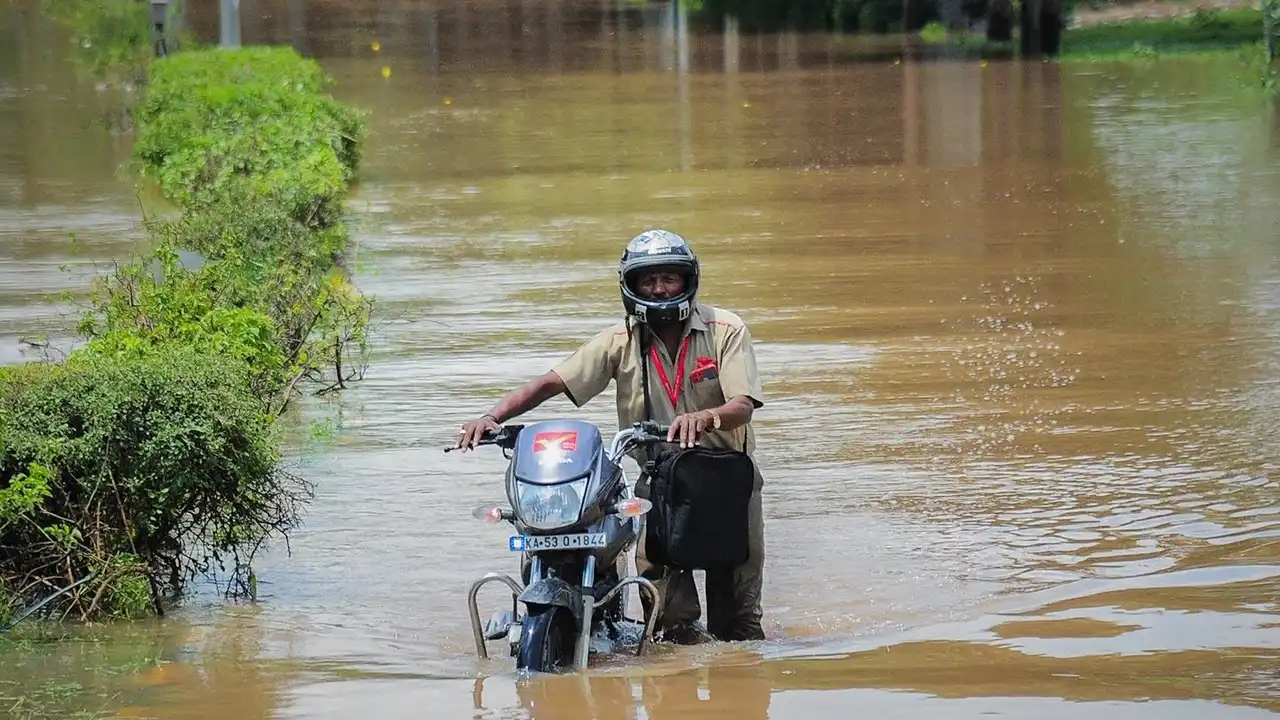
A melting glacier thousands of kilometres away in Antarctica might seem like a distant problem, but its impact is global. A 65 -centimetre sea -level rise from Thwaites alone would be devastating for India 's 7 ,500 -kilometre coastline, which is dotted with low -lying , densely populated cities and agricultural lands. Major metropolitan areas like Mumbai , Kolkata , Chennai , and Surat are already highly vulnerable to coastal flooding and storm surges. The collapse of Thwaites would make extreme weather events far more destructive and could lead to the permanent submergence of coastal communities , displacing millions of people. It would threaten critical infrastructure , contaminate freshwater sources with saltwater , and cripple coastal economies. The fate of Thwaites is directly tied to the future security and prosperity of coastal India.