


An Ocean World Sending Samples
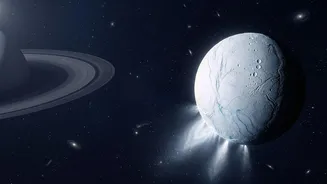
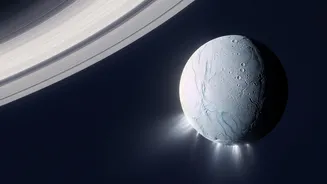
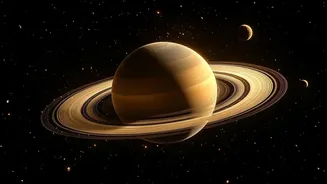
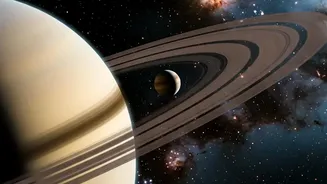
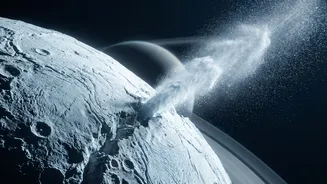
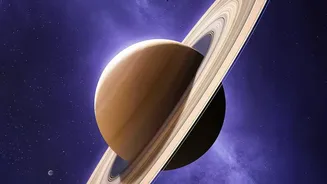
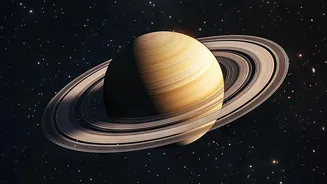
Hundreds of millions of kilometres from Earth, Enceladus orbits Saturn, wrapped in a thick shell of ice. For a long time, it was just another of the ringed planet's many moons. But that changed when NASA's Cassini spacecraft flew by and discovered something
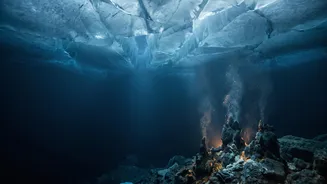
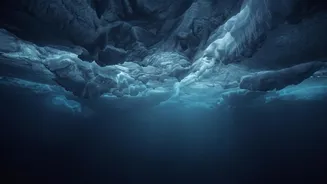
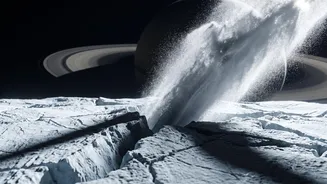
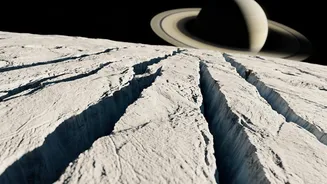
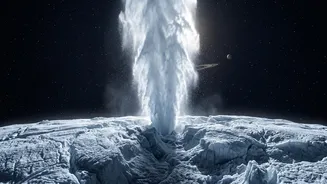
extraordinary: massive plumes of water vapor and ice grains erupting from cracks near the moon's south pole. This was the first sign that beneath its frozen exterior lies a vast, global ocean of liquid saltwater. Further analysis by Cassini revealed this ocean contains organic compounds and salts, and is likely warmed by hydrothermal vents on its rocky seafloor — conditions strikingly similar to those that support life in Earth's own deep oceans, far from the sun's light. This makes Enceladus one of the most promising places in our solar system to search for extraterrestrial life, offering a unique advantage: it continuously ejects samples from its ocean directly into space.
Recreating a Cosmic Geyser
The key question for scientists has been whether delicate molecules that might indicate life — known as biosignatures — could survive this violent journey. If potential evidence is destroyed during the eruption, a mission to sample the plumes would be fruitless. Recent laboratory studies, however, bring fantastic news. One team of researchers simulated the conditions inside the icy fissures of Enceladus where water droplets travel before being blasted into space. They discovered that the droplets likely freeze much more slowly than once thought. This slow freezing process has a crucial side effect: it causes the different substances dissolved in the water, like salts and organic compounds, to separate and become concentrated. These droplets then shatter into smaller ice grains, some of which could contain highly concentrated, relatively pure samples of specific compounds.
Finding a Chemical Needle in a Haystack
This natural separation process is a game-changer for future space missions. Instead of finding a diluted soup of chemicals, a spacecraft could encounter individual ice grains packed with a single, highly concentrated substance. A biosignature, which might be a complex amino acid or lipid, could be present in only a tiny fraction of the plume's ice grains. But thanks to this sorting mechanism, its chemical fingerprint would be strong and clear within that one grain, making it far easier to detect with modern instruments. Frank Postberg, a planetary scientist involved in the research, called it "great news in the search for life," noting that future missions could identify these signatures with technology that is already available. Essentially, Enceladus itself may be doing the hard work of sample preparation, making our job of finding life that much simpler.
What This Means for the Search for Life
These findings don't prove life exists on Enceladus, but they provide a crucial roadmap for how to find it if it does. They confirm that the building blocks of life, like amino acids, can survive being ejected into space and detected by a passing probe. Another recent study complemented this by showing that certain methane-producing microbes from Earth's deep-sea vents can survive and thrive in lab-created conditions mimicking Enceladus's ocean. This bolsters the case that the moon's ocean is indeed habitable. Together, these studies provide a powerful boost of confidence for proposed missions like the Enceladus Orbilander, which aims to orbit the moon and analyze its plumes in unprecedented detail before landing on the surface. The science tells us that if there are signs of life to be found in those plumes, we have a very real chance of finding them.