

A Galaxy of Ghosts
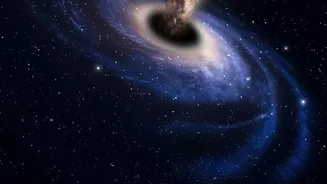
Based on the life cycles of massive stars, scientists predict that our galaxy should be littered with millions of stellar-mass black holes — the collapsed cores of stars that were once many times the mass of our Sun. Over the galaxy's 13-billion-year
history, countless such stars should have exhausted their fuel and imploded, leaving behind these incredibly dense objects. Yet, despite these predictions, the number of confirmed black holes is surprisingly small. As of late 2026, astronomers have managed to identify only a tiny fraction of this estimated population. This enormous gap between theory and observation represents one of the most compelling mysteries in modern astronomy: where are all the missing black holes?
The Challenge of Invisibility
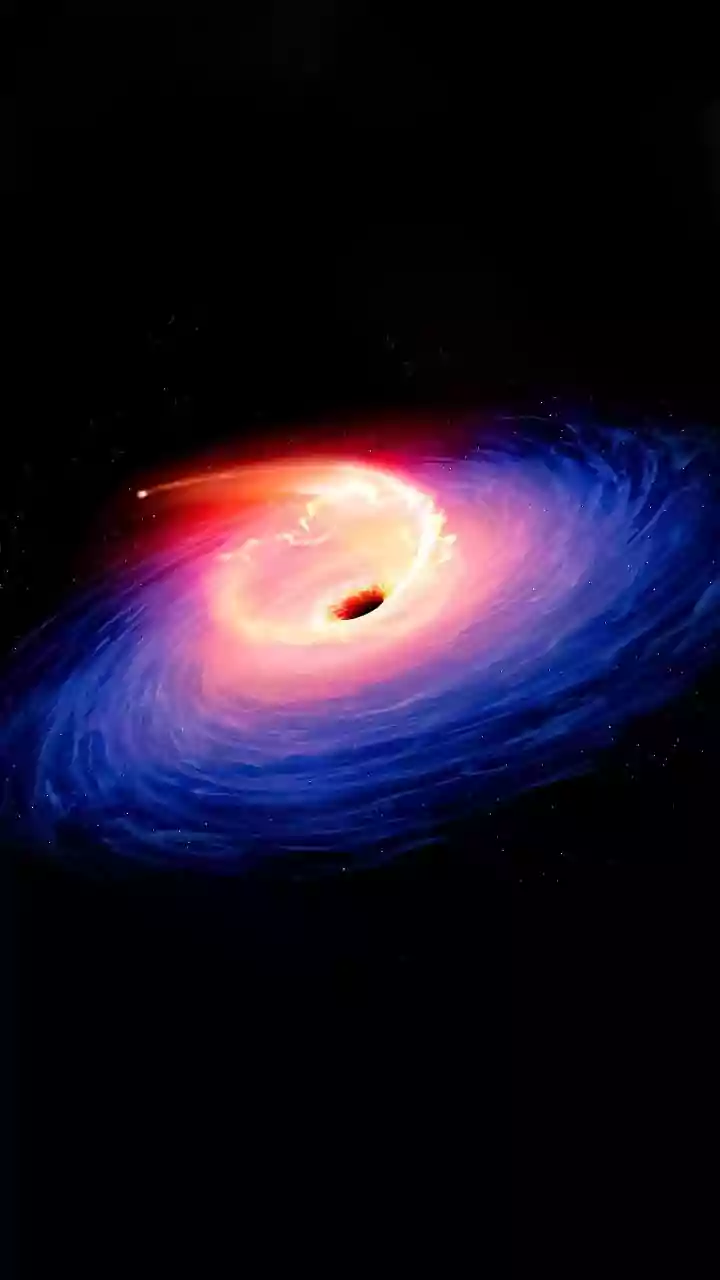
The reason most black holes are so elusive is simple: they are profoundly difficult to see. A black hole itself emits no light. Astronomers typically find them indirectly. When a black hole is close to a companion star, its immense gravity can pull gas from the star into a swirling, superheated disk. This 'accretion disk' gets so hot that it blazes with X-rays, creating a beacon that our telescopes can detect. However, the vast majority of black holes are not actively 'feeding' in this way. They are what astronomers call 'dormant' or 'quiescent' — drifting silently through space alone or orbiting a companion star from too great a distance to steal its material. These quiet giants produce no tell-tale radiation, making them effectively invisible to traditional search methods.
Meet the New Hunters
A new wave of astronomical surveys and dedicated projects is changing the game. The European Space Agency's Gaia mission, a spacecraft meticulously mapping the positions and motions of billions of stars, has become an unexpected black hole hunting tool. By tracking the subtle 'wobble' of a star, Gaia can reveal if it's being tugged by the gravity of an unseen, massive companion. This astrometric method has already led to the discovery of several dormant black holes, including Gaia BH1, the closest known black hole to Earth, and Gaia BH3, the most massive stellar black hole found in our galaxy so far. Simultaneously, projects like the Vera C. Rubin Observatory in Chile are beginning decade-long surveys to create a 'movie' of the southern sky. Its massive camera will capture changes in stellar brightness night after night, searching for a phenomenon called gravitational microlensing. This occurs when a black hole passes in front of a more distant star, its gravity briefly magnifying the star's light. These fleeting events can betray the presence of an otherwise hidden black hole.
Anyone Can Join the Search
The hunt is not just for professional astronomers. A citizen science project called 'Black Hole Hunters' invites the public to help sift through vast amounts of data gathered by NASA's TESS telescope. Volunteers learn to spot the characteristic brightening of a star that could indicate a microlensing event caused by an orbiting black hole. With millions of stars to monitor, the human eye is often better at spotting these unique patterns than automated algorithms alone. By flagging potential candidates, volunteers help professional astronomers know where to point more powerful telescopes for follow-up observations, dramatically speeding up the search and making the most of precious telescope time.
Why Finding Them Matters
Each new black hole discovery is more than just a cosmic trophy. Finding and cataloging this missing population will provide crucial data for understanding how massive stars live and die. It will help refine our models of how binary star systems evolve and how galaxies themselves are structured. The mass and distribution of these black holes can offer clues about everything from the history of star formation in the Milky Way to the physics of supernova explosions. By finally taking a proper census of our galaxy's dark inhabitants, we are piecing together a more complete and accurate picture of our cosmic home, revealing the unseen architecture that has shaped the galaxy we see today.