







A Dramatic Launch into History
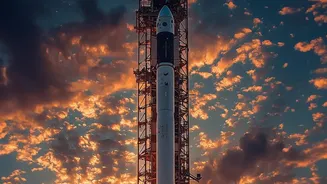
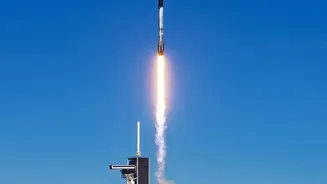
On September 28, 2026, the world’s largest and most powerful rocket, standing 124 metres tall, thundered to life at SpaceX’s Starbase facility in Texas. This was Starship’s 14th test flight, but its first attempt to achieve a full orbit, a feat that has
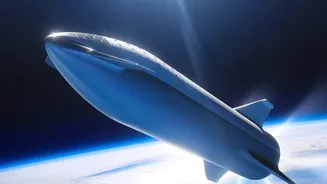
been the central goal of its development. The launch was not without drama; one of the Starship upper stage's six powerful Raptor engines shut down prematurely during the ascent. For several tense minutes, mission control deliberated whether to proceed. Ultimately, the team gave the 'go' for the orbital insertion burn, and with a single engine firing, Starship pushed into a stable orbit 171 miles above Earth, travelling at over 17,400 miles per hour.
Why Reaching Orbit Is Everything
Previous Starship flights were impressive, but they followed suborbital trajectories. This meant they went up and came back down without achieving the velocity needed to continuously circle the planet. Reaching orbit is the true test for any launch system designed for deep space. It requires accelerating to a mind-bending speed where the vehicle is essentially falling around the Earth, with the planet’s surface curving away beneath it at the same rate. Achieving this proves the vehicle can operate as a true spacecraft, not just a high-altitude projectile. For Starship, this success transitions it from a test article into a functional delivery system, capable of carrying payloads and, eventually, people anywhere in Earth orbit and beyond.
A Successful, If Shortened, Mission
While the original mission plan called for a 10-hour flight with six orbits, SpaceX opted to shorten the mission to about three hours out of an abundance of caution due to the engine issue. Despite the change, the flight was packed with achievements. The Super Heavy booster successfully separated and performed a controlled splashdown in the Gulf of Mexico. More importantly, while in orbit, Starship successfully opened its payload bay doors and deployed 26 operational, next-generation Starlink V3 satellites, marking the first time it has delivered a functional payload. The flight concluded with Starship performing its first-ever deorbit burn and splashing down in the Pacific Ocean north of Hawaii.
The Linchpin for Mars and the Moon
This orbital milestone is about much more than just launching satellites. It is the critical enabler for SpaceX's ambitious long-term goals. The entire Starship system is designed to be fully and rapidly reusable, a concept that promises to dramatically lower the cost of accessing space. CEO Elon Musk envisions Starship as the vehicle that will make humanity a multi-planetary species by establishing a self-sustaining city on Mars. To get there, Starships will need to be refueled in orbit by tanker variants of the same spacecraft. This first orbital flight is a foundational step. Furthermore, NASA has selected Starship as a key component of its Artemis program, intending to use a modified version to land astronauts on the moon as early as 2028.
What Comes Next After This Milestone?
With orbit achieved, SpaceX will now focus on the next set of monumental challenges. The immediate goal is mastering full reusability. While the booster has been recovered before, the next major step will be to fly both the Super Heavy booster and the Starship upper stage back to the launch pad and catch them with the giant mechanical arms of the launch tower. This has not yet been attempted with the ship itself. Following that, demonstrating in-space propellant transfer between two Starship vehicles is a critical technology needed for all missions beyond low-Earth orbit, including the Artemis lunar landings. This successful, albeit imperfect, flight provides a trove of invaluable data to push toward those next goals, moving from a successful test to routine operations.