






The Empty Middle of Air Travel
In the world of aviation, a persistent gap exists for journeys that are too long for a car but too short for a major airline hub-and-spoke model to be efficient. For distances between 100 and 500 kilometres, travellers are often left with imperfect options.
A private helicopter charter is prohibitively expensive for most, while flying on a conventional airline often means indirect routes, long layovers, and the hassle of large airports. This creates an 'empty middle' in the market. Airlines have historically struggled to serve these shorter routes profitably with their larger 50-plus seat regional jets, as operating costs don't scale down easily and filling enough seats is a constant challenge. The result is that many smaller towns and cities remain underserved or entirely cut off from the national aviation network, a problem that hampers both business and tourism.
Enter the 19-Seat Solution
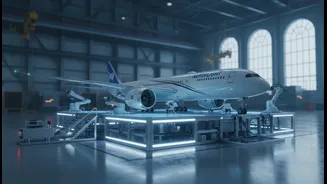
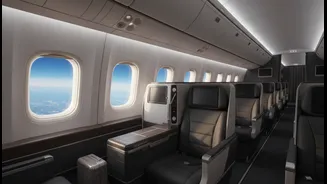
A new generation of 19-seat aircraft is being developed specifically to address this market failure. These planes are not just scaled-down versions of larger jets; they are purpose-built for the unique economics of short-haul regional routes. Their smaller size means they can operate from shorter runways, opening up access to thousands of underutilised airstrips in smaller communities. By matching capacity more closely to demand, these aircraft can offer more frequent services, making air travel a more viable and convenient option. For decades, the 19-seat category was a staple of regional aviation before being phased out in favour of larger jets. Now, technological advancements are sparking a major comeback, positioning this format as a key to unlocking the future of regional connectivity.
The Magic Number: Why 19 Seats?
The choice of 19 seats is not arbitrary; it's a strategic decision rooted in aviation regulations and economics. In many jurisdictions, including under the US Federal Aviation Administration's (FAA) rules, aircraft with 19 or fewer passenger seats fall under a simpler and less costly certification category (Part 23) compared to larger 'transport category' aircraft. This significantly reduces the development and manufacturing costs for planemakers. Furthermore, these aircraft can typically be operated by a single pilot and do not require a flight attendant, which drastically lowers operational expenses for airlines. This regulatory 'sweet spot' allows carriers to operate routes with lower passenger volumes sustainably, a feat that is often impossible with larger aircraft that have higher trip costs.
Technology Paving the Way
The revival of the 19-seater is being supercharged by cutting-edge technology. Many new designs, like the ERA from French manufacturer Aura Aero, are incorporating hybrid-electric propulsion systems. These systems combine traditional fuel-burning turbogenerators with electric motors, promising to reduce carbon emissions by up to 80% compared to conventional aircraft in the same class. This not only addresses environmental concerns but also offers substantial fuel savings, further improving the economic viability of regional routes. Companies are aiming for entry into service around 2030, with hundreds of pre-orders already placed by airlines globally, signalling strong industry confidence in this emerging segment.
A New Lifeline for Regional India
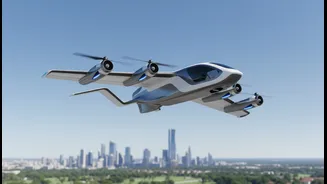
For India, this global trend holds immense promise. The government's UDAN (Ude Desh ka Aam Naagrik) scheme, designed to enhance regional connectivity and make air travel affordable, is a perfect match for the capabilities of 19-seat aircraft. The latest phase of the scheme, UDAN 2.0, specifically aims to boost small aircraft manufacturing and connect more Tier-2 and Tier-3 cities. These new, efficient planes could provide the crucial link needed to make many currently unviable UDAN routes profitable and sustainable. By connecting smaller towns with economic centres, they can boost local economies, support tourism, and provide better access to healthcare and education. This move towards Advanced Air Mobility (AAM) is seen as a key part of India's vision for a more integrated and accessible national infrastructure.