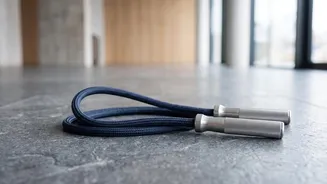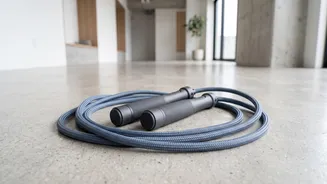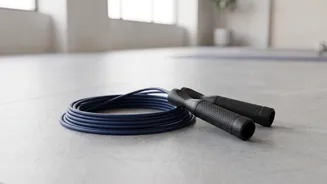






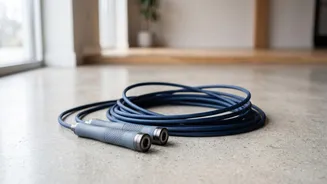
In the world of simple, effective cardio, two titans stand out: running and jumping rope. Both promise to boost heart health and burn calories, but what if your goal is sharper coordination? Let's untangle which is best for beginners.
Understanding Coordination In Fitness
Before we dive in,
what do we even mean by 'coordination'? In fitness, it's your brain's ability to orchestrate a symphony of movements. It’s the seamless communication between your mind and muscles that allows you to move with precision, rhythm, and balance. Think of it as your body's internal timing system. Good coordination makes movements more efficient, reduces the risk of injury, and is the foundation for almost every athletic skill. Both running and jumping rope challenge this system, but in very different ways.
Jump Rope: A Crash Course in Rhythm
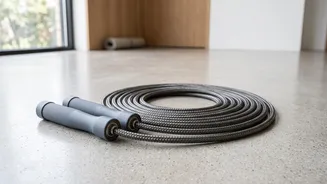
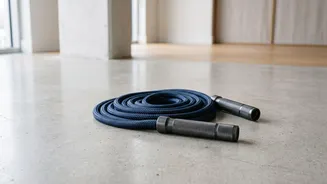
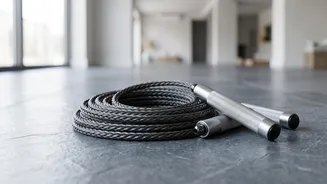
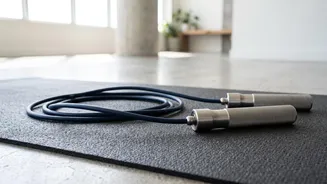
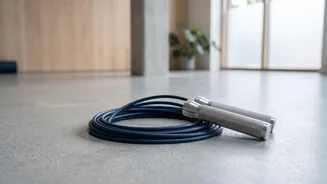
Jumping rope is coordination boot camp. From the very first swing, it demands that your hands, wrists, eyes, and feet all work together in perfect synchrony. Your hands must turn the rope at a consistent speed, while your feet must time their jump to clear it by a hair's breadth. This creates a powerful feedback loop: if your timing is off, you trip. This immediate consequence is what makes it such a potent tool for training your neuromuscular system. For a beginner, this is where the learning curve feels steepest. The first few sessions can be a frustrating cycle of trip, reset, and repeat. It’s a skill that must be learned from scratch. However, this initial hurdle is also its greatest strength. By forcing you to master rhythm and timing, jumping rope builds a specific, high-level form of coordination very quickly once you get the hang of it. Experts suggest that using a slightly heavier rope can actually make it easier for beginners, as it provides more feedback, helping you feel where the rope is as it rotates.
Running: A Natural but Complex Skill
Running, on the other hand, feels more intuitive. Most of us can break into a jog without any instruction, making its initial learning curve much flatter than a jump rope's. But don't mistake accessibility for simplicity. Efficient, injury-free running is a deeply complex act of coordination. Every stride is a delicate balancing act on one leg, requiring stability from your core, a counter-balancing arm swing, and proper foot placement. Improving as a runner means refining this 'intermuscular coordination' to create a smooth, economical stride that conserves energy and reduces impact. The learning curve for running is therefore more gradual and subtle. A beginner can run for months without ever consciously thinking about their form, but they may hit a plateau or develop injuries related to poor mechanics like shin splints or knee pain. The coordination gains from running are less about learning a new rhythm and more about optimizing a natural movement pattern over a long period.
The Verdict for Beginners
So, which is better for a beginner focused on coordination? It depends on your goal and your patience. If you want to directly and intensely train your rhythm, timing, and the connection between your upper and lower body, jumping rope is the more direct tool. The learning curve is sharp and upfront; you will struggle initially, but the coordination gains are specific and rapid once you find your rhythm. It isolates and hones the skill of synchronisation. If you prefer an activity that feels more natural to start, running is your answer. It builds a more foundational, whole-body coordination and balance over time, almost as a side effect of becoming a better runner. The learning curve is about longterm refinement rather than overcoming an initial skill barrier. While easier to start, mastering the coordination of good running form can take years.