





The Roar from Sriharikota
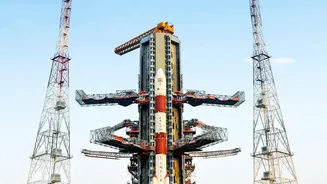
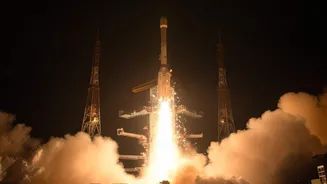
On September 4, 2026, the Satish Dhawan Space Centre witnessed another milestone in India's space journey. The Geosynchronous Satellite Launch Vehicle (GSLV) F17 successfully lifted off, carrying an advanced Earth-Observation Satellite (EOS) into orbit.
The launch, which took place from India's primary spaceport on the coast of Andhra Pradesh, marked a significant achievement for the Indian Space Research Organisation (ISRO). For about 18 minutes, the powerful rocket ascended, precisely executing its complex series of manoeuvres before successfully deploying its precious cargo into a Geosynchronous Transfer Orbit (GTO). This orbit is a crucial stepping stone for the satellite to reach its final destination high above the Earth.
GSLV: The Three-Stage Powerhouse
The GSLV is a formidable three-stage rocket designed to carry heavier payloads than its polar-orbit counterpart, the PSLV. Its first stage consists of a solid-fuel core accompanied by four liquid-fueled strap-on boosters. The second stage is also powered by a reliable liquid-fueled engine. However, it is the third and final stage that represents a pinnacle of Indian engineering: the indigenous cryogenic engine. This stage uses super-cooled liquid hydrogen and liquid oxygen as propellants. Mastering cryogenic technology, which provides immense thrust and efficiency, was a long-sought goal for ISRO. The success of this engine allows India to launch satellites weighing over two tonnes into high-energy orbits, reducing dependence on foreign launch providers.
An Eye That Never Blinks
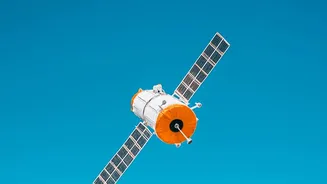
The passenger aboard the GSLV-F17 was a sophisticated Earth-Observation Satellite. Unlike satellites in Low Earth Orbit that pass over a location periodically, this satellite is destined for a geosynchronous orbit. This means it will orbit at the same speed as the Earth's rotation, allowing it to seemingly hover over the Indian subcontinent. This constant watch provides a game-changing capability. It enables near-real-time monitoring of a large geographical area, a massive leap for applications requiring persistent surveillance. India now has one of the largest constellations of remote sensing satellites in operation, used for a huge variety of national needs.
What It Means for India
The data from Earth-Observation satellites is woven into the fabric of modern governance and daily life in India. These eyes in the sky are crucial for agricultural planning, helping to forecast crop yields and manage water resources. They are indispensable for disaster management, providing vital, real-time imagery of developing cyclones, spreading floods, and forest fires. Furthermore, these satellites contribute to urban planning, monitoring environmental changes, mineral prospecting, and bolstering national security by providing crucial data for border surveillance. The continuous observation capability of a geosynchronous satellite significantly enhances all these applications, offering a more dynamic and responsive picture of the nation's land and seas.