


More Than a Red Desert
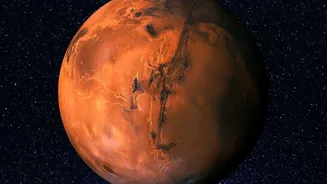
For decades, Mars has been typecast as a geologically sleepy planet with a simple, frigid climate. It’s thin atmosphere, about 95% carbon dioxide, can’t retain heat like Earth’s, leading to extreme temperature swings. Data shows surface temperatures can vary
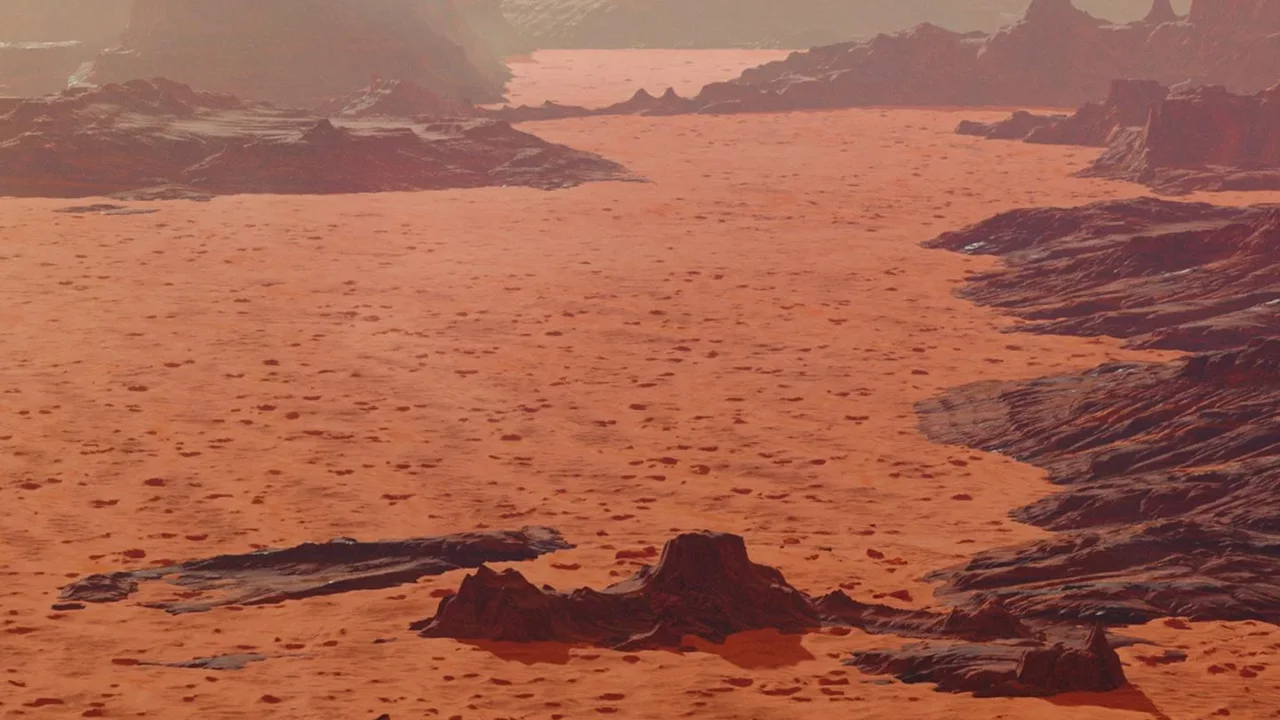
wildly from around 22 degrees Celsius down to a chilling -123 degrees Celsius. While it was clear that Mars once had a warmer, wetter past, with evidence of ancient rivers and lakes, the modern climate was seen as largely monotonous. However, thanks to long-term observation from orbiters like NASA's Mars Reconnaissance Orbiter (MRO), a new picture is emerging. Mars isn't just a planet with a past; it has a dynamic present, with ongoing climate shifts that are far more pronounced than those on Earth.
The Wobble That Changes Everything
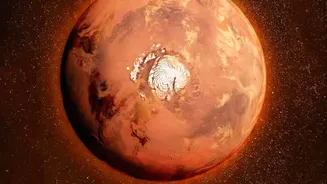
The secret to Mars’ dramatic climate swings lies in its axial tilt, or obliquity. Like Earth, Mars tilts on its axis, which causes seasons. But unlike Earth, which is stabilized by its large moon, Mars is missing a gravitational anchor. Its two small moons, Phobos and Deimos, are not massive enough to prevent the planet's axis from wobbling dramatically over long periods. While Earth’s tilt varies subtly between 22 and 24.5 degrees, Mars’ tilt can swing wildly from as low as 10 degrees to as high as 60 degrees. These cycles, occurring over hundreds of thousands of years, are the primary drivers of Martian ice ages. During periods of high tilt, the poles receive more direct sunlight, causing the polar ice caps to sublimate—turning directly from solid ice into gas. This process releases vast amounts of water vapor and carbon dioxide into the atmosphere, making it thicker and warmer.
Ice Ages in Reverse
A Martian ice age is strangely the opposite of one on Earth. Instead of poles getting colder and ice sheets expanding towards the equator, on Mars the poles get warmer. The water vapor and snow then migrate from the poles and accumulate as ice and frost at mid-latitudes, equivalent to regions like Egypt or Houston on Earth. Orbiting spacecraft have found compelling evidence for this process. Ground-penetrating radar from the MRO has discovered vast sheets of buried ice far from the poles, remnants of a relatively recent ice age. Some studies suggest Mars may just be emerging from such an ice age that occurred between 400,000 and 2.1 million years ago. Analysis of glacier-like features and their boulder deposits suggest Mars has undergone between six and 20 distinct ice ages in the last few hundred million years.
A Story Written in Water and Rock
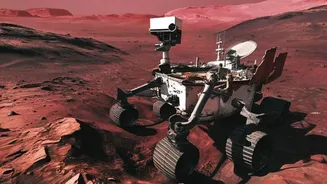
Recent discoveries from NASA’s rovers are adding even more layers to this complex history. In Jezero Crater, the Perseverance rover has found evidence that rocks were altered by water on at least three separate occasions, including one period involving hot groundwater. This indicates a dynamic history of not just surface water, but subsurface hydrothermal systems, which are key environments in the search for signs of past life. This interaction between surface water, groundwater, and heated fluids paints a picture of a world that was far from static. These findings suggest that habitable conditions on Mars may not have been confined to short-lived surface lakes but could have existed in long-duration systems underground. Studying how Mars' climate evolved from a potentially habitable world to the cold, dry planet we see today is a key focus of current and future missions.