








What is a High Plank with a Knee Drive?
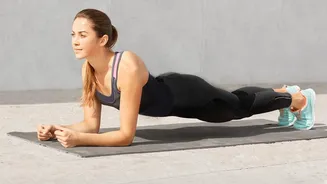
Imagine the top of a push-up position—that’s your high plank. Your body forms a straight, rigid line from your head to your heels, supported by your hands and toes. Now, add the 'knee drive': this is a controlled but powerful movement where you pull one
knee in towards your chest and then return it to the starting position. By combining the static strength of a plank with the dynamic motion of a knee drive, you create a compound exercise that challenges your stability, strength, and cardiovascular system all at once. This isn't just a core move; it's a full-body exercise that engages your shoulders, hips, and legs.
Your Step-by-Step Guide to Proper Form
Executing this move correctly is crucial for maximizing benefits and preventing injury. Start slow to master the form before increasing your speed. 1. Start in a High Plank: Place your hands directly under your shoulders, fingers spread for stability. Extend your legs straight behind you, with your feet hip-width apart. Your body should form a straight, neutral line—no sagging hips or raised buttocks. 2. Engage Your Core: Before you move, brace your abdominal muscles as if preparing for a punch. This keeps your hips stable and protects your lower back. 3. Drive the Knee: Exhale as you smoothly pull your right knee towards your chest. Keep your hips as level as possible; avoid twisting or lifting them. The movement should come from your core and hip flexors. 4. Return to Start: Inhale as you extend your right leg back to the initial high plank position with control. 5. Alternate Sides: Repeat the movement with your left knee, driving it towards your chest. Continue alternating legs at a steady, controlled pace.
The Calorie-Burning Advantage
A standard plank is an isometric exercise, meaning the muscles are held under tension without movement. It burns roughly 2-5 calories per minute, depending on your body weight. However, when you add the dynamic knee drive, you significantly increase the metabolic demand. This is because you are moving more and engaging more muscle groups, which elevates your heart rate and turns a static hold into a cardiovascular challenge. While it won't burn as many calories as a high-intensity run, incorporating knee drives turns your plank into a more efficient use of your workout time, contributing more to your overall calorie expenditure than a static plank alone. The continuous movement requires more energy, making it a smarter choice for those looking to get more out of every minute.
Targeting the Lower Abdominals
Many people struggle to feel their lower abs working during traditional crunches. The plank with a knee drive excels here. Holding the plank position itself engages the entire rectus abdominis (the 'six-pack' muscle) and the deep transverse abdominis to stabilize your spine. When you drive your knee towards your chest, you actively contract the lower portion of the rectus abdominis and the obliques to pull your pelvis and leg forward. This conscious pulling motion is key to strengthening the lower abdominal region. It's important to remember that 'toning' is a two-part process: building muscle and reducing the layer of body fat above it. This exercise effectively builds that underlying muscle, contributing to a firmer, more defined core as part of a comprehensive fitness and nutrition plan.
Common Mistakes to Avoid
To get the full benefits, watch out for these common form errors: Dropping or Piking the Hips: A very common mistake is letting the hips sag towards the floor, which strains the lower back, or lifting them too high in the air, which disengages the core. Focus on maintaining a straight line from head to heels. Moving Too Fast: Performing the knee drives too quickly can lead to sloppy form and reduces muscle engagement. Focus on a controlled, deliberate pace to maximize core activation. Shoulders Shifting: Ensure your hands stay directly under your shoulders throughout the exercise. Shifting your weight too far forward or back can strain your shoulder joints. Holding Your Breath: Remember to breathe. A common pattern is to inhale as you return to the plank and exhale as you drive your knee to your chest.
How to Incorporate It Into Your Routine
Plank knee drives are versatile and can be easily added to your existing workouts. For beginners, start with a slower tempo, focusing entirely on form. You can aim for 3 sets of 10-12 repetitions per leg. As you get stronger, you can increase the pace to make it more of a cardio challenge or add more sets. This exercise works well as part of a core-focused circuit, in a high-intensity interval training (HIIT) session, or as a dynamic warm-up to activate your core before a larger workout.