







Why Balance Is More Than Strong Feet
Good balance feels effortless, but it’s actually a complex skill managed by your brain. It relies on a team effort between three main systems: your visual system (what you see), your vestibular system in the inner ear (which detects motion and head position),
and your proprioceptive system (your body's awareness of itself in space). When these systems work together, you can walk on uneven ground or recover from a stumble without thinking twice. While your feet are the foundation, providing the initial contact and feedback from the ground, they don't work in isolation. A truly effective balance routine acknowledges this by training all the interconnected parts that keep you steady.
The Foundation: Foot and Ankle Strength
Your feet are packed with over 100 muscles, tendons, and ligaments, plus hundreds of sensory receptors that constantly send information to your brain. Strengthening them is the logical first step. Strong, mobile feet create a stable base, allowing for quick adjustments to shifting surfaces. Simple exercises can make a huge difference. Try 'toe yoga'—lifting and spreading your toes—or grabbing a small towel with your toes. Heel and calf raises build power for propulsion and stability. Even just standing barefoot and feeling the floor can stimulate those crucial nerve endings, improving the conversation between your feet and your brain.
The Powerhouse: Your Core
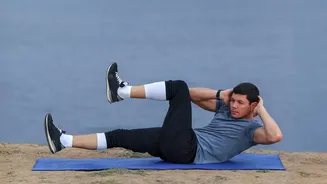
Think of your core—the muscles in your abdomen, back, and hips—as the central link in your body's stability chain. A strong core keeps your spine aligned and acts as a sturdy anchor, allowing your limbs to move freely and with control. When your core is weak, your body has to work harder to stay upright, making you less stable. Exercises like planks, bird-dog (extending an opposite arm and leg while on all fours), and bridges are excellent for building core stability that directly translates to better balance in everyday movements. These exercises teach your midsection to brace and support you, whether you're standing still or in motion.
The Brain-Body Connection: Proprioception
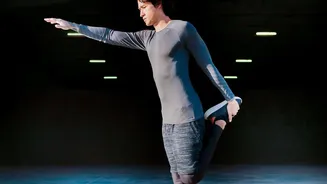
Proprioception is your 'sixth sense'—the subconscious ability to know where your body parts are without looking. This sense is vital for balance, as it allows your brain to make instant, automatic adjustments. Ankle proprioception is particularly important, as it helps your body react to changes in terrain. You can train this system by challenging it. The simplest exercise is standing on one leg. To make it harder, try it with your eyes closed, which forces your body to rely on sensory feedback from your joints and muscles instead of your vision. Walking heel-to-toe in a straight line is another classic proprioception drill that improves coordination and control.
Putting It All Together: Dynamic Movement
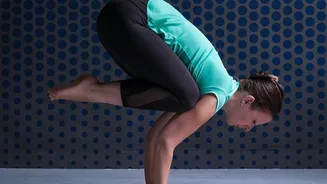
Once you've strengthened the individual components, the final step is to integrate them into dynamic, real-world movements. This is where your balance is truly tested and honed. Activities like Tai Chi and yoga are fantastic because they involve slow, controlled shifts in weight, challenging both your strength and proprioception simultaneously. But you don't need a formal class. Simply practicing standing up from a chair without using your hands, walking sideways, or doing slow, controlled lunges helps your body learn to maintain stability during movement. The goal is to make your balance reactive, strong, and reliable for any activity life throws your way.