

The Great Thaw Begins
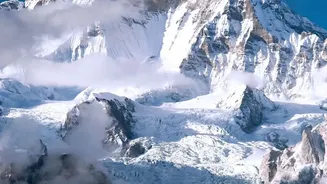
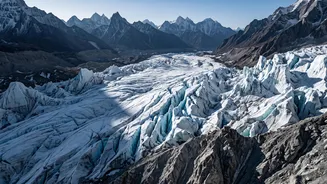
The foundation of the problem lies in accelerating glacial melt. As global temperatures rise, the vast stores of ice in the Himalayas are melting faster than ever before. Studies indicate that glaciers in the region have melted 65% faster in the last
decade compared to the previous one. This isn't just a slow trickle; it's a fundamental change to the cryosphere—the planet's frozen regions. The melt does more than just shrink glaciers; it creates vast quantities of water that need to go somewhere, setting the stage for a chain reaction of hazards. This meltwater is the primary ingredient in a series of escalating risks that threaten communities downstream.
Unstable Lakes in the Sky
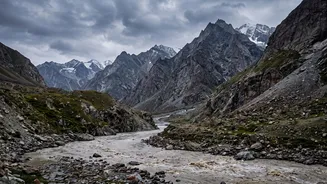
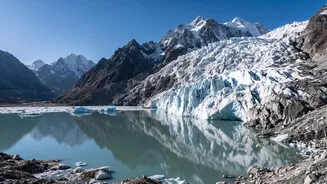
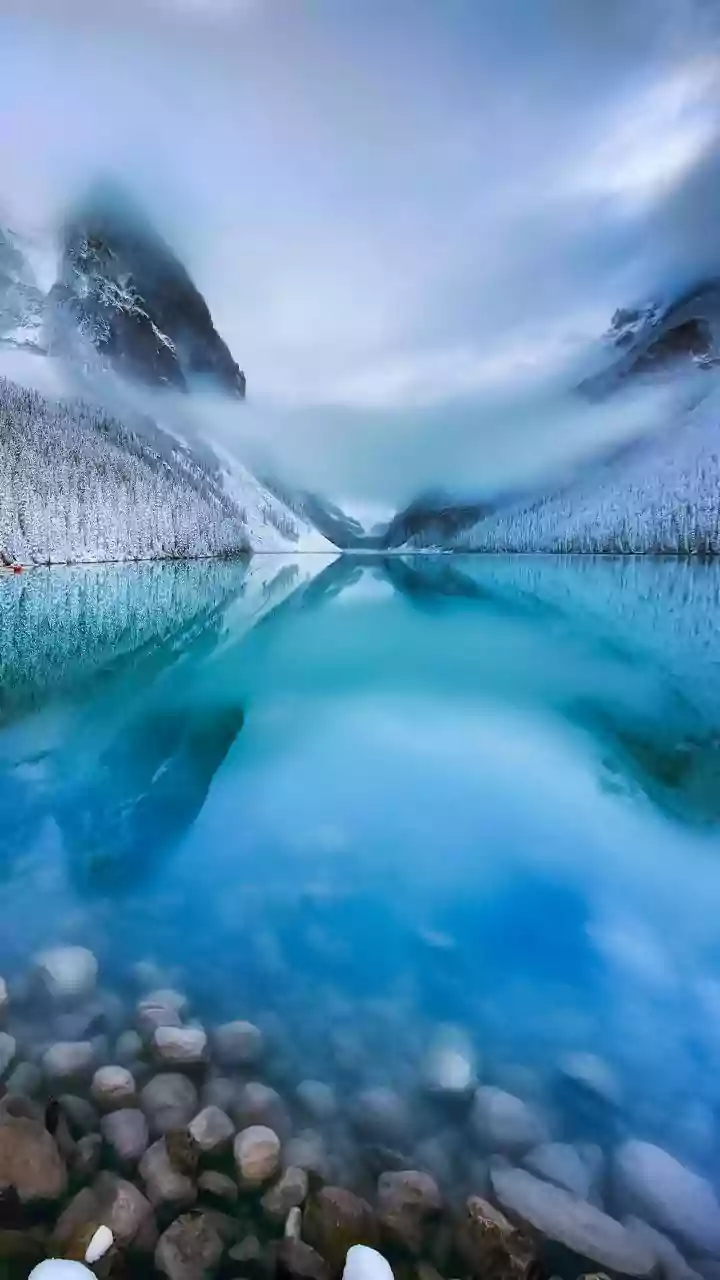
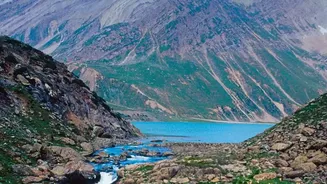
As glaciers retreat, they leave behind depressions that fill with meltwater, forming new and expanding glacial lakes. Many of these lakes are dammed by moraines—unstable walls of loose rock, soil, and ice left behind by the glacier. These natural dams are inherently weak and can fail with little warning. A large chunk of ice falling into the lake, a landslide, heavy rainfall, or even an earthquake can trigger a breach. The result is a Glacial Lake Outburst Flood (GLOF), a sudden and catastrophic release of enormous volumes of water, ice, and debris that surges down narrow mountain valleys. The frequency of GLOFs in the Hindu Kush Himalaya has increased roughly fivefold since 1950, posing a growing threat to villages, roads, and crucial infrastructure like hydropower dams.
The Ground Is No Longer Solid
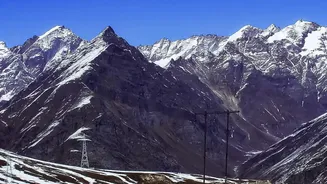
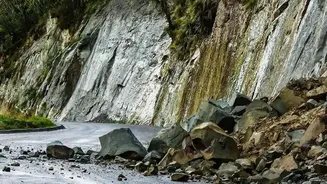
A less visible but equally dangerous process is the thawing of permafrost. Permafrost is ground that has been frozen for two or more consecutive years, acting like a cement that binds soil and rock together on steep mountain slopes. As temperatures climb, this frozen glue weakens and thaws. This loss of stability can trigger devastating landslides, rockfalls, and debris flows on slopes that were once solid. Research in the western Himalayas shows that this destabilisation can create a cascade of disasters, where a landslide could spill into a glacial lake, triggering a GLOF. This 'tsunami of dirt' moves with incredible speed and destructive power, fundamentally altering the landscape and posing an immediate threat to anything in its path.
A Cascade of Compounding Risks
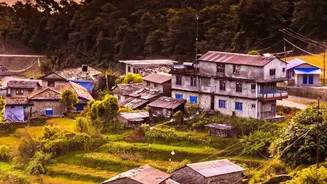
These events rarely happen in isolation. The Himalayas are a complex system where one hazard can trigger another, creating a cascading disaster. An ice avalanche can fall into a glacial lake, causing a GLOF that rushes downstream, picking up sediment and boulders along the way. This torrent can then overwhelm river systems, destroy bridges, and inundate towns. The increasing concentration of infrastructure and settlements in river valleys, where construction is easier, has created a dangerous convergence: as the mountains above become more unstable, more people and assets are gathering in the direct path of potential floods and landslides. This dynamic dramatically increases the human and economic cost of each event.
The Human Cost and Path Forward
The consequences of these changes are borne by the millions who live in the Himalayan region and the billions downstream who depend on its rivers. Disasters destroy homes, farms, and critical infrastructure like roads and hydropower plants, sometimes isolating entire communities for weeks. The floodwaters from a GLOF can travel with terrifying speed, leaving mere minutes for evacuation. Addressing this growing threat requires a multi-pronged approach. Experts are calling for improved early warning systems that use satellite data, seismic sensors, and on-the-ground monitoring to detect hazards before they strike. Because many Himalayan rivers cross national boundaries, greater cross-border cooperation between countries like India, Nepal, and China to share data is essential for effective disaster management. Ultimately, building a more resilient future in the Himalayas means investing in monitoring, strengthening infrastructure, and fostering international collaboration to manage a shared and growing risk.