



What Are Tserkvas?
A 'tserkva' is the local name for a church built by Eastern Orthodox and Greek Catholic communities. The group recognized by UNESCO consists of 16 exquisite wooden churches—eight in Poland and eight in Ukraine—constructed between the 16th and 19th centuries.
These are not forgotten relics; most remain active places of worship, central to the communities that have maintained them for generations. They were built by distinct ethnic groups, including the Boyko, Lemko, and Hutsul people, whose identities are woven into the very fabric of the buildings. This collection stands as a remarkable testament to a building tradition that has largely vanished elsewhere in the world.
An Architecture Born from Wood
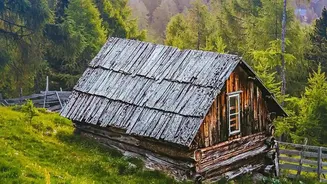
The genius of the tserkvas lies in their construction. Master carpenters used a horizontal log technique, skillfully joining massive timbers with complex corner joints, often without using a single metal nail. The builders traditionally preferred high-quality timber like spruce, fir, and pine, laying the logs on stone foundations to protect them from the damp ground. The structures are typically tripartite, meaning they have three main sections: a narthex (entrance), a central nave, and a sanctuary, each topped with its own distinct dome or pyramidal roof. These multi-layered roofs, covered in wooden shingles, create a stunning, cascading silhouette that echoes the surrounding mountain peaks.
A Fusion of Faith and Folk Art
The design of each tserkva is a beautiful dialogue between the formal requirements of Orthodox liturgy and the folk traditions of the mountain communities. The overall layout follows Orthodox principles, with the altar facing east, but the execution is purely local. Inside, many churches feature an 'iconostasis'—a screen of religious icons that separates the sanctuary from the nave—along with vibrant polychrome paintings that cover the walls and ceilings. These elements, combined with wooden bell towers, gatehouses, and surrounding graveyards, create a complete and harmonious sacred space that feels deeply connected to its environment.
A UNESCO World Heritage Treasure
In 2013, this collection of 16 tserkvas was officially inscribed on the UNESCO World Heritage List. The designation recognizes them as an outstanding example of a distinct building tradition and for bearing exceptional testimony to the cultural and religious life of the Carpathian communities. UNESCO noted that the churches represent the cultural expression of different ethnographic groups and showcase how Orthodox ecclesiastic design was interwoven with local styles and symbolic references. This honor highlights their global significance and helps ensure the preservation of the unique carpentry skills and architectural solutions that are on display.