






Introducing AU-QUASAR
The new hub making waves is AU-QUASAR, short for Alliance University – Quantum AI School for Advanced Research. Located in the heart of Electronics City, this is not just another building on campus. It's an interdisciplinary centre established by Alliance University,
a private institution, with a clear and ambitious goal: to create a powerful ecosystem where education, deep-tech research, and entrepreneurship converge. The project was inaugurated in early August 2026, drawing praise from tech industry leaders like Infosys co-founder Kris Gopalakrishnan, who hailed it as a defining moment for India's technology landscape. At its core, AU-QUASAR is designed to be a catalyst, accelerating the journey from the laboratory to the market.
A Hands-On Quantum Leap
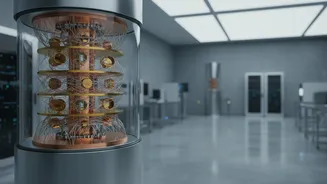
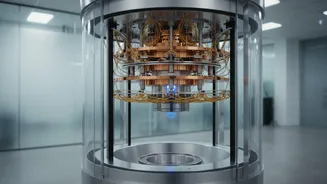
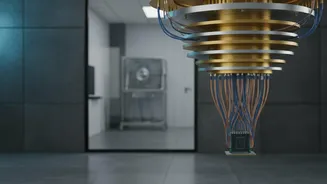
The facility's crown jewel is an 8-qubit quantum computing system, designed and built in India by the Bengaluru-based company QpiAI. What makes this significant is that the quantum computer is physically installed on campus, a first for a private university in India. For years, students and researchers have had to rely on cloud-based simulators, which mimic the behaviour of quantum computers. AU-QUASAR provides direct, hands-on access to actual quantum hardware. This is a game-changer, allowing students, faculty, and partner startups to experiment, innovate, and solve real-world problems using the next frontier of computing technology. According to Dr. Nagendra Nagaraja, founder of QpiAI, this sets a new benchmark for quantum education in the country.
More Than Just Quantum
While the quantum computer grabs headlines, the vision for AU-QUASAR is much broader. The campus is a comprehensive deep-tech hub, also featuring an advanced Artificial Intelligence lab accelerated by NVIDIA DGX servers. The facility's mission is to foster innovation across a range of interconnected fields, including AI, robotics, and Cyber-Physical Systems. To build a pipeline of talent, Alliance University is also launching specialized B.Tech degree programs in these cutting-edge domains. This integrated approach ensures that the facility is not just a research centre but a dynamic environment where different disciplines can cross-pollinate, leading to new ideas and ventures.
Bridging the Innovation Gap
In the world of technology, there is a well-known chasm called the 'valley of death'—the gap between promising academic discoveries and commercially viable products. Many brilliant ideas born in university labs never find their way to the market due to a lack of funding, business mentorship, and infrastructure. Initiatives like AU-QUASAR are designed to build a bridge across this valley. By providing access to expensive hardware, fostering collaboration with industry, and creating a space for startups, the facility directly addresses these critical hurdles. It joins other key players in the city, like the Foundation for Science, Innovation and Development (FSID) at the Indian Institute of Science (IISc), which is also dedicated to nurturing deep-tech startups and commercialising research.
An Ecosystem for Future Innovators
Ultimately, the power of AU-QUASAR lies in the ecosystem it aims to build. The facility is explicitly designed to bring together four key groups: students, researchers, startups, and established industry collaborators. This model creates a virtuous cycle. Students gain exposure to frontier technology and real-world problems. Researchers can work with industry partners to find practical applications for their work. Startups can access talent, mentorship, and world-class infrastructure that would otherwise be out of reach. For established companies, it offers a direct line to the next wave of innovation and innovators. As Pro-Chancellor Abhay G. Chebbi noted, the goal is for the university to become a creator of technology, not just a consumer.