







The Journey Begins at the Farm
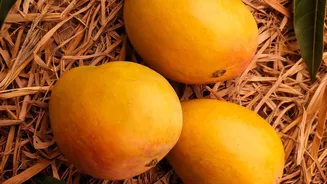
The export journey of a mango doesn't start at the airport, but in the orchard. For premium export markets, only the best fruit will do. Farmers must harvest mangoes at the precise stage of maturity—not too ripe, not too raw. This decision is critical;
a mango that is too mature will spoil before it reaches its destination, while one picked too early will fail to ripen properly, lacking the flavour and aroma that makes Indian varieties world-famous. Once picked, the clock starts ticking. The fruit must be rapidly moved to a packhouse, where the next crucial steps in preserving its value will take place. This initial stage sets the foundation for the entire export process, as any mistake here cannot be corrected later.
The All-Important Cold Chain
Heat is the biggest enemy of a fresh mango. To combat this, the fruit enters a strict 'cold chain'—an unbroken, temperature-controlled supply line. Within hours of being harvested, mangoes must be pre-cooled to bring their core temperature down from the high field heat. For most export varieties like the Alphonso, the ideal storage temperature is between 12-13°C. If it drops too low, the fruit suffers 'chilling injury,' causing the skin to blacken and the pulp to lose its ability to ripen. If it gets too warm, ripening accelerates, and spoilage begins. This precise temperature must be maintained in packhouses, refrigerated trucks, and specialized airport facilities, making the cold chain the most critical element in ensuring the mango arrives in pristine condition.
Clearing International Hurdles
Before a single mango can be loaded onto a plane, it must meet the strict phytosanitary (plant health) standards of the importing country. Many nations, including the United States, are concerned about agricultural pests like fruit flies and seed weevils. To mitigate this risk, shipments often undergo a mandatory treatment process. For mangoes heading to the U.S., this involves irradiation, where the fruit is exposed to a controlled dose of radiation to neutralise any pests. For other markets, treatments like vapor heat or a hot water dip might be required. This step is non-negotiable and is often overseen by officials from both India and the importing country, adding another layer of complexity and time to the pre-shipment schedule.
The Final Dash to the Aircraft
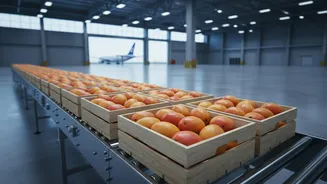
With all treatments and checks complete, the final leg of the domestic journey is a coordinated dash to the airport cargo terminal. This isn't a simple drop-off. Perishable cargo like mangoes gets priority handling. They are stored in temperature-controlled facilities at the airport before being moved to the aircraft, often using specialised 'cool dollies' to maintain the cold chain right up to the plane's cargo hold. Timing is everything. Airlines have strict cut-off times for perishable goods, often requiring them to be at the airport several hours before departure to ensure all checks and loading procedures are completed without a hitch. Any delay at this stage can risk the entire shipment.
Why Air Freight is a Game-Changer
Shipping by air is significantly more expensive than sending goods by sea. Recent geopolitical events have caused air freight charges to surge, making it a major challenge for price-sensitive products like mangoes. However, for high-value, highly perishable fruits, air travel is often the only viable option for reaching distant premium markets. A sea journey can take weeks, whereas an air shipment can deliver mangoes to cities in Europe, the U.S., or East Asia in a matter of days. This speed preserves the freshness and quality that commands high prices, allowing farmers and exporters to access lucrative global consumers. A recent first-ever air shipment of late-season Neelam and Totapuri mangoes from Karnataka to the Maldives, facilitated by APEDA, is a perfect example. It not only extended the export season but also gave farmers over 50% higher returns than domestic markets, showcasing the power of efficient air logistics.