




A Breakthrough Discovery in a Distant Cloud
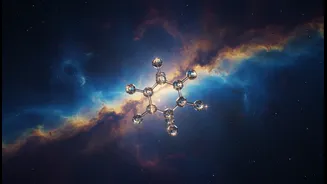
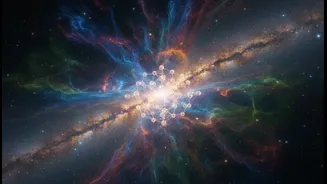
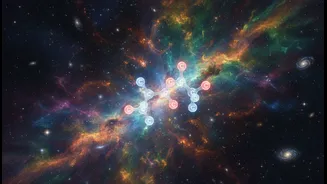
Scientists have announced the first-ever direct detection of a true sugar in the interstellar medium—the thin mixture of gas and dust that exists between stars. The molecule, known as erythrulose, was found in a giant molecular cloud called G+0.693-0.027,
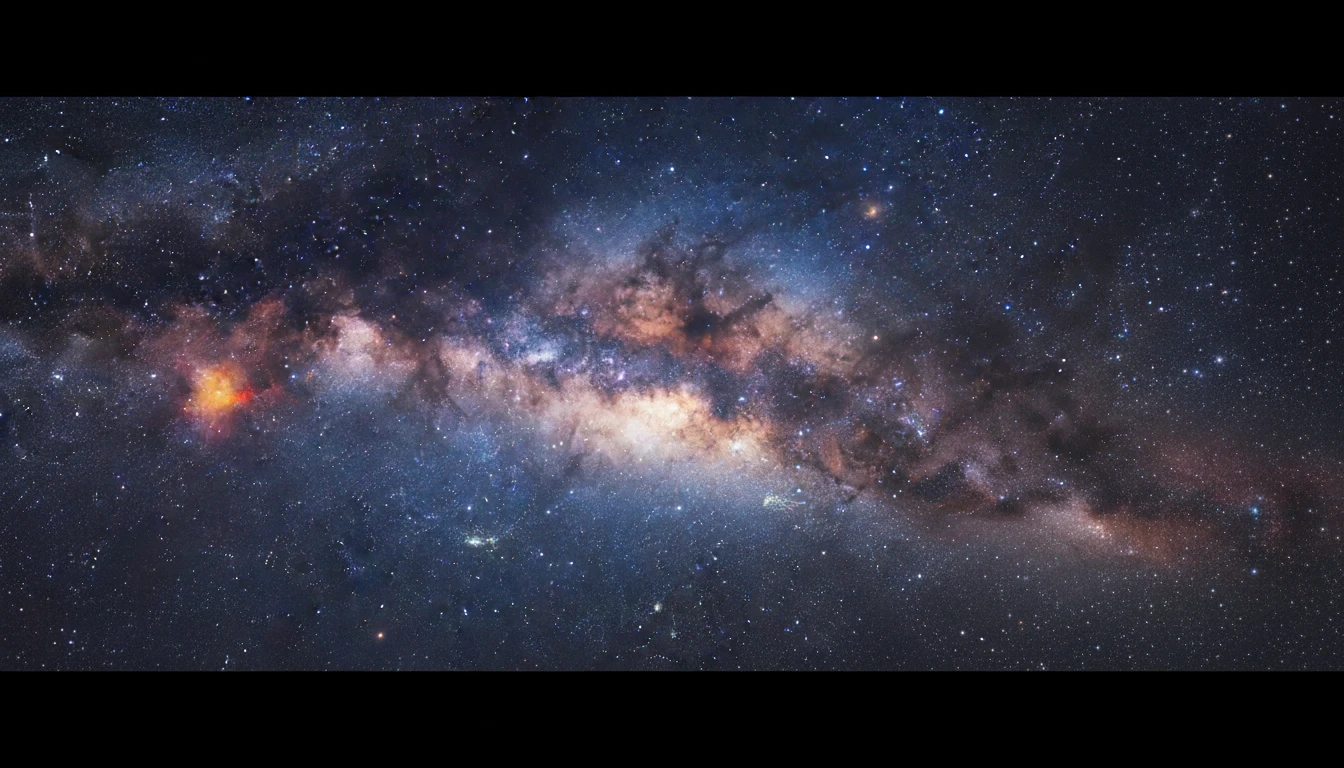
located near the heart of our Milky Way galaxy, some 26,700 light-years from Earth. While simpler, sugar-like molecules such as glycolaldehyde had been spotted before, this four-carbon sugar is the first confirmed monosaccharide found drifting in the birthplace of stars and planets. On Earth, erythrulose is a simple sugar naturally found in raspberries.
The Spanish Eyes on the Sky
This groundbreaking observation was made possible by a powerful pair of radio telescopes located in Spain. An international team of researchers, led from the Center for Astrobiology in Madrid, used the 40-metre telescope at the Yebes Observatory in Guadalajara and the 30-metre telescope at the Institute for Radio Astronomy in the Millimeter Range (IRAM) in the Sierra Nevada mountains. These sensitive instruments scanned the distant molecular cloud, picking up faint radio waves. By analysing the specific frequencies of these waves—a process known as spectroscopy—they identified 12 distinct spectral lines that perfectly matched the unique chemical fingerprint of erythrulose, confirming its presence.
More Than Just a Sweet Finding
Detecting sugar in space is more than a cosmic curiosity; it's a vital clue in the search to understand the origins of life. Sugars are fundamental to biology, forming the structural backbone of RNA and DNA, the molecules that carry genetic information. Scientists have long theorized that the raw materials for life may have formed in space and been delivered to a young Earth by comets and asteroids. The discovery of erythrulose demonstrates that complex sugars—not just their simpler precursors—can indeed form in the harsh, cold conditions of interstellar clouds, even before stars and planets are born.
A Recipe for Life's Ingredients
The discovery of erythrulose is particularly exciting because in water, it can transform into other sugars that are considered possible evolutionary predecessors to RNA. This finding supports the idea that the chemical building blocks for life are not exclusive to planets but are widespread throughout the galaxy. The researchers noted that erythrulose was surprisingly abundant, at least eight times more plentiful than simpler three-carbon sugars they searched for but did not find. This suggests that the chemical pathways to creating complex molecules in space might be more efficient than previously thought, perhaps by combining smaller, two-carbon molecules on the surface of icy dust grains.
What This Cosmic Clue Means for the Future
This discovery opens a new chapter in the field of astrochemistry. It proves that the inventory of molecules in stellar nurseries is complex enough to include key ingredients for prebiotic chemistry. For decades, sugars have been found in meteorite samples, hinting that they existed in the early solar system, but this is the first direct proof of their presence in the interstellar medium itself. Scientists believe millions of tons of erythrulose could have rained down on early Earth during periods of heavy asteroid bombardment, potentially seeding the young planet with the materials needed to kick-start life. The search now continues for even more complex molecules, bringing us one step closer to understanding our own cosmic beginnings and the possibility of life elsewhere in the universe.