





Listening to the Heart of Mars
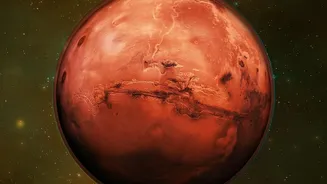
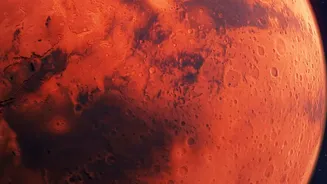
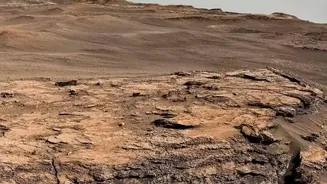
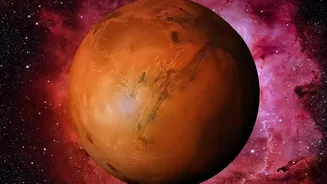
For years, the surface of Mars has been the primary focus in the search for water and life. We’ve sent rovers to scour ancient riverbeds and lakebeds, confirming that water once flowed freely. But the planet we see today is a cold, dry desert, ravaged
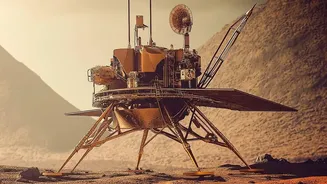
by radiation. The new frontier, it turns out, might be deep underground. Data from NASA’s InSight lander, which recorded seismic waves from 'marsquakes' between 2018 and 2022, has given scientists an unprecedented look inside the planet. By studying how these waves traveled through Mars, researchers have mapped its internal structure, much like an ultrasound for a planet. This seismic sleuthing has uncovered a mysterious boundary about 24 kilometers (15 miles) down.
A Subterranean Surprise
This deep crustal boundary is more than just a line on a chart; it represents a dramatic shift in the rock composition. Recent analysis led by researchers at the University of Oxford suggests this layer was formed by vast, interconnected networks of molten rock, or magma, that pooled deep within the crust. This is a far more complex picture than the previously held view of isolated volcanoes fed by simple magma chambers. The findings indicate that early Mars had a dynamic and complex geological system, one capable of creating a diverse crust without the kind of plate tectonics we have on Earth. This is a crucial finding, as it suggests the processes that make a planet geologically interesting, and potentially habitable, may be more common across the cosmos than once believed.
The Recipe for a Hidden Biosphere
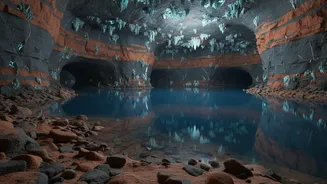
So how does a magma network relate to habitability? The answer lies in what this complex geology could create and sustain: water, heat, and shelter. The porous, fractured rock at this deep boundary could be a perfect trap for vast quantities of water, likely in the form of ice. Other analyses of InSight's data specifically point to the potential for a water-saturated layer deep in the crust. While Mars’s core has cooled considerably, residual geothermal heat could warm these deep zones, creating pockets of liquid water. This subterranean environment would be shielded from the deadly radiation that sterilizes the Martian surface. On Earth, deep-rock ecosystems thrive in total darkness, feeding on chemical energy from water-rock reactions—a process called radiolysis. The new findings suggest this same life-sustaining recipe could exist on Mars today.
A New Roadmap for Finding Martians
This discovery fundamentally shifts the strategy for finding life on Mars. While missions like Perseverance continue to search for signs of ancient life on the surface, the new holy grail may be the deep subsurface. The evidence suggests that if a Martian biosphere ever existed, it may have retreated underground as the planet lost its atmosphere and surface water, where it could potentially survive to this day. This doesn't mean finding it will be easy. Probing miles beneath the Martian crust is a monumental technological challenge far beyond our current capabilities. However, it provides a clear and compelling target for future exploration. It tells us that in the search for extraterrestrial life, we may need to learn to dig deeper, both literally and figuratively, to uncover the secrets planets hold.