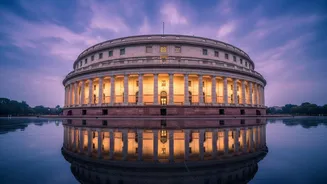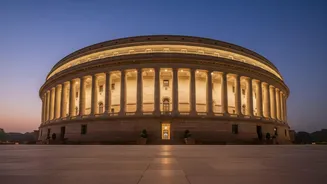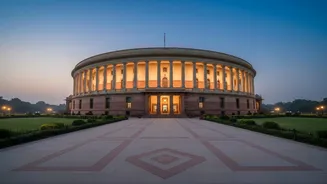







The Current Development
The latest chapter in the anthem’s story unfolded in August 2026, when the President of India gave assent to the Prevention of Insults to National Honour (Amendment) Bill. This new law provides India's national song, 'Vande Mataram,' with the same legal
protections against insults or disruptions as the national anthem, 'Jana Gana Mana'. Previously, the law only penalised intentionally preventing the singing of the national anthem or causing disturbances during its rendition. The amendment, which makes such acts concerning 'Vande Mataram' punishable with imprisonment or a fine, formalises the equal status that was envisioned for both songs when the republic was formed. This move has reignited conversations about the history and roles of both 'Jana Gana Mana' and 'Vande Mataram' in the national consciousness.
A Poem Born in 1911
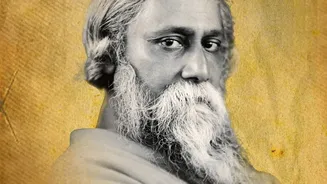
The story of 'Jana Gana Mana' begins more than a century ago. It was originally composed as 'Bharoto Bhagyo Bidhata' in a highly Sanskritised form of Bengali by the polymath and Nobel laureate Rabindranath Tagore on December 11, 1911. The composition is the first of a five-stanza hymn. It was first sung publicly not by Tagore himself, but by his niece, Sarala Devi Chowdhurani, and a group of students on December 27, 1911, at the Calcutta session of the Indian National Congress. The song's public performance at a major political gathering was a significant expression of cultural identity during British rule. Shortly after, in January 1912, it was published in the journal 'Tatwabodhini Patrika', which helped it reach a wider intellectual audience.
The Path to Adoption
The journey from poem to national anthem was gradual. A major turning point came when Subhas Chandra Bose adopted a Hindi-Urdu translation of the song, titled 'Shubh Sukh Chain,' as the anthem for his Indian National Army (INA) in 1941. The song was also played at the United Nations in 1947 when the Indian delegation was asked for the country's anthem, even before its official adoption. On January 24, 1950, two days before India became a republic, the Constituent Assembly officially adopted the first stanza of 'Jana Gana Mana' as the national anthem. In the same session, Dr. Rajendra Prasad, the President of the Assembly, declared that 'Vande Mataram', a song by Bankim Chandra Chatterjee that was a powerful anthem for the freedom movement, would be honoured equally as the national song.
Understanding the Words
The anthem is a testament to India's spirit of unity in diversity. Tagore's lyrics invoke the names of various regions of the country— Punjab, Sindh, Gujarat, Maratha, Dravida (South India), Utkala (Orissa), and Banga (Bengal)—celebrating its vast geographical and cultural fabric. The lines also mention the Vindhya and Himalaya mountain ranges and the rivers Yamuna and Ganga, painting a picture of a unified landmass. The song is a prayer to the 'Dispenser of India's destiny' ('Bharata Bhagya Bidhata'), seeking blessings and celebrating the victory of the people. A full rendition of the anthem takes approximately 52 seconds.
A History of Debate
Debates around 'Jana Gana Mana' are not new. The most persistent controversy has been the false allegation that Tagore wrote it in praise of the British King George V, who was visiting India in 1911. This rumour spread due to misreporting by some colonial newspapers at the time. Tagore himself strongly refuted this claim, stating the song praised the eternal spirit guiding India's destiny, not any earthly king. In more recent years, discussions have surfaced regarding everything from the inclusion of 'Sindh' (a region now in Pakistan) to mandatory singing in cinema halls, a rule later modified by the Supreme Court. These ongoing conversations highlight that national symbols are often living concepts, continuously interpreted by new generations.