


Meet NASA's PUFFINS Mission
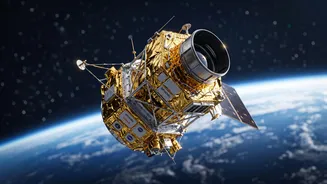
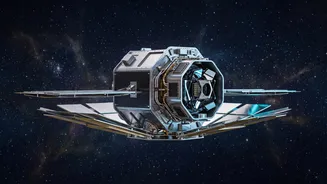
PUFFINS, which stands for 'Polarimetry in the Ultraviolet to Find Features in INterStellar dust', is a small satellite mission developed as part of NASA’s Astrophysics Pioneers program. Led by the University of Arizona's Steward Observatory, this $20
million mission is designed to deploy a specialized 10-inch ultraviolet space telescope into low-Earth orbit. Its goal is ambitious: to study the smallest particles of interstellar dust, some as tiny as 50 nanometers—roughly the size of a common cold virus. The mission is led by Principal Investigator Dr. Ramya Anche, a Bengaluru-born astronomer, and represents a significant step forward in a field that hasn't seen a dedicated mission in nearly three decades.
Why Interstellar Dust Matters
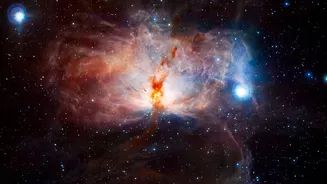
Though it makes up only about one percent of the visible mass in the Milky Way, interstellar dust is a critical component in the life cycle of the universe. These tiny particles, often originating from dying stars called asymptotic giant branch (AGB) stars, are the fundamental building blocks for new stars and planets. Dust acts as a shield, protecting developing cosmic structures from harsh radiation and allowing molecular clouds to cool and collapse, which is the first step in star formation. By studying the composition and structure of this dust, scientists can piece together the story of how raw materials are recycled across the cosmos to form new worlds, potentially including habitable ones.
A New Way of Seeing Starlight
The PUFFINS mission will use a technique called ultraviolet spectropolarimetry. In simple terms, it will analyze how starlight is altered as it passes through clouds of interstellar dust. Specifically, it measures a property of light called polarization, which reveals the orientation of light waves. Certain types of dust grains align with the galaxy's magnetic fields, acting like microscopic compass needles. As light from a distant star travels through these aligned grains, its polarization changes. These changes can tell scientists a great deal about the dust's size, composition, and structure. By reviving UV polarimetry, PUFFINS will be able to study the smallest dust grains that are effectively invisible to optical and infrared telescopes.
What Scientists Hope to Discover
From its orbital vantage point, PUFFINS will observe at least 70 different stars, mapping how dust properties vary in different environments across our galaxy. This data will help solve long-standing mysteries, such as why ultraviolet light from some stars shows unexpectedly high levels of polarization. The mission aims to create a detailed picture of how dust forms, how it is changed by the harsh environment of interstellar space, and how it eventually gets incorporated into the next generation of celestial bodies. The findings will not only deepen our understanding of cosmic evolution but also serve as a crucial precursor for future flagship projects like NASA's Habitable Worlds Observatory, planned for the 2040s, by refining the technology needed for its ambitious goals.