



The New Space Race Is Crowded
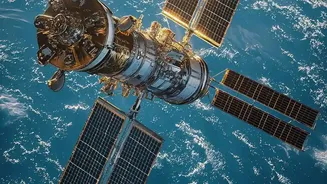
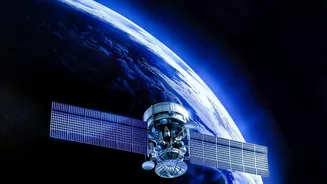
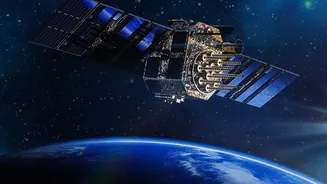
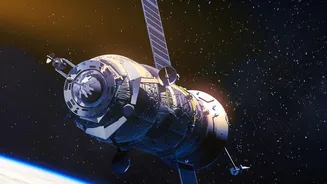
Low Earth Orbit (LEO) is getting crowded at an unprecedented rate. Once the domain of a few hundred satellites, LEO is now home to thousands of active spacecraft, and tens of thousands more are planned. This explosion is driven by 'mega-constellations'—enormous
networks of small, mass-produced satellites. The most prominent is SpaceX's Starlink, which already has over 11,000 satellites in orbit and plans for many more. Other major players like Amazon's Project Kuiper and OneWeb are also building their own constellations. The goal is to provide fast, low-latency internet to every corner of the planet, a potentially revolutionary and highly lucrative business. But this new commercial space race is creating a traffic jam of epic proportions, pushing the limits of safe space operations.
Rules for an Emptier Sky
The rules governing space debris were written for a different era. The primary international guidelines, developed by bodies like the Inter-Agency Space Debris Coordination Committee (IADC), were largely voluntary. A long-standing guideline was the '25-year rule,' which recommended that operators deorbit their satellites within 25 years of mission completion. These recommendations were created when launches were infrequent and orbits were mostly empty. There was no binding global treaty on debris; regulation was left to national licensing bodies. In the U.S., this has led to a fragmented approach. While the Federal Communications Commission (FCC) has recently enforced a much stricter 5-year deorbit rule for satellites it licenses, other regulations have been withdrawn, creating a complex and sometimes conflicting landscape for operators.
Why Old Guidelines Are Failing
The sheer number of new satellites makes the old framework obsolete. With tens of thousands of satellites operating in similar orbital bands, the probability of collision increases dramatically. Recent data is alarming. In the year leading up to May 2026, Starlink satellites alone had to perform over 355,000 collision avoidance manoeuvres. That means each satellite is dodging other objects, from active satellites to untracked debris, on a near-weekly basis. While many new satellites have automated collision avoidance systems, the sheer number of alerts and required manoeuvres is becoming a massive operational burden. Experts warn that at this scale, even a tiny failure rate is no longer negligible. The existing rules simply weren't designed to manage traffic on this scale or to enforce responsible behaviour among a growing number of commercial actors.
The Nightmare Scenario: Kessler Syndrome
The ultimate fear is a chain reaction known as the Kessler Syndrome. Proposed by NASA scientist Donald J. Kessler in 1978, it describes a scenario where the density of objects in orbit becomes so high that a single collision creates a cloud of debris. Each piece of that debris then becomes a projectile that can cause further collisions, creating even more debris. This cascading effect could eventually make entire orbital altitudes unusable for generations, trapping us on Earth. We are no longer talking about a purely theoretical risk. Some scientists believe the debris environment is already unstable, meaning that even if all launches stopped today, the amount of junk in orbit would continue to increase due to collisions among existing objects. A 2024 explosion of a Chinese rocket body that created hundreds of new debris fragments serves as a stark reminder of how quickly the orbital environment can degrade.
A Race for New Solutions
Recognising the growing danger, space agencies and operators are scrambling for solutions. The European Space Agency (ESA) is championing a 'Zero Debris' approach, aiming to stop its missions from generating any new debris by 2030 and tightening its internal rules, such as adopting a five-year disposal timeframe. There's also a growing consensus that simply preventing new debris isn't enough; we need to start cleaning up what's already there through Active Debris Removal (ADR) missions. However, these technologies are still in their infancy and are extremely expensive. The most critical need is for better space traffic management—a globally coordinated system to track objects, predict collisions, and coordinate manoeuvres. Without clear, enforceable international rules of the road, the commercial promise of mega-constellations could be wiped out by the very congestion they are creating.