



The Iron Hypothesis: A Primer
To understand the new findings, we first need to grasp the 'iron hypothesis'. In simple terms, many vast regions of the ocean are rich in nutrients but lack iron, an essential micronutrient for microscopic marine plants called phytoplankton. These tiny
organisms form the very base of the entire marine food web. The theory, first proposed decades ago, is that adding small amounts of iron to these 'deserts' could trigger massive phytoplankton blooms. This isn't just a theory; natural events like volcanic eruptions or dust storms have been observed causing enormous blooms that are visible from space. The core idea behind intentionally fertilizing the ocean with iron is twofold: boost marine life and, potentially, fight climate change, as phytoplankton absorb carbon dioxide during photosynthesis.
What the Latest Research Shows
Recent modelling studies and analyses are providing a more nuanced picture than ever before. While past field experiments in the 1990s and 2000s confirmed that adding iron does indeed cause phytoplankton to bloom, they were often too short to measure the long-term consequences. More recent and advanced modelling, published in journals like Nature and Global Change Biology, explores the complex downstream effects. One key finding is that while fertilization boosts productivity in one area, it can lead to 'nutrient robbing', essentially taking resources that would have naturally flowed to other regions. This can lead to decreased productivity in tropical areas, potentially harming the coastal fisheries that many communities rely on.
A Cascade Through the Food Web
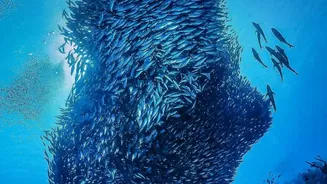
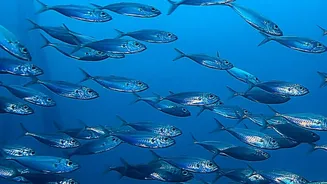
The effects of an iron-induced bloom cascade up the food chain in complex ways. The initial explosion of phytoplankton, particularly larger types like diatoms, provides a massive food source for tiny animals called zooplankton. This, in turn, can support more krill, small fish, and ultimately larger animals like whales and penguins. However, it's not always a straightforward win. Some studies warn that the process might favour the growth of less useful or even harmful algal blooms, though this has not been observed in open-ocean experiments to date. A major concern highlighted by recent models is that large-scale fertilization could actually amplify the decline in total animal biomass already projected due to climate change, with the most negative impacts felt in low-latitude regions.
The Carbon Question and Unintended Risks
A primary motivation for this research is its potential as a climate change solution. When phytoplankton die, they sink, taking their stored carbon with them to the deep ocean, a process called the 'biological carbon pump'. However, the efficiency of this carbon sequestration is a major point of debate. Early experiments struggled to confirm how much carbon actually made it to the deep sea and stayed there. Beyond that, there are other risks. The decomposition of a massive bloom consumes oxygen, which could create or expand low-oxygen zones in the ocean, harming marine life. Furthermore, a dense phytoplankton bloom at the surface can block sunlight to life below and even warm the surface waters, which ironically reduces how much CO2 the water can hold.
Why This Matters for India
For a nation with over 7,500 kilometres of coastline and a massive population dependent on the sea for food and livelihood, these findings are crucial. The Arabian Sea is one of the oceanic regions known to be limited by iron availability. Changes in marine productivity, whether from climate change or large-scale interventions elsewhere, can have direct impacts on India's fisheries. The potential for 'nutrient robbing' from tropical waters, as suggested by new models, could directly affect the health of the ecosystems that support Indian fishing communities. As the world scrambles for climate solutions, understanding the delicate balance of our oceans is not just an academic exercise—it's a matter of economic and food security for coastal nations like India. The science is clear that while iron is a powerful lever, pulling it has consequences that ripple across the globe.