


More Than Just Stacking Rocks
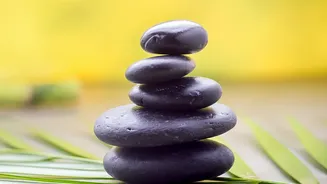
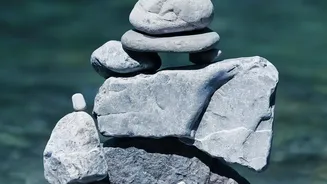
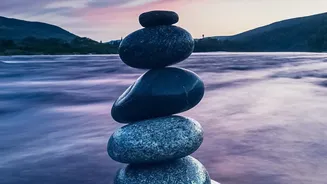
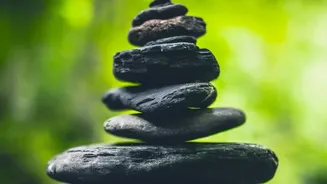
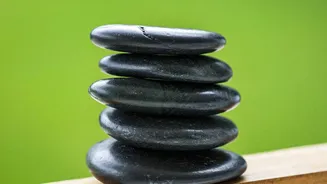
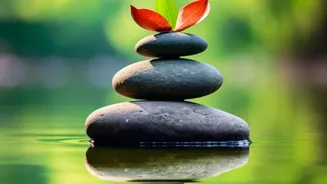
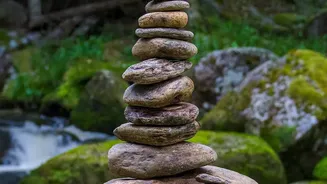
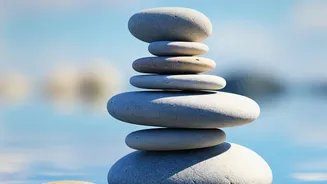
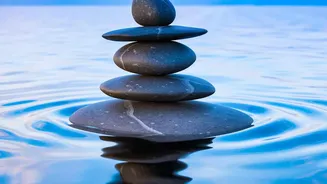
Stone balancing, also known as rock balancing, is the art of arranging natural stones in improbable formations without the use of any adhesives, wires, or supports. The goal is to find the natural balance point of each stone and use gravity alone to create
a stable, albeit temporary, sculpture. Unlike simple stacking of flat rocks, true balancing often involves finding minuscule contact points, sometimes just three tiny notches that form a natural 'tripod' for the stone above it to rest on. Practitioners describe it as a meditative activity where patience and sensitivity are more important than brute force. It is a dialogue with physics, a dance with gravity, and a profound exercise in being present.
An Exercise in Mindfulness and Focus
In a world filled with constant digital distractions, stone balancing offers a powerful way to slow down and cultivate deep concentration. The process demands your full and undivided attention. To find the precise point of equilibrium, you must quiet your mind, listen to your sense of touch, and become acutely aware of the subtle shifts in weight. This intense focus acts as a form of active meditation, calming the mind and reducing stress and anxiety. Practitioners often report entering a flow state where the outside world fades away, and the only thing that exists is the connection between their hands and the stones. This practice of returning to the present moment can improve mental clarity long after the stones have been returned to the earth.
Developing Fine Motor Control
The headline's promise of improved fine motor control is central to the practice. Balancing stones requires incredibly precise, small movements of the hands and fingers. As you handle each stone, you are constantly making micro-adjustments, training the delicate muscles that control dexterity. This enhances hand-eye coordination, as you visually assess a potential placement and then translate that into a physical action. Children and adults alike can benefit from this physical training. The act of feeling for tiny divots and ledges on a rock's surface, and then carefully placing another stone upon that precarious point, is a high-level exercise in proprioception—your body's awareness of its position in space. Over time, these skills translate to improved dexterity in other daily tasks.
How to Get Started on Your Journey
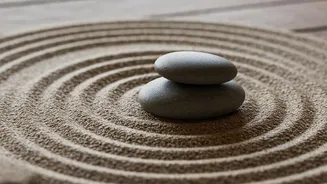
The beauty of stone balancing is its accessibility; all you need is a collection of stones and a bit of patience. Beginners are advised to start small. Don't try to build a towering masterpiece on your first attempt. Instead, begin with just two or three rocks. Find a stable base rock and then try to balance one stone on top of it. Hold the stone and feel for its weight distribution. Gently move it around on the base, feeling for small clicks or points of stability where it seems to 'settle'. The key is to be gentle and patient, letting your sense of touch guide you. Expect the stones to fall—it's a natural part of the learning process. The goal isn't perfection, but the experience of finding a moment of quiet, impossible balance.