






The Old Antarctic Anomaly
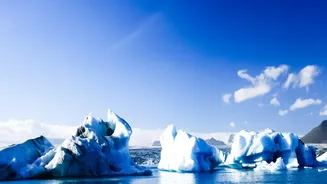
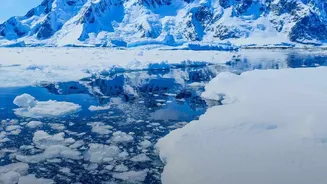
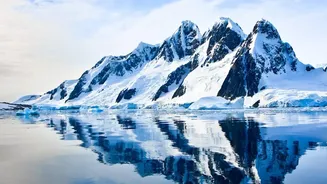
For decades, scientists observed a curious trend. While Arctic sea ice was shrinking at an alarming rate, its southern counterpart around Antarctica was, in many areas, expanding. Between 1979 and 2014, satellite data showed that the total area of sea ice surrounding
the continent was growing, reaching a record high in 2014. This phenomenon became a talking point, sometimes used to question the global trend of climate change. Scientists proposed various explanations, from changes in wind patterns caused by the ozone hole to a complex process where melting land ice created a surface layer of fresh water that froze more easily. This apparent stability, however, masked a more complicated reality, as key regions like the West Antarctic Ice Sheet were already showing signs of rapid and concerning melt.
A Sudden and Dramatic Reversal
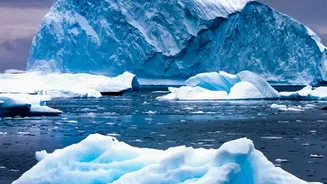
The script flipped dramatically after 2015. Beginning in 2016, Antarctic sea ice extent plummeted to record lows, effectively wiping out decades of gains in just a few years. A recent study from Stanford University explains that this reversal was linked to the release of ocean heat that had been trapped beneath a layer of less salty surface water. For years, increased precipitation had made the surface ocean fresher, acting like a lid. However, shifts in wind patterns eventually drove this warm, deeper water upwards, melting the sea ice from below. This abrupt decline brought Antarctica more in line with the global warming narrative and showed that the previous period of growth was not a permanent state of affairs.
The New Study: A Surprising Snowfall Event
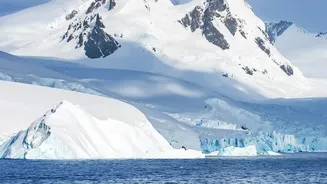
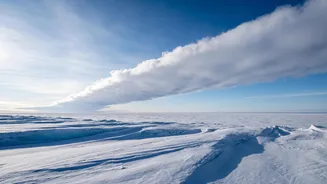
Adding another layer to this complex picture, a new study published in 'Nature' has identified a massive, short-term ice gain specifically on the East Antarctic Ice Sheet. Between 2021 and 2023, the continent gained an astonishing 695 billion tons of ice, the largest such increase observed by GRACE satellites. Researchers traced this event not to local cooling, but to weather patterns originating thousands of miles away. Sustained warming in the tropical ocean near the western Pacific and eastern Indian Ocean altered atmospheric circulation, creating a pathway that funneled huge amounts of moisture towards East Antarctica. This resulted in exceptionally heavy snowfall, which temporarily added mass to the ice sheet.
Temporary Gain, Long-Term Loss
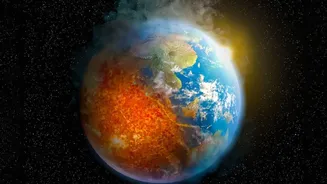
Crucially, the scientists behind the recent discovery stress that this massive snowfall does not reverse the continent's long-term melting trend. The gain was temporary and localised primarily in East Antarctica, while the vulnerable West Antarctic Ice Sheet continues to lose mass at a worrying rate. Overall, Antarctica has been losing ice at an average of about 140.5 billion tons per year for the last two decades. The recent gain was an anomalous event driven by a specific set of atmospheric conditions. It highlights the immense variability in the Antarctic system but doesn't change the underlying physics: a warming planet means a melting Antarctica.
Why This Matters for India
The fate of a frozen continent thousands of kilometres away has direct consequences for India. The Antarctic Ice Sheet holds enough water to raise global sea levels by about 60 metres (nearly 200 feet) if it all melted. While that won't happen overnight, even small increases in the rate of melt contribute to rising seas. Global sea level rise is already accelerating, posing a significant threat to India's 7,500-kilometre coastline and its densely populated coastal cities like Mumbai, Chennai, and Kolkata. Understanding these complex Antarctic processes, including both melting and temporary gains from snowfall, is critical for creating accurate projections that allow coastal communities to prepare and adapt to the inevitable changes ahead.