







A Breakthrough in Assistive Tech
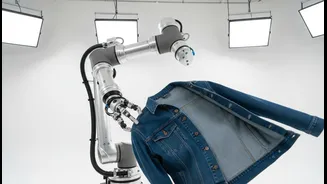
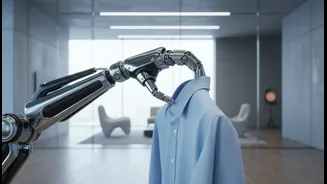
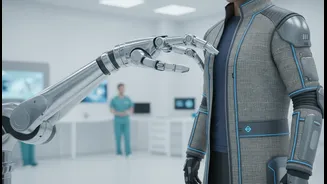
A joint team of researchers from South Korea's KAIST and Stanford University in the US has developed a remarkable new robotic technology. Their system is designed to help a person get dressed without the use of their hands or assistance from another person.
Incredibly, they say the process can take as little as ten seconds to put on a full suit. The inspiration for the technology came from a surprisingly mundane moment: a researcher riding a bicycle in the rain wished for a raincoat that could put itself on. This led to the creation of a system with vast potential, not just for cyclists, but for a wide range of applications.
How 'Vines' and Air Power Work
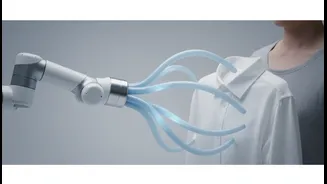
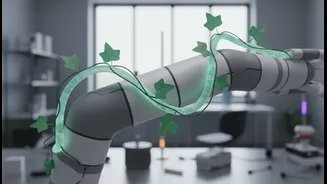
Instead of complex robotic arms that mimic human motion, this new system uses a completely different approach. The technology relies on soft, flexible "vines" powered by air pressure that are embedded directly into the clothing. When air is pumped in, these vines glide the fabric up and along the wearer's body, much like an ivy plant climbing a wall. A key innovation is that the vine-like robot grows from its tip rather than moving its whole body, which allows it to navigate the curves of a human body and even pass through narrow gaps. This method is so effective that it works even if the person is moving, and it doesn't require a complex control algorithm to function.
The Human Side of Robotic Dressing
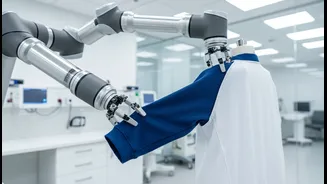
While the technology is impressive, the primary motivation behind robotic dressing research is to enhance human dignity and independence. For many people, including older adults and those with disabilities or limited mobility from strokes or injuries, the simple act of getting dressed can be a daily struggle. This reliance on others for such a personal task can be difficult. Robotic assistance could empower individuals to perform these tasks themselves, granting them a greater degree of autonomy. Researchers in the field, like those at the University of York, are also exploring how two-armed robots can mimic the gentle motions of human caregivers to make the experience more comfortable and natural.
The Challenge of Deformable Objects
A core reason why dressing is so hard for robots is that clothing is a 'deformable object'. Unlike a rigid car part on an assembly line, fabric stretches, wrinkles, and folds unpredictably. This makes it incredibly difficult for a robot to predict how a garment will behave when it's pushed, pulled, or lifted. For years, this has been a major hurdle in robotics, often called the 'laundry folding problem'. To overcome this, scientists use advanced simulations and machine learning, essentially allowing a robot to practice dressing a virtual human thousands of times to learn the nuances of how fabric moves and how to react to a person's body.
Beyond the Bedroom: Future Applications
The potential uses for this kind of hands-free dressing technology extend far beyond helping with a morning routine. The researchers behind the vine-based system see immediate applications where speed and a lack of hand use are critical. This could include emergency workers who need to quickly don personal protective equipment (PPE) or technicians working in sterile semiconductor cleanrooms. As artificial intelligence and mechanical engineering continue to advance, the line between science fiction and practical application is blurring. While there are still challenges to overcome in terms of safety, user trust, and cost, this breakthrough signals a future where robots are seamlessly integrated into our lives to provide help where it's needed most.