






A Fabric on the World Stage
The sight of Khadi on a global platform like New Zealand Fashion Week is more than just a fashion moment; it's a significant cultural statement. An official showcase titled 'Khadi Beyond Borders' is set to feature several leading Indian designers. Headlined
by Rajesh Pratap Singh, the event marks a collaboration between the Fashion Design Council of India (FDCI) and NZFW, aimed at taking the fabric's story to a new international audience. This follows similar successful showcases at fashion weeks in Moscow and London, which have steadily built Khadi’s reputation not just as a heritage textile, but as a forward-thinking, versatile material. For a fabric intrinsically linked to India's identity and Mahatma Gandhi's philosophy of self-reliance, each international appearance is a step towards redefining it as a symbol of conscious luxury and sustainable fashion.
What is Khadi's 'Material Identity'?
To understand the challenge of styling Khadi, one must first appreciate its unique identity. Unlike mass-produced textiles, Khadi is hand-spun and hand-woven, often from cotton, but also silk and wool. This artisanal process means no two batches are exactly alike. Its identity lies in its perfect imperfections: a slightly coarse texture that softens with every wash, a remarkable breathability that keeps you cool in summer and warm in winter, and a connection to the millions of rural artisans whose livelihoods depend on it. This is the 'swadeshi' spirit Gandhi championed—a fabric that is eco-friendly, has a low carbon footprint, and embodies a story of human hands, not machines. Preserving this identity means not erasing its characteristic texture or its sustainable ethos in the quest for a sleek, global look.
The Global Styling Challenge
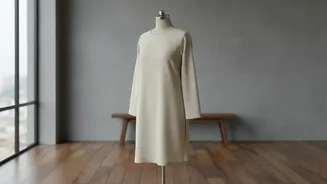
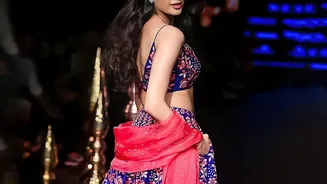
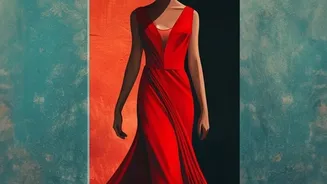
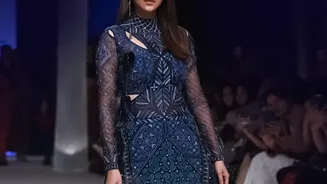
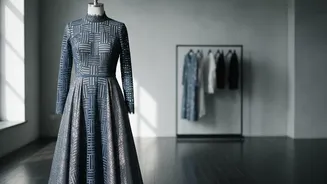
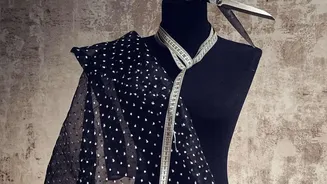
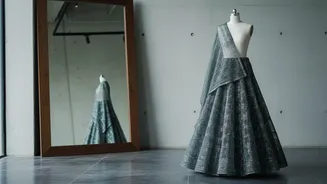
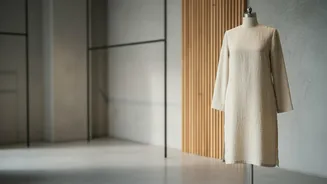
Taking a fabric known for its rustic simplicity and making it resonate with a trend-driven global market is a delicate balancing act. The primary challenge is to move beyond the traditional kurtas and jackets that Khadi is known for in India. Designers must innovate with silhouettes that feel contemporary and globally relevant. This involves creating everything from sharply tailored trousers and chic dresses to bomber jackets and even Khadi denim. The colour palette is another area of evolution. While classic Khadi is often associated with earthy and neutral tones, designers are now experimenting with vibrant hues and modern prints to appeal to a wider audience, all while using eco-friendly dyes to maintain the fabric's sustainable credentials. The goal is not to disguise the fabric, but to showcase its versatility in forms that fit seamlessly into a modern wardrobe worldwide.
Designers Leading the Innovation
A new generation of Indian designers is at the forefront of this movement, reimagining Khadi with immense creativity. Designers like Samant Chauhan, Shruti Sancheti, and Pawan Sachdeva, who are part of the NZFW showcase, are known for their ability to blend tradition with modernity. Others, like Sabyasachi Mukherjee and Gaurav Jai Gupta, have consistently used Khadi in their collections, transforming it into high-fashion ensembles that speak a global language. Their work often involves pairing Khadi with other textiles, using intricate embroidery, or focusing on architectural silhouettes to give the fabric a new dimension. Brands like 11.11 / eleven eleven have even made Khadi denim a signature, bridging the gap between ancient craft and contemporary style. These efforts prove that Khadi can be both a canvas for high fashion and a staple for everyday wear, from office attire to evening gowns.