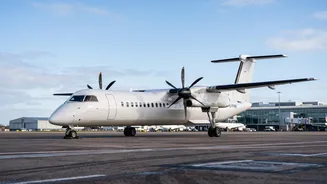








Kerala's dream of having its own airline is taking a new flight path. The state government has officially approved a proposal to launch an airline under a cooperative model, a first for India's fiercely competitive aviation sector.
A New Model for the Skies
On October 26, 2026,
Kerala's Chief Minister V.D. Satheesan announced that the government has given the green light to the Kerala Civil Aviation Development Cooperative Society to launch flight services. Tentatively named 'Co-Keralam', the project aims to demonstrate the power of the state's robust cooperative movement, extending it from traditional sectors like banking and agriculture into the capital-intensive world of aviation. The initiative will be spearheaded by C.N. Vijayakrishnan, a prominent figure known for his leadership at the MVR Cancer Centre and Research Institute. The announcement signifies a major step forward, turning a long-held ambition into a tangible project, though the airline is yet to begin commercial operations.
How a Cooperative Airline Works
Unlike a traditional airline owned by a corporation or a single entity, a cooperative airline is owned and operated for the benefit of its members. In this model, member-owners often have a say in the company's governance, typically following a 'one member, one vote' principle. The goal is to serve the community's needs rather than maximizing shareholder profit. For Co-Keralam, the financing plan is ambitious: it involves around 200 cooperative societies investing ₹2 crore each, aiming to raise a total of ₹400 crore. This funding strategy is inspired by the successful public-private partnership model of Cochin International Airport (CIAL) and is designed to proceed without direct financial aid from the state government. Approval to begin collecting these shares was granted in September 2026.
Connecting South India
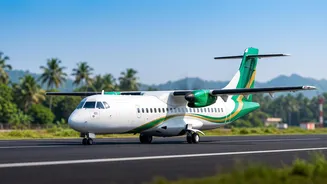
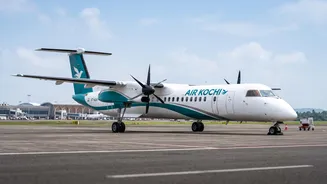
The airline's initial focus will be on boosting regional connectivity within South India. The plan is to start operations from a base in Kochi, using two leased 72-seater aircraft. The proposed initial network aims to connect Kochi with key destinations within Kerala, such as Kozhikode and Kannur, and major cities in neighbouring states, including Bengaluru, Mangaluru, Chennai, Coimbatore, and Madurai. By providing more direct flights between these cities, the airline hopes to offer a convenient alternative to journeys that currently require passing through larger, more congested airport hubs. For travelers, this could mean more choice and potentially competitive fares, with proposed ticket prices ranging from ₹3,500 to ₹7,000, although these are preliminary figures.
Challenges on the Horizon
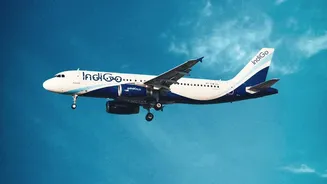
While the approval is a significant milestone, the path to launching an airline in India is fraught with challenges. The Indian aviation market is notoriously difficult, characterized by intense competition, high operational costs, and thin profit margins. The industry has a history littered with failed airlines, and even major players currently face financial headwinds from rising fuel prices and supply chain issues. Any new entrant must navigate a complex regulatory environment overseen by the Directorate General of Civil Aviation (DGCA) to secure all necessary permits and licenses before a single flight can take off. Furthermore, Co-Keralam will be entering a market dominated by giants like IndiGo and the Tata-owned Air India group, which together control a vast majority of domestic air travel. Building a sustainable operation against such established competition will require not just capital, but exceptional operational efficiency and a clear value proposition for passengers.