






A Workshop That Shifts the Focus
The Indian Institute of Technology Madras recently hosted a hands-on workshop titled “AI in Action: Climate and Energy Systems Applications,” organised by its AI4NetZero Team. The event brought together students, researchers, and industry professionals
to move beyond theoretical discussions and dive into the practical use of Artificial Intelligence (AI) to solve real-world climate and energy problems. Instead of just talking about climate change, the focus was on building tools. Participants engaged with real datasets on platforms like Google Colab to understand how machine learning can be applied to India’s specific challenges. This signals a significant shift in the national approach: from discussing abstract goals to developing concrete, data-driven solutions for a sustainable future.
Defining India's 'Real' Problems
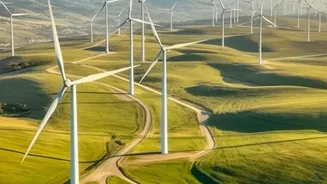
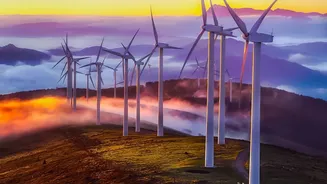
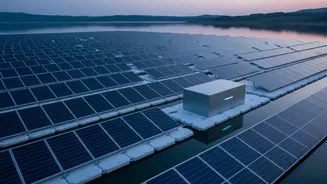
The headline's reference to "real climate problems" points to the urgent, on-the-ground challenges India faces. These are not abstract issues for 2070 but present-day crises. They include managing an unstable energy grid burdened by a growing population, predicting increasingly erratic monsoons that affect agriculture, tackling severe urban air pollution, and ensuring the stability of renewable energy sources like solar and wind, which are intermittent by nature. For instance, India’s transmission and distribution losses for electricity are significantly high, and integrating massive amounts of renewable energy requires a much smarter grid. These complex, data-heavy problems are exactly where the new approach demonstrated at IIT Madras can make a difference.
AI as a Powerful New Tool
Artificial intelligence is emerging as a critical tool in the fight against climate change, offering capabilities that were previously unimaginable. The IIT Madras workshop highlighted several key applications. AI can dramatically improve renewable energy forecasting, helping grid operators predict how much solar and wind power will be available and balance the supply with demand. It can optimize the performance of the existing power systems, reducing waste and preventing blackouts. Furthermore, AI algorithms can analyze vast amounts of climate data to create more accurate weather and climate models, which are crucial for disaster prediction and agricultural planning. In essence, AI provides the analytical power to make sense of complex systems and make smarter, faster decisions.
From the Lab to Lived Reality
The initiatives at IIT Madras, including its Centre for Responsible AI (CeRAI), are designed to bridge the gap between academic research and real-world impact. The goal is to ensure that the AI tools being developed are not just technologically advanced but also ethical, explainable, and tailored to India's unique societal context. The hands-on nature of the workshop, providing participants with reusable code and experience with real datasets, is a deliberate step to empower a new generation of engineers and researchers to apply these solutions across the country. The challenge now is to scale these innovations. It requires collaboration between academic institutions, industry, and policymakers to move these powerful AI tools from the lab into the systems that manage India's energy, water, and environment, supporting the nation's ambitious net-zero goals.