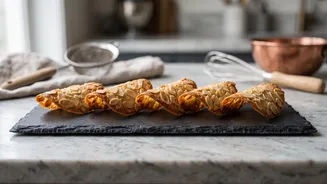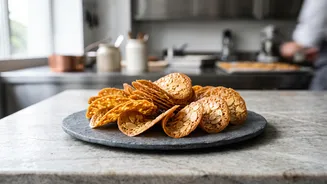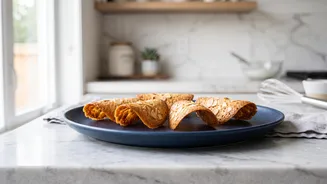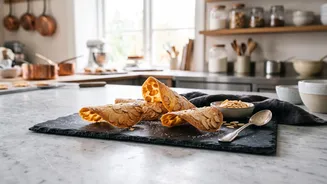







Delicate, crisp, and surprisingly simple, French almond tuiles are the elegant touch your desserts have been missing. These thin, curved cookies are named for the roof tiles they resemble and offer a world of versatility beyond the coffee cup.
What Exactly Are Tuiles?
A classic
of French pâtisserie, a tuile (pronounced 'tweel') is a thin, wafer-like cookie. Its name translates to 'tile' in French, a nod to the curved shape of terracotta roof tiles common in the French countryside. The magic of the tuile lies in its texture: shatteringly crisp and light. While the base recipe is simple, often involving just egg whites, sugar, flour, and butter, the addition of sliced almonds is what makes them truly iconic, lending a rich, nutty flavour and a beautiful, lace-like appearance. The simple batter can be made ahead and stored in the refrigerator for up to a week, making it easy to bake fresh tuiles whenever you like.
Mastering the Basic Recipe
The process of making tuiles is one of finesse, not force. The batter comes together by gently whisking egg whites with sugar, then stirring in flour and melted butter until just smooth. You are not looking to whip the egg whites to a foam; the goal is a smooth, liquid batter. After the batter is mixed, sliced almonds are folded in. To bake, small spoonfuls of the batter are dropped onto a parchment-lined or silicone baking sheet and spread as thinly as possible into rounds. Be sure to leave plenty of space between them, as they will spread a bit. They bake quickly, usually in under 10 minutes, until the edges are a deep golden brown.
The Art of the Curve
The most crucial step is shaping the tuiles, which must be done immediately after they come out of the oven while they are still hot and pliable. This is a time-sensitive task, so it's best to work in small batches. Using a thin spatula, carefully lift each hot cookie from the baking sheet and gently drape it over a rolling pin, a wine bottle, or the side of a glass to create that signature curve. They will harden into their final, crispy shape within a minute or two as they cool. If the cookies become too brittle to shape, you can return them to the hot oven for a few seconds to soften them again.
Classic Companion to Drinks and Dessert
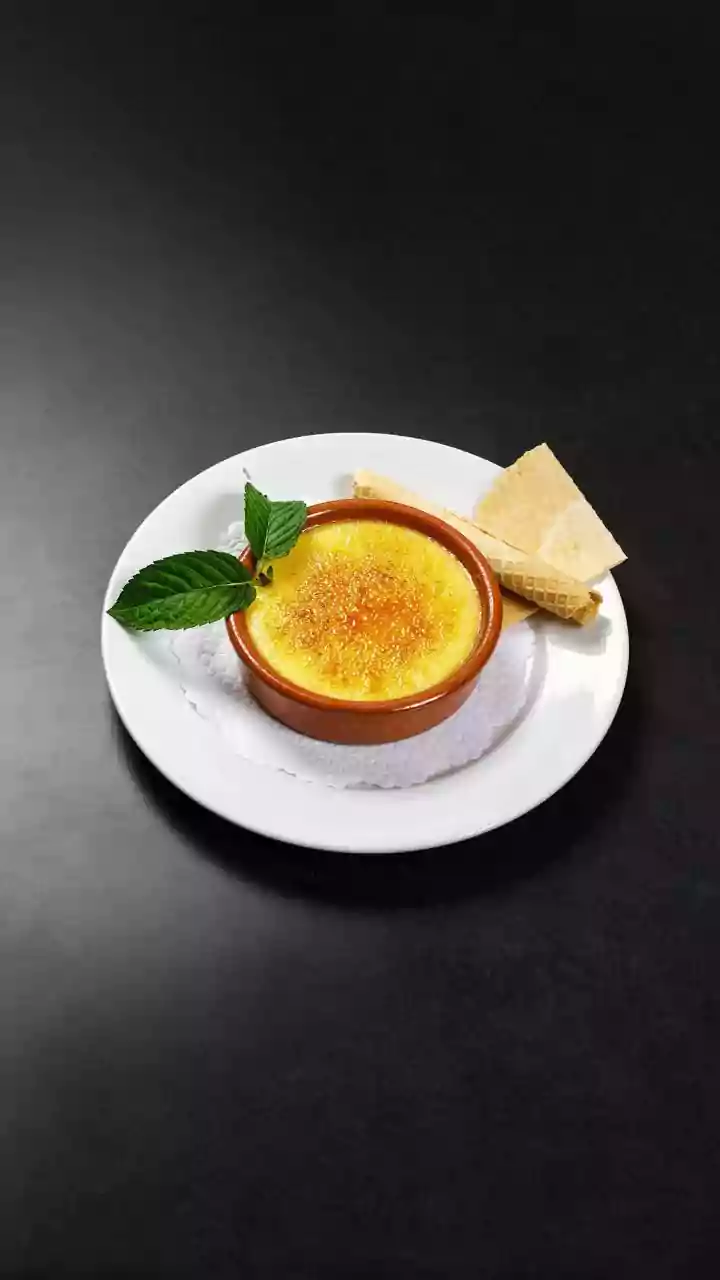
The most traditional way to enjoy an almond tuile is also the simplest: alongside a cup of coffee or tea. Their delicate crunch and nutty flavour are the perfect counterpoint to a hot beverage. They also serve as an effortless, professional-looking garnish for a scoop of ice cream, sorbet, or a creamy pot de crème. Simply tuck one or two into the side of the dessert just before serving for an instant touch of elegance. This simple addition can elevate a weekday treat into something that feels truly special.
Create Stunning Edible Bowls
For a more dramatic presentation, you can create larger tuiles and shape them into edible bowls. Instead of draping the warm cookie over a rolling pin, press it gently into a small bowl or over the back of an inverted ramekin. Once cooled, these beautiful, lacy cups become the perfect vessel for all sorts of fillings. Imagine serving a rich chocolate mousse, a light panna cotta, or a vibrant fresh fruit salad nestled inside a crisp almond bowl. It’s a showstoppping dessert presentation that is guaranteed to impress your guests.
A Crunchy Topping for Everything
Don’t worry if a few of your tuiles break during the shaping process—or if you simply want to try something different. Crushed almond tuiles make for a fantastic textural topping. Sprinkle the crunchy shards over a bowl of yogurt and berries for an upgraded breakfast parfait. Use them as a crunchy layer in a trifle, alternating with cream and fruit. They can even be used to add a contrasting crunch to creamy puddings and custards. This is a great way to use up any imperfect cookies while adding flavour and texture to other dishes.