





Gateway to the Roof of the World
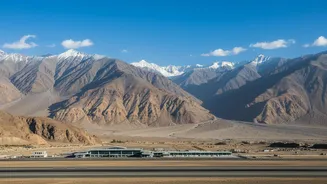
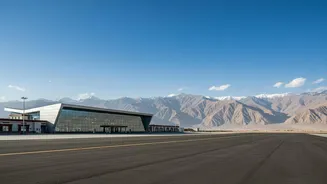
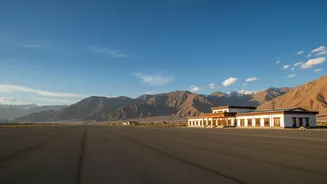
At the heart of this spectacular entry is Kushok Bakula Rimpochee Airport (IXL) in Leh. Situated at a breathtaking altitude of 3,256 metres (10,682 feet), it is India's highest commercial airport and one of the highest globally. Named after the revered
statesman and Buddhist monk, the 19th Kushok Bakula Rinpoche, the airport is more than just a landing strip; it is a vital lifeline. For several months a year when high mountain passes are buried under snow, this airport provides the only connection for the people of Ladakh to the rest of the country and the world. It serves a dual purpose as a civilian airport and a strategic airfield for the Indian Air Force, underscoring its importance in this sensitive border region.
An Engineering and Piloting Marvel
Operating an airport nestled deep within the Himalayas presents a unique set of challenges. The thin air at this high altitude significantly impacts aircraft performance. It reduces engine thrust and the lift generated by the wings, necessitating a longer runway for takeoff and landing. The approach to Leh is considered one of the most challenging in the world, requiring specially trained pilots who must navigate a narrow, unidirectional corridor between towering peaks. There is little room for error. This is also why almost all flights to and from Leh are scheduled in the early morning. By afternoon, strong mountain winds and atmospheric turbulence become a major hazard, making operations unsafe.
The Morning Rush Hour
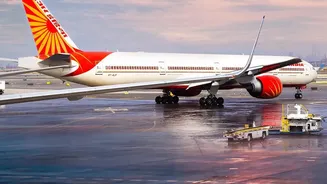
The morning-only flight window creates a unique rush hour at IXL. Between roughly 6 AM and 11 AM, the airport buzzes with activity as a flurry of arrivals and departures take place. Airlines like Air India, IndiGo, and SpiceJet connect Leh primarily with Delhi, along with other cities like Mumbai and Chandigarh. For travellers, this means an early start and the possibility of delays, as flight operations are entirely dependent on the day's weather and visibility. Even clear skies can pose a challenge; on unusually hot days, the air can become too thin for some aircraft to take off safely, leading to cancellations. Because of the airport's strategic importance, security is tight, and passengers may face stricter baggage rules than at other airports.
A Traveller’s First High-Altitude Test
For visitors, the journey begins the moment they step off the plane. The first breath of thin, crisp mountain air is an immediate reminder of the high altitude. The stunning panorama of the Stok Kangri range visible from the tarmac is awe-inspiring, but the altitude demands respect. Health experts and local guides uniformly advise travellers to spend their first 24 to 48 hours in Leh acclimatising. This means resting, staying hydrated, and avoiding any strenuous activity to allow the body to adjust to the lower oxygen levels. In this sense, the airport is not just a point of entry but the first stage of the Ladakhi adventure, where acclimatisation becomes the first and most important item on the itinerary.