





A Rover That Folds and Transforms
When you hear 'origami rover', you might picture a robot made of folded paper. The reality is far more robust, but the principle is the same: complex structures can be created through folding. A team at the Korea Advanced Institute of Science and Technology
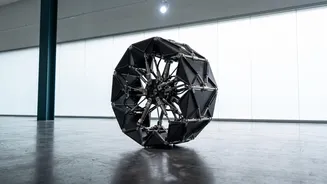
(KAIST) has developed a revolutionary airless wheel that can change its size and shape without complex mechanical parts. By weaving together flexible, high-carbon steel strips, they created a wheel that can shrink from a diameter of nearly 20 inches down to just 9 inches. This allows a rover equipped with these wheels to be packed into a small lander for its journey to the Moon and then expand to its full, rugged size upon arrival. The design cleverly avoids hinges and joints, which can be vulnerable to the abrasive lunar dust and extreme temperature swings that can exceed 500 degrees Fahrenheit.
Wheels That Adapt to Any Obstacle
The true genius of the origami wheel lies in its adaptability. On a smooth surface, a wider wheel provides stability. When faced with a large rock or a steep drop, the wheel can deform, effectively absorbing impacts and clambering over obstacles up to 7.8 inches high. If the rover needs to squeeze through a narrow passage, the wheels can contract. This design, inspired by the self-supporting structure of a Da Vinci bridge, gives the rover unprecedented mobility. Researchers have subjected the wheels to rigorous testing, including dropping them from heights simulating a 100-meter descent under lunar gravity and even driving them through fire, with the wheels remaining structurally sound. This resilience is critical for a machine expected to operate millions of miles from the nearest mechanic.
From a Korean Cave to a Lunar Crater
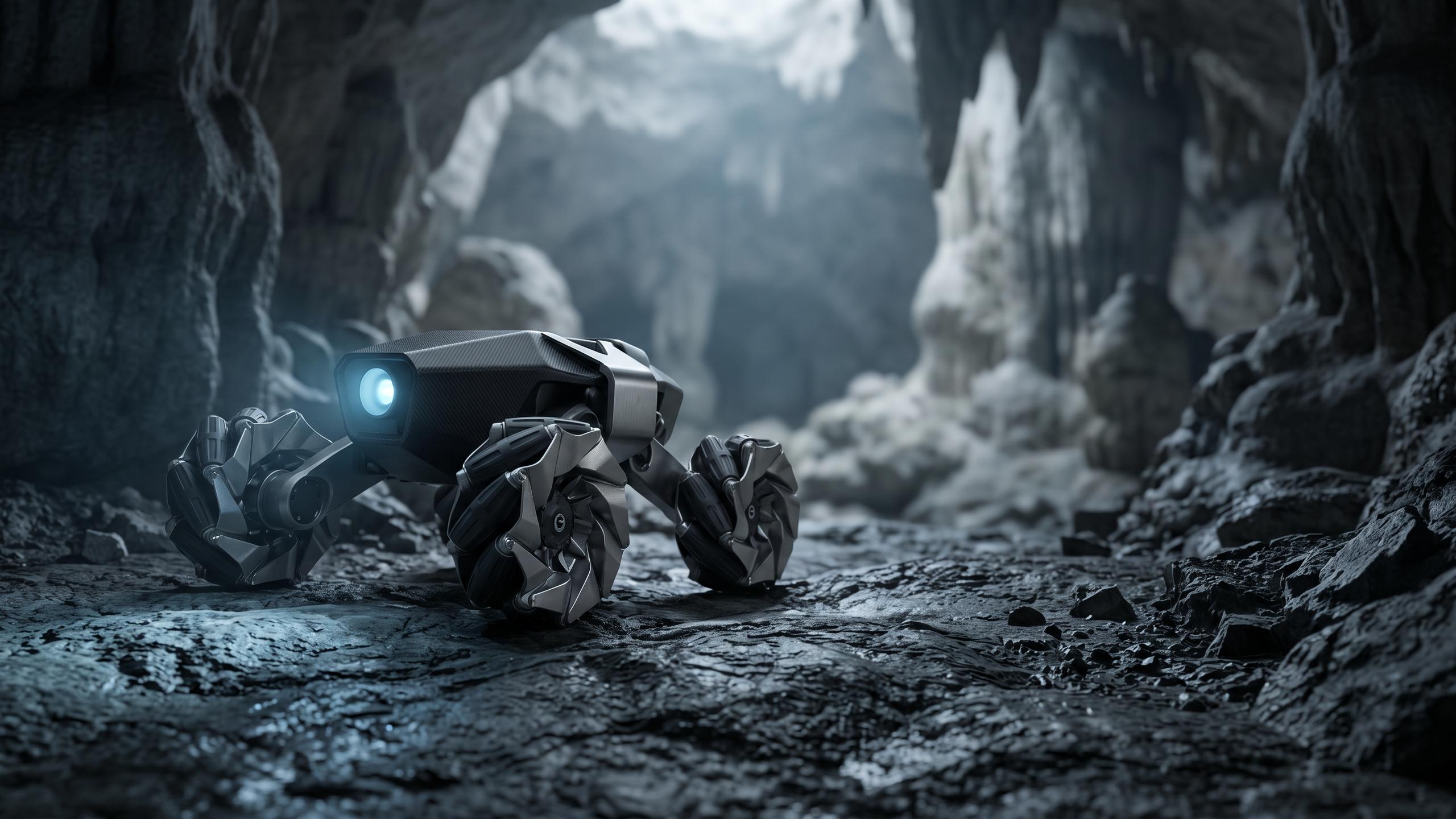
To prove their rover is ready for the Moon, the KAIST team took it to a location that mimics the lunar environment surprisingly well: the volcanic caves and lava tubes of Jeju Island. These subterranean networks, formed by ancient lava flows, are seen as prime candidates for future human bases on the Moon. They offer natural protection from cosmic radiation and the extreme temperature swings on the lunar surface. However, their entrances are often steep, rocky, and treacherous. By successfully navigating the dark, uneven terrain of the caves, the origami rover demonstrated its ability to explore these scientifically valuable and potentially life-sustaining locations that are inaccessible to conventional rovers.
Powering South Korea's Lunar Ambitions
This innovative rover is a key part of South Korea's rapidly growing space program. The nation's space agency, now called the Korea AeroSpace Administration (KASA), has set an ambitious goal of landing a domestically built robotic explorer on the Moon by 2032. To achieve this, researchers are focused on developing core technologies in-house, reducing reliance on foreign imports for critical components like motors and actuators. This origami rover project, a collaboration between KAIST and the private space robotics company Unmanned Exploration Laboratory (UEL), showcases the country's growing expertise and its strategy of fostering partnerships between academia and industry to become a top-five global aerospace power.