





A 'Once-in-a-Century' Discovery
The story begins with a discovery that scientists are calling a once-in-a-century event. While reviewing images from NASA's Lunar Reconnaissance Orbiter (LRO), which has been mapping the Moon for over 17 years, an analyst spotted something new: a massive
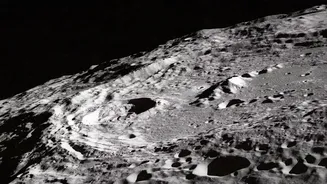
crater that wasn't there in previous scans. Named McGetchin crater, it measures over 700 feet wide and 140 feet deep, likely formed when an object the size of a multi-story building struck the Moon sometime in 2024. Finding a fresh impact of this scale is exceptionally rare and provided an unprecedented opportunity to study the immediate aftermath of a major lunar collision. Thanks to the LRO's long-term monitoring, scientists had 'before' and 'after' images, allowing for a detailed investigation into precisely how the landscape changed.
The Mysterious Cold Spot
While the new crater was remarkable, the biggest surprise lay beyond its rim. Using a thermal instrument on the LRO called Diviner, scientists examined the temperature of the area around the impact site. They found a vast 'cold spot' extending nearly seven kilometres across—an area far larger than the crater itself. During the long lunar night, this zone was found to be about 16 degrees Fahrenheit cooler than its immediate surroundings. The reason, researchers concluded, is that the force of the impact 'fluffed up' the lunar soil, or regolith. This process made the ground less dense and, like a freshly tilled garden, less able to retain the heat it had absorbed during the day.
Rewriting Our Understanding of the Surface
This discovery fundamentally changes our view of how impacts shape the Moon. Previously, the main effects were considered to be the crater itself and the ejecta, or debris, thrown from it. Now, it's clear that impacts can alter the physical and thermal properties of the lunar surface over a much wider area. This has significant practical implications for future lunar exploration. As NASA plans for its Artemis missions and potential long-term bases, understanding the terrain is critical. A 'fluffier,' less-compacted surface could behave differently under the wheels of a rover or the legs of a lander. This natural laboratory provides invaluable data for designing equipment that can safely navigate the altered lunar landscape.
Ghosts of Ancient Impacts
The McGetchin discovery is not the only recent finding highlighting these far-reaching effects. In a separate study, researchers analyzing data from NASA's Moon Mineralogy Mapper, an instrument that flew on India's Chandrayaan-1 orbiter, found evidence of an enormous, ancient impact basin that has been all but erased by time. Though the physical crater is no longer visible, its 'ghost' persists in the mineral composition of the surface. The impact, which occurred billions of years ago, excavated minerals from deep within the Moon's crust and scattered them in a massive ring. By tracing this mineralogical fingerprint, scientists can reconstruct the scale of an ancient cataclysm, showing that the consequences of major impacts have been reshaping the lunar surface over vast distances for its entire history.