




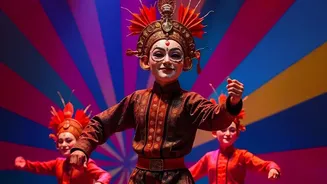
The Human Canvas
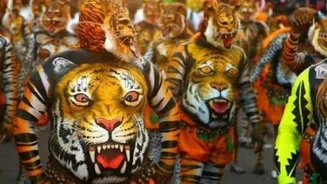
The transformation from person to 'puli' (tiger) is not a simple costume change; it is a profound and demanding process that begins long before the first drop of paint is applied. Performers, or 'Pulikalikkar', are chosen months in advance, embarking
on a period of special training and even fasting. The first physical step is to prepare the body itself. Every single hair is removed to create a smooth, uninterrupted canvas, a crucial stage for ensuring the paint adheres flawlessly and the intricate designs stand out. This preparation is an act of dedication, signaling the performer's commitment to the art form and their readiness to endure the hours of transformation that lie ahead. It's a tradition that requires not just physical strength for the dance, but immense patience from the very start.
The Art of the Mask
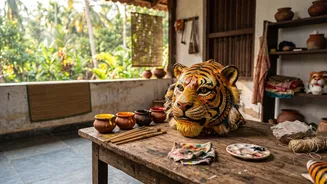
While the body painting is central, the transformation is incomplete without the mask. In the early days of Pulikali, performers' faces were also painted, but over time, handcrafted masks have become a key feature. These aren't mass-produced items but are instead bespoke works of art. Artisans use materials like paper and glue to construct the base. The fearsome teeth are often fashioned from shaped rattan, and the tongue might be resourcefully made from a piece of a bicycle tube. Hair is then glued to the chin and face of the mask before the final colouring brings the fierce feline expression to life. Each mask is a testament to the community's creativity, turning everyday materials into a vital piece of cultural iconography that completes the tiger's fearsome visage.
An All-Night Affair
The painting process itself is an endurance test for both the performer and the artists. Often beginning in the early morning hours on the day of the performance, it is a meticulous and time-consuming affair. A large team of artists gathers to apply the paint, which is traditionally a specific mixture of tempera powder and varnish or enamel. First, a base coat is applied and left to dry for two to three hours. Following this, artists begin the detailed second coat, painstakingly creating the distinctive stripes of a 'varayan puli' (tiger) or the spots of a 'pullipuli' (leopard). The entire process can take anywhere from five to nine hours. Performers must stand or sit patiently, a test of stamina that precedes the energetic street performance.
The Final Transformation
As the hours of painting conclude, the final elements are added. A broad belt adorned with bells is tied around the waist, ready to create a rhythmic jingle with every powerful movement of the dance. With the mask on and the paint complete, the human form disappears, and the tiger emerges. This moment of transformation is the culmination of a ritualistic process. Before taking to the streets, the troupes, known as 'sangams', often gather to offer a coconut to Lord Ganesha, a spiritual blessing for the performance ahead. Finally, powered by the beat of traditional percussion instruments like the chenda and thakil, the tigers are unleashed onto the streets of Thrissur, ready to captivate thousands of spectators with their wild, joyful dance.